



Sam Altman vs Elon Musk: Why OpenAI’s CEO says space-based data centres won’t matter this decade
Once allies at OpenAI, Sam Altman and Elon Musk are now sharply divided over the future of AI infrastructure.
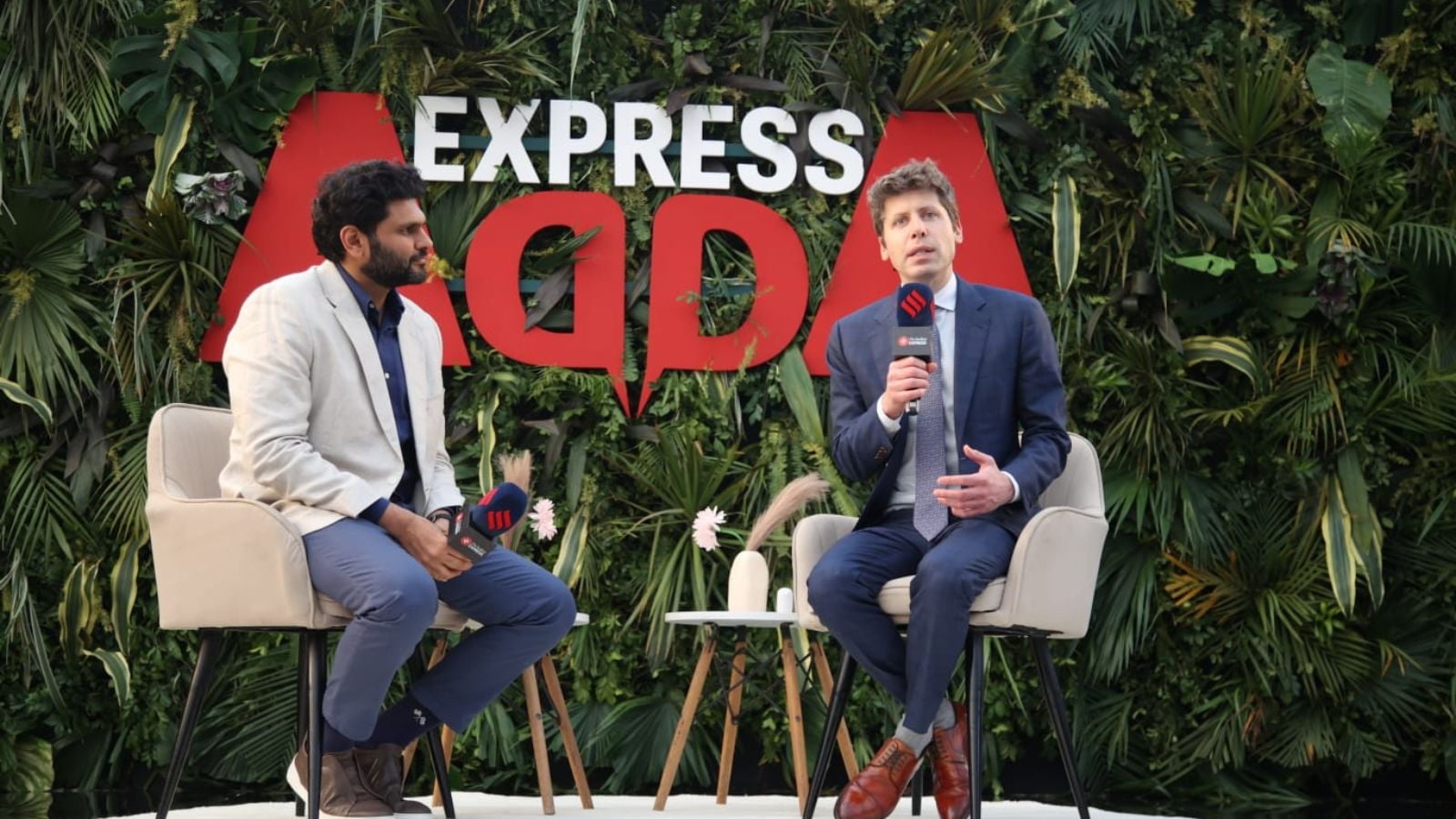
In his recent outing with Express Adda, OpenAI CEO Sam Altman spoke about meeting the staggering future demands of artificial intelligence (AI). When Anant Goenka, Executive Director of The Indian Express, asked about putting data centres in space, Altman quipped, saying the idea was ‘ridiculous’. This is in stark contrast to Altman’s chief rival, billionaire Elon Musk, who has been speaking profusely about moving AI computation off Earth into space, specifically into orbit with the help of satellites and solar power.
“Putting data centres in space with the current landscape is ridiculous. Orbital data centres are not going to matter at scale this decade due to the rough math of launch costs and how hard it is to fix a broken GPU in space,” Altman told Goenka.
As the conversation proceeded, we got a glimpse of Altman’s complicated equation with the SpaceX chief. Their rivalry, mostly an ideological one, stems from the fact that they started on the same side. Musk was an early co-founder of OpenAI in 2015, along with Altman and others, when the company’s initial stand was non-profit, open research, and the view that no one company should wield godlike AI. However, in 2018, Musk exited OpenAI, reportedly owing to a conflict of interest with Tesla.
Musk’s departure from the company set the stage for everything that followed, and OpenAI turned into something that Musk disagreed with, such as its shift to a capped-profit model, billions of investment from Microsoft, and locking down its most capable models. The Tesla boss has since publicly accused OpenAI of deceiving its founding mission and even went to the extent of suing it. The billionaire technocrat later went on to build a competing AI company that aligned with his worldview, xAI, in 2023 with its flagship model, Grok.
Why is tech looking at space to solve the data centre energy crunch
As of today, with AI capabilities leapfrogging by manifolds, the demand for computing power has reached astronomical levels, almost becoming a central bottleneck for AI companies. Altman foresees a future where billions of people have access to vast amounts of compute, emphasising that building this capacity “will be the most expensive, complex infrastructure project the world has ever collectively taken on for all of our welfare”.
Considering the stakes, AI compute demand will put increasing strain on existing grids. Someone like Musk views space-based data centres as a near-term necessity to bypass Earth’s resource constraints. Conversely, Altman was quick to dismiss this idea for the near future. He stressed the sheer logistical nightmares of such a feat.
Data centres on Earth consume massive amounts of electricity, and their energy needs are rising fast. The International Energy Agency warns that power use from data centres could double by 2026. Although companies prefer renewable energy, solar and wind are unreliable without large-scale storage, pushing many of them back toward fossil fuels thereby putting their climate targets at risk. Nuclear power is another option, but new plants may take years to become operational.
In order to circumvent these limits, some tech companies and startups are exploring orbital data centres. In space, data centres could rely on constant solar energy, unaffected by weather or day-night cycles, and are likely to operate at lower energy costs. Advocates of this idea believe that this could reduce pressure on Earth’s power grids, water use, and electricity prices. However, space-based data centres also raise new questions, especially because there are currently no clear rules governing such infrastructure.
Altman’s praise for musk
Other than the massive physical infrastructure of AI, the landscape seems to be also shaped by intense personal dynamics and rivalries. Altman’s relationship with Musk has been famously fraught. During the interview, Goenka asked Altman to weigh the probabilities of two highly unlikely scenarios: whether Taiwan Semiconductor Manufacturing Company (TSMC) would lose its global monopoly on chip manufacturing, or if he and Musk would ever become friends again. Altman was unambiguous in his response. “I think Musk and I becoming friends again is less likely,” he admitted, adding with a touch of humour, “I feel like I have more control over that one.”
Despite the evident rift between the two tech leaders, Altman acknowledged Musk’s unique talents. When pressed to name one thing he admired about Musk despite all their differences, Altman offered high praise for Musk’s operational and technical capabilities. “He’s extremely good at physical engineering and also extremely good at getting people to perform incredibly well at their jobs.”
In his recent outing with Express Adda, OpenAI CEO Sam Altman spoke about meeting the staggering future demands of artificial intelligence (AI). When Anant Goenka, Executive Director of The Indian Express, asked about putting data centres in space, Altman quipped, saying the idea was ‘ridiculous’. This is in stark contrast to Altman’s chief rival, billionaire Elon Musk, who has been speaking profusely about moving AI computation off Earth into space, specifically into orbit with the help of satellites and solar power.
“Putting data centres in space with the current landscape is ridiculous. Orbital data centres are not going to matter at scale this decade due to the rough math of launch costs and how hard it is to fix a broken GPU in space,” Altman told Goenka.
As the conversation proceeded, we got a glimpse of Altman’s complicated equation with the SpaceX chief. Their rivalry, mostly an ideological one, stems from the fact that they started on the same side. Musk was an early co-founder of OpenAI in 2015, along with Altman and others, when the company’s initial stand was non-profit, open research, and the view that no one company should wield godlike AI. However, in 2018, Musk exited OpenAI, reportedly owing to a conflict of interest with Tesla.
Musk’s departure from the company set the stage for everything that followed, and OpenAI turned into something that Musk disagreed with, such as its shift to a capped-profit model, billions of investment from Microsoft, and locking down its most capable models. The Tesla boss has since publicly accused OpenAI of deceiving its founding mission and even went to the extent of suing it. The billionaire technocrat later went on to build a competing AI company that aligned with his worldview, xAI, in 2023 with its flagship model, Grok.
Why is tech looking at space to solve the data centre energy crunch
As of today, with AI capabilities leapfrogging by manifolds, the demand for computing power has reached astronomical levels, almost becoming a central bottleneck for AI companies. Altman foresees a future where billions of people have access to vast amounts of compute, emphasising that building this capacity “will be the most expensive, complex infrastructure project the world has ever collectively taken on for all of our welfare”.
Considering the stakes, AI compute demand will put increasing strain on existing grids. Someone like Musk views space-based data centres as a near-term necessity to bypass Earth’s resource constraints. Conversely, Altman was quick to dismiss this idea for the near future. He stressed the sheer logistical nightmares of such a feat.
Data centres on Earth consume massive amounts of electricity, and their energy needs are rising fast. The International Energy Agency warns that power use from data centres could double by 2026. Although companies prefer renewable energy, solar and wind are unreliable without large-scale storage, pushing many of them back toward fossil fuels thereby putting their climate targets at risk. Nuclear power is another option, but new plants may take years to become operational.
In order to circumvent these limits, some tech companies and startups are exploring orbital data centres. In space, data centres could rely on constant solar energy, unaffected by weather or day-night cycles, and are likely to operate at lower energy costs. Advocates of this idea believe that this could reduce pressure on Earth’s power grids, water use, and electricity prices. However, space-based data centres also raise new questions, especially because there are currently no clear rules governing such infrastructure.
Altman’s praise for musk
Other than the massive physical infrastructure of AI, the landscape seems to be also shaped by intense personal dynamics and rivalries. Altman’s relationship with Musk has been famously fraught. During the interview, Goenka asked Altman to weigh the probabilities of two highly unlikely scenarios: whether Taiwan Semiconductor Manufacturing Company (TSMC) would lose its global monopoly on chip manufacturing, or if he and Musk would ever become friends again. Altman was unambiguous in his response. “I think Musk and I becoming friends again is less likely,” he admitted, adding with a touch of humour, “I feel like I have more control over that one.”
Despite the evident rift between the two tech leaders, Altman acknowledged Musk’s unique talents. When pressed to name one thing he admired about Musk despite all their differences, Altman offered high praise for Musk’s operational and technical capabilities. “He’s extremely good at physical engineering and also extremely good at getting people to perform incredibly well at their jobs.”