

Salman Rushdie attacker convicted on terrorism charges years after stabbing
Rushdie, an Indian-born novelist, was attacked in the August of 2022 while he was about to deliver a lecture at Chautauqua Institution in western New York.
A man from the United States, serving 25 years in prison for attempting to kill author Salman Rushdie, has now been convicted of additional charges, including terrorism. He has been charged with providing material support to Hezbollah, the BBC News reported.
A New York federal court convicted Hadi Matar on Wednesday of engaging in an act of transnational terrorism and providing assistance to Hezbollah — an armed group from Lebanon, designated as a terrorist group by the US, UK and several other nations — the report stated.
Rushdie, an Indian-origin novelist, was attacked in August 2022 just before delivering a lecture at Chautauqua Institution in western New York.
During the trial in New York, the award-winning author testified, describing the attack as well as crediting a firefighter for saving his life by providing medical care.
He was stabbed 15 times, including to his cheek, chest, eye, neck and thigh, the report stated.
“I was on the stage, lying down, with an enormous pool of blood all around me,” he testified, adding: “It was an enormous and expansive lake of blood,” BBC quoted.
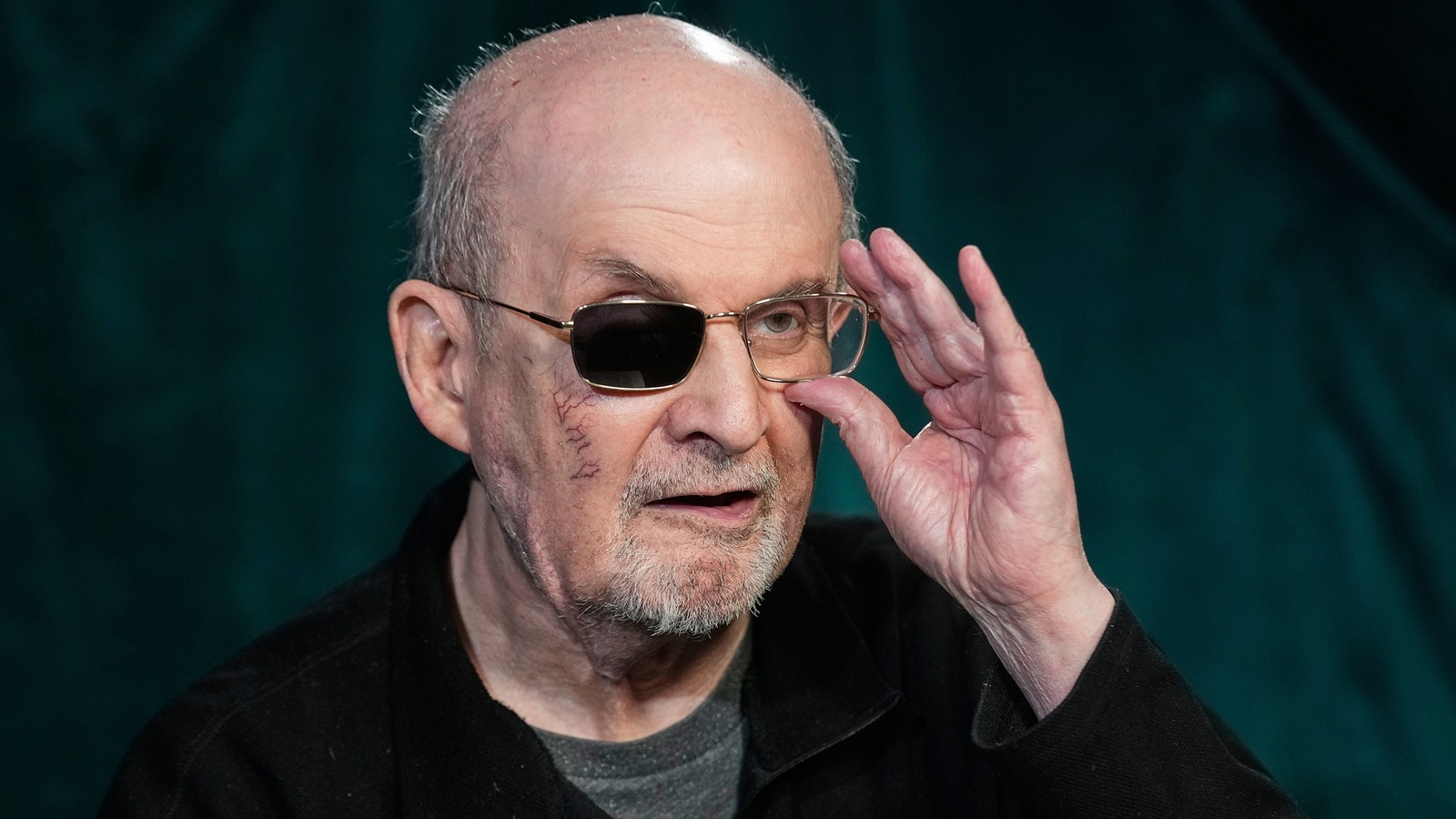
Additionally, Rushdie lifted the darkened lens on his glasses to reveal the wound to his eye, which left him partially blinded. The attacker’s knife had come “within millimetres from my brain,” Rushdie said.
The prosecutors in the case argued that Matar was motivated by a fatwa — a religious edict — issued by Iran’s religious leader in 1989 for the author’s death, and that he had plotted the attack for 2 years.
Assistant US Attorney Timothy Lynch, in his closing statement, said, “The defendant decided no one was going to do it, so he had to do it,” The Buffalo News quoted. “The defendant is the one who answered that call.”
Defence attorneys, meanwhile, argued that Matar’s attack was not motivated by terrorism. They also questioned Rushdie about whether he should have expected a backlash to his controversial 1988 novel The Satanic Verses.
Rushdie’s 1988 novel ran into controversy in the Islamic countries immediately after its publication because of its alleged disdainful depiction of Prophet Muhammad. With many Muslims considering the text ‘blasphemous’, the book has been banned in Iran ever since.
Iran’s late leader Ayatollah Ruhollah Khomeini issued the fatwa in 1989 calling for Rushdie’s death. Although the Iranian government has distanced itself from Khomeini’s decree, anti-Rushdie sentiment has persisted in the country.
Dismissing these threats at the time, Rushdie had defended his book, saying: “It’s not true that this book is a blasphemy against Islam. I doubt very much that Khomeini or anyone else in Iran has read the book or more than selected extracts out of context.”
Stay updated with the latest - Click here to follow us on Instagram
A man from the United States, serving 25 years in prison for attempting to kill author Salman Rushdie, has now been convicted of additional charges, including terrorism. He has been charged with providing material support to Hezbollah, the BBC News reported.
A New York federal court convicted Hadi Matar on Wednesday of engaging in an act of transnational terrorism and providing assistance to Hezbollah — an armed group from Lebanon, designated as a terrorist group by the US, UK and several other nations — the report stated.
Rushdie, an Indian-origin novelist, was attacked in August 2022 just before delivering a lecture at Chautauqua Institution in western New York.
During the trial in New York, the award-winning author testified, describing the attack as well as crediting a firefighter for saving his life by providing medical care.
He was stabbed 15 times, including to his cheek, chest, eye, neck and thigh, the report stated.
“I was on the stage, lying down, with an enormous pool of blood all around me,” he testified, adding: “It was an enormous and expansive lake of blood,” BBC quoted.
Additionally, Rushdie lifted the darkened lens on his glasses to reveal the wound to his eye, which left him partially blinded. The attacker’s knife had come “within millimetres from my brain,” Rushdie said.
The prosecutors in the case argued that Matar was motivated by a fatwa — a religious edict — issued by Iran’s religious leader in 1989 for the author’s death, and that he had plotted the attack for 2 years.
Assistant US Attorney Timothy Lynch, in his closing statement, said, “The defendant decided no one was going to do it, so he had to do it,” The Buffalo News quoted. “The defendant is the one who answered that call.”
Defence attorneys, meanwhile, argued that Matar’s attack was not motivated by terrorism. They also questioned Rushdie about whether he should have expected a backlash to his controversial 1988 novel The Satanic Verses.
Rushdie’s 1988 novel ran into controversy in the Islamic countries immediately after its publication because of its alleged disdainful depiction of Prophet Muhammad. With many Muslims considering the text ‘blasphemous’, the book has been banned in Iran ever since.
Iran’s late leader Ayatollah Ruhollah Khomeini issued the fatwa in 1989 calling for Rushdie’s death. Although the Iranian government has distanced itself from Khomeini’s decree, anti-Rushdie sentiment has persisted in the country.
Dismissing these threats at the time, Rushdie had defended his book, saying: “It’s not true that this book is a blasphemy against Islam. I doubt very much that Khomeini or anyone else in Iran has read the book or more than selected extracts out of context.”