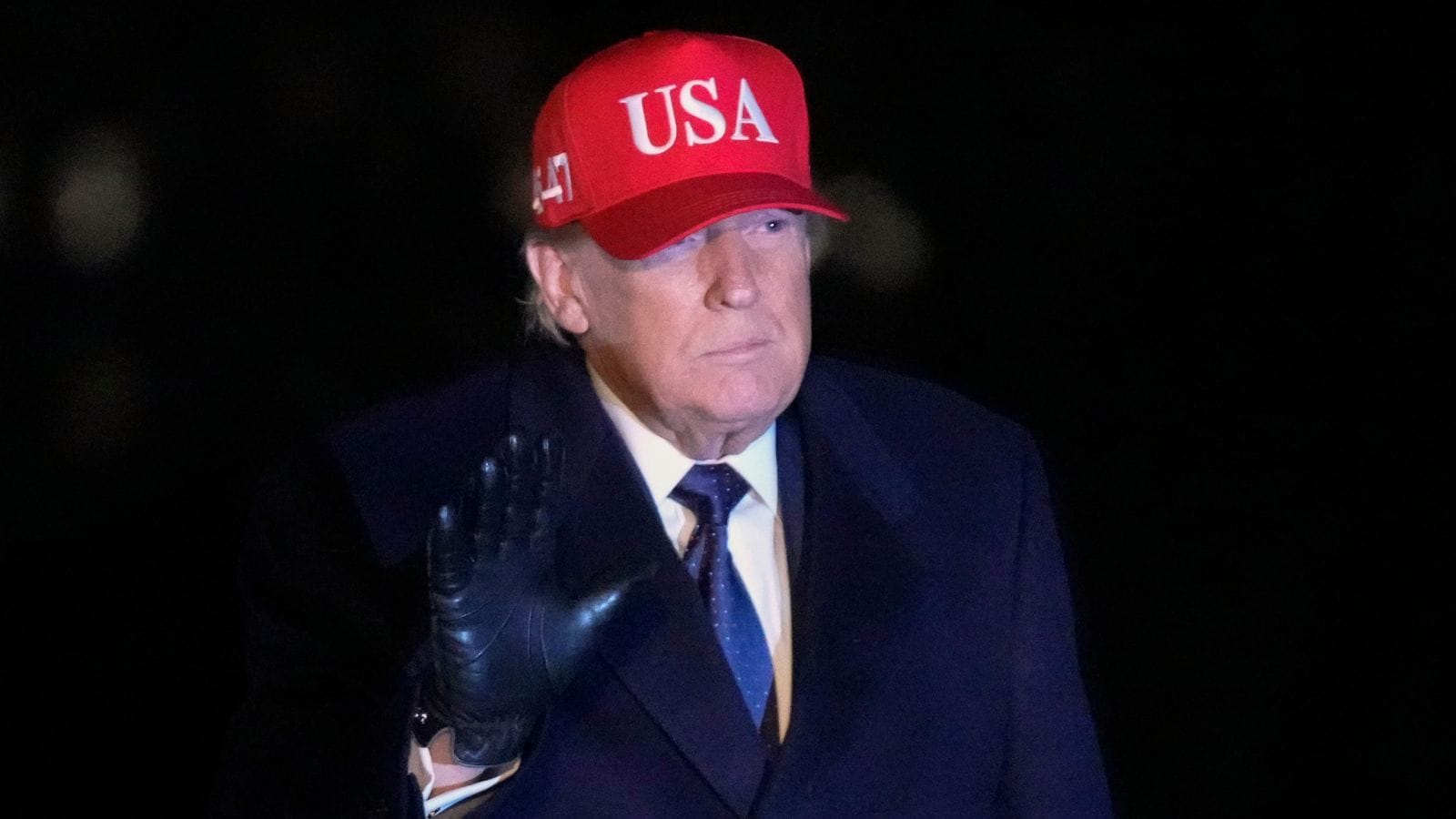


Trump considers ‘winding down’ Iran war as US is close to achieving 5 military objectives
Donald Trump said the US is nearing major objectives in the Iran conflict, listed five military goals, rejected a ceasefire, and urged other nations to secure the Strait of Hormuz.
US President Donald Trump has indicated he could ease the intensity of the conflict with Iran, saying US forces are nearing their key military targets. He also maintained that responsibility for safeguarding the Strait of Hormuz should lie with nations dependent on the route, adding that the United States is not one of them.
Energy markets worldwide have remained volatile after Tehran effectively sealed off the critical maritime corridor following the outbreak of hostilities last month. At the same time, Iran’s newly installed Supreme Leader declared that the country had dealt a “dizzying blow” to its opponents.
Trump has previously hinted that the war was approaching a conclusion, even as violence continued to escalate. This week, the White House requested an additional $200 billion to maintain operations, while more American troops and naval resources move toward the region.
Addressing reporters outside the White House before leaving Washington for Florida, Trump rejected calls for a ceasefire. “You don’t do a ceasefire when you’re literally obliterating the other side,” he was quoted as saying by BBC.
Later, while travelling to Palm Beach, Trump wrote on Truth Social that the US was “very close” to accomplishing its goals and was considering scaling down Middle East operations aimed at what he termed Iran’s “terrorist regime”. He listed five objectives the US was close to securing:
On Hormuz, Trump said the passage “will have to be guarded and policed” by other nations that use it. Earlier, he criticised NATO members for refusing to support efforts to reopen the channel, calling the mission militarily simple and low-risk.
This is not the first time Trump has forecast a quick end to the conflict. On March 9, he told CBS the war was “pretty much” over and later repeated in Florida that it would conclude “pretty quickly”.
However, CBS reported, citing sources, that the Pentagon is preparing for the possibility of ground operations inside Iran. Planning reportedly includes procedures for detaining Iranian personnel if US forces enter the country.
The US military is organising the deployment of around 2,500 Marines along with additional warships, according to Reuters. Separately, Axios reported that officials are examining options to capture or blockade Kharg Island, a vital oil export centre previously targeted in US strikes. A White House official was quoted by the BBC the island could be neutralised at any moment.
Retired Colonel Mark Cancian, now a senior adviser at the Center for Strategic and International Studies, said reinforcements are on the way but a full deployment could take from one week to a month.
Oil prices have jumped about 50% since the US and Israel began strikes on February 28. With concerns growing over a global energy squeeze, Washington said it would temporarily ease sanctions to permit the sale of 140 million barrels of Iranian oil stranded at sea since the war began. Attacks on oil refineries and gas fields across West Asia have worsened supply pressures.
Iran has kept up its offensive, launching new drone and missile attacks on Saudi Arabia and Israel. Marking the Persian New Year, Mojtaba Khamenei issued a defiant statement saying Iranian forces had hit the enemy so hard that it now speaks in “contradictory words and nonsense”. He added that national unity had secured victory.
Khamenei has not been seen in public since an Israeli strike killed his father and predecessor, Ali Khamenei, on the first day of the war.
Stay updated with the latest - Click here to follow us on Instagram
US President Donald Trump has indicated he could ease the intensity of the conflict with Iran, saying US forces are nearing their key military targets. He also maintained that responsibility for safeguarding the Strait of Hormuz should lie with nations dependent on the route, adding that the United States is not one of them.
Energy markets worldwide have remained volatile after Tehran effectively sealed off the critical maritime corridor following the outbreak of hostilities last month. At the same time, Iran’s newly installed Supreme Leader declared that the country had dealt a “dizzying blow” to its opponents.
Trump has previously hinted that the war was approaching a conclusion, even as violence continued to escalate. This week, the White House requested an additional $200 billion to maintain operations, while more American troops and naval resources move toward the region.
Addressing reporters outside the White House before leaving Washington for Florida, Trump rejected calls for a ceasefire. “You don’t do a ceasefire when you’re literally obliterating the other side,” he was quoted as saying by BBC.
Later, while travelling to Palm Beach, Trump wrote on Truth Social that the US was “very close” to accomplishing its goals and was considering scaling down Middle East operations aimed at what he termed Iran’s “terrorist regime”. He listed five objectives the US was close to securing:
On Hormuz, Trump said the passage “will have to be guarded and policed” by other nations that use it. Earlier, he criticised NATO members for refusing to support efforts to reopen the channel, calling the mission militarily simple and low-risk.
This is not the first time Trump has forecast a quick end to the conflict. On March 9, he told CBS the war was “pretty much” over and later repeated in Florida that it would conclude “pretty quickly”.
However, CBS reported, citing sources, that the Pentagon is preparing for the possibility of ground operations inside Iran. Planning reportedly includes procedures for detaining Iranian personnel if US forces enter the country.
The US military is organising the deployment of around 2,500 Marines along with additional warships, according to Reuters. Separately, Axios reported that officials are examining options to capture or blockade Kharg Island, a vital oil export centre previously targeted in US strikes. A White House official was quoted by the BBC the island could be neutralised at any moment.
Retired Colonel Mark Cancian, now a senior adviser at the Center for Strategic and International Studies, said reinforcements are on the way but a full deployment could take from one week to a month.
Oil prices have jumped about 50% since the US and Israel began strikes on February 28. With concerns growing over a global energy squeeze, Washington said it would temporarily ease sanctions to permit the sale of 140 million barrels of Iranian oil stranded at sea since the war began. Attacks on oil refineries and gas fields across West Asia have worsened supply pressures.
Iran has kept up its offensive, launching new drone and missile attacks on Saudi Arabia and Israel. Marking the Persian New Year, Mojtaba Khamenei issued a defiant statement saying Iranian forces had hit the enemy so hard that it now speaks in “contradictory words and nonsense”. He added that national unity had secured victory.
Khamenei has not been seen in public since an Israeli strike killed his father and predecessor, Ali Khamenei, on the first day of the war.