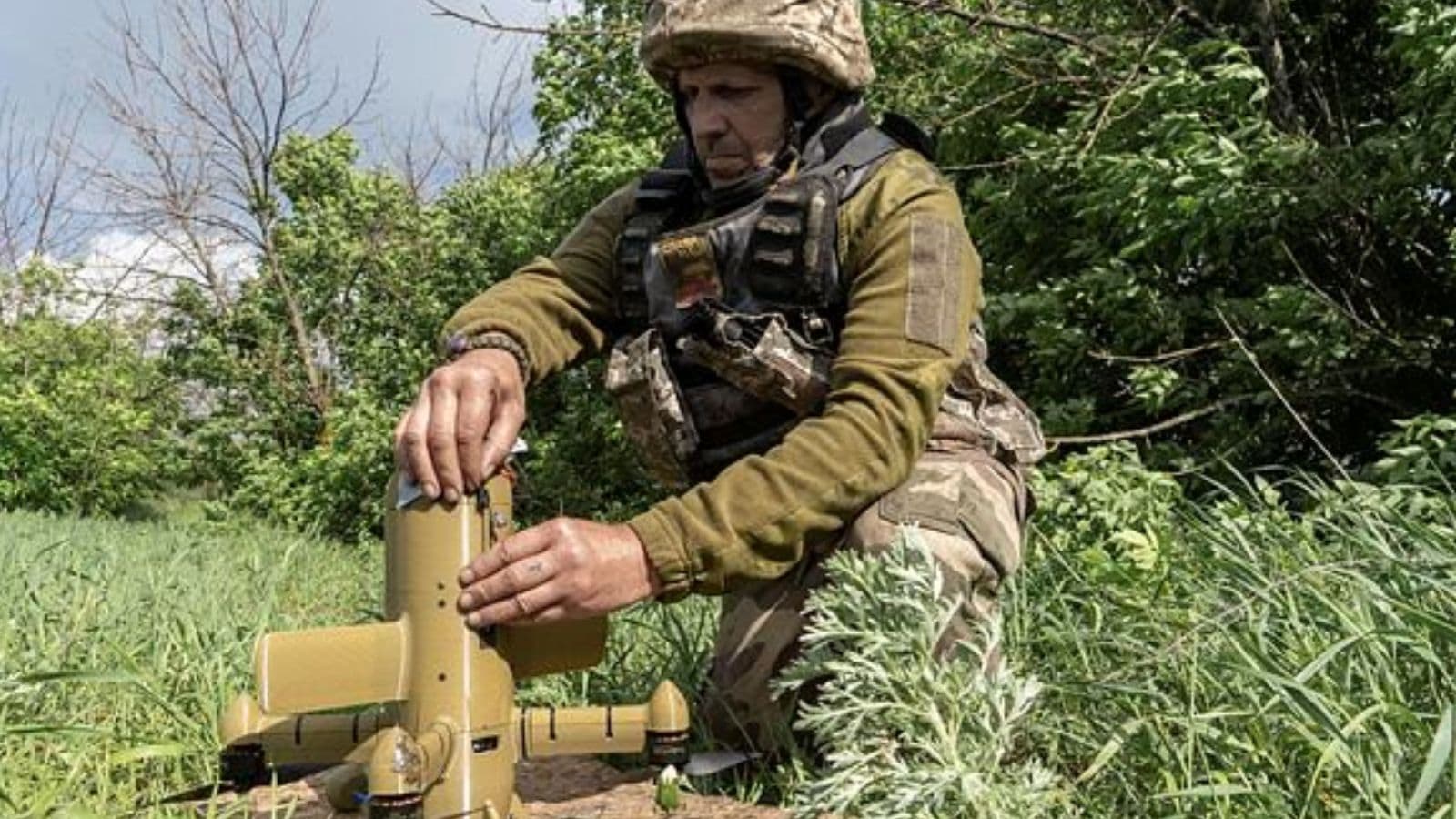


Ukraine is using ‘AI-trained drones’ to hit Russian supply convoys, says report
Ukraine is deploying AI-powered drones to target Russian supply routes and logistics hubs
The Ukrainian military has ramped up its operation on targeting Russian supply tanks that allegedly carried essentials such as fuel, food and ammunition for Russian troops. Ukraine is preparing to use new AI drone technology to carry out the operation, BBC reported.
BBC verify has confirmed footage of at least 14 incidents of vehicles carrying food, fuel and ammunition being targeted along critical routes that connect Russia to Crimea and other Russian-occupied territories in Southern Ukraine.
The report comes just a day after a Russian drone targeted on Ukraine went astray and hit an apartment building in eastern Romania, a NATO member.
Experts say new AI drone technologies including the AI-powered Hornet system have helped Ukraine strike Russian targets farther from the front line and with greater accuracy.
Ukraine’s Defence Minister Mykhailo Fedorov said the country’s ‘logistics lockdown’ strategy is aimed at increasing pressure on Russian forces behind the front line and disrupting their ability to sustain offensive operations.
Met with U.S. Congressmen @SenBlumenthal and @jahimes to advance our defense and tech partnership. Our focus is clear: protecting our skies, strengthening the front lines, and expanding a true win-win collaboration.
Through the PURL initiative, Ukraine secures over 90% of its… pic.twitter.com/Qx3pqVwOJT
— Mykhailo Fedorov (@FedorovMykhailo) May 28, 2026
Nick Brown, a weapons expert at defence intelligence firm Janes, told BBC Verify that Ukraine’s Hornet drones are trained by AI models on thousands of hours of footage showing Russian military targets collected over the past four years.
The drones can also use the Starlink satellite network to stay connected with operators over long distances and are harder for Russian forces to jam. Brown said Ukraine can launch hundreds of these drones towards a target area more than 160 km away, with the AI helping them identify and strike Russian military targets.
Footage analysed by BBC Verify and open-source analysts at GeoConfirmed shows burnt-out container lorries and military vehicles at several locations along a key route in southern Ukraine.
At least 10 strikes were recorded between Russia’s border and the occupied city of Mariupol in Ukraine, including one south-west of Melitopol. The route is a crucial supply line used by Russian forces operating on the front line and in Crimea.
Clement Molin, an analyst at the Atum Mundi think tank told BBC Verify he had confirmed the destruction of around 150 vehicles more than 20 km from the front line. He said this likely represents only about half of the total incidents.
According to conflict monitoring group Acled, the attacks have forced Russia to use smaller supply convoys to reduce losses. Analyst Cristian Vlas said Ukraine is targeting key supply routes, command centres and communication towers that help Russian forces operate and launch drone and missile attacks.
Robert Tollast, a land warfare expert at the Royal United Service Institute told BBC that some military brigades need up to 1000 tonnes of fuel, food, ammunition and other supplies every day.
He said Ukraine had previously targeted Russian air defence systems with long-range strikes, but the reach of its new drone attacks is far greater. According to Tollast, hitting supply trucks more than 100 km from the front line and targeting larger logistics hubs could create serious problems for Russian forces.
As per a report by the Institute for the Study of War, for the first time since the war broke out between Russia and Ukraine in 2022, Ukraine is starting to gain more ground than it has lost. Even after four years since the war, neither side has gained any significant ground, says the BBC.
Russian President Putin said on May 29 that his earlier comments about the Ukraine war eventually ending were based on Russia’s progress on the battlefield. However, he did not give any timeline for when the war might end.
Putin also rejected Western claims that Russia is preparing for a war with Europe, calling them false, reports the Associated Press. He further criticised Western media coverage of what Moscow said was a Ukrainian drone attack on a student dormitory in Russian-controlled Luhansk that reportedly killed 21 people.
Stay updated with the latest - Click here to follow us on Instagram
The Ukrainian military has ramped up its operation on targeting Russian supply tanks that allegedly carried essentials such as fuel, food and ammunition for Russian troops. Ukraine is preparing to use new AI drone technology to carry out the operation, BBC reported.
BBC verify has confirmed footage of at least 14 incidents of vehicles carrying food, fuel and ammunition being targeted along critical routes that connect Russia to Crimea and other Russian-occupied territories in Southern Ukraine.
The report comes just a day after a Russian drone targeted on Ukraine went astray and hit an apartment building in eastern Romania, a NATO member.
Experts say new AI drone technologies including the AI-powered Hornet system have helped Ukraine strike Russian targets farther from the front line and with greater accuracy.
Ukraine’s Defence Minister Mykhailo Fedorov said the country’s ‘logistics lockdown’ strategy is aimed at increasing pressure on Russian forces behind the front line and disrupting their ability to sustain offensive operations.
Met with U.S. Congressmen @SenBlumenthal and @jahimes to advance our defense and tech partnership. Our focus is clear: protecting our skies, strengthening the front lines, and expanding a true win-win collaboration.
Through the PURL initiative, Ukraine secures over 90% of its… pic.twitter.com/Qx3pqVwOJT
— Mykhailo Fedorov (@FedorovMykhailo) May 28, 2026
Nick Brown, a weapons expert at defence intelligence firm Janes, told BBC Verify that Ukraine’s Hornet drones are trained by AI models on thousands of hours of footage showing Russian military targets collected over the past four years.
The drones can also use the Starlink satellite network to stay connected with operators over long distances and are harder for Russian forces to jam. Brown said Ukraine can launch hundreds of these drones towards a target area more than 160 km away, with the AI helping them identify and strike Russian military targets.
Footage analysed by BBC Verify and open-source analysts at GeoConfirmed shows burnt-out container lorries and military vehicles at several locations along a key route in southern Ukraine.
At least 10 strikes were recorded between Russia’s border and the occupied city of Mariupol in Ukraine, including one south-west of Melitopol. The route is a crucial supply line used by Russian forces operating on the front line and in Crimea.
Clement Molin, an analyst at the Atum Mundi think tank told BBC Verify he had confirmed the destruction of around 150 vehicles more than 20 km from the front line. He said this likely represents only about half of the total incidents.
According to conflict monitoring group Acled, the attacks have forced Russia to use smaller supply convoys to reduce losses. Analyst Cristian Vlas said Ukraine is targeting key supply routes, command centres and communication towers that help Russian forces operate and launch drone and missile attacks.
Robert Tollast, a land warfare expert at the Royal United Service Institute told BBC that some military brigades need up to 1000 tonnes of fuel, food, ammunition and other supplies every day.
He said Ukraine had previously targeted Russian air defence systems with long-range strikes, but the reach of its new drone attacks is far greater. According to Tollast, hitting supply trucks more than 100 km from the front line and targeting larger logistics hubs could create serious problems for Russian forces.
As per a report by the Institute for the Study of War, for the first time since the war broke out between Russia and Ukraine in 2022, Ukraine is starting to gain more ground than it has lost. Even after four years since the war, neither side has gained any significant ground, says the BBC.
Russian President Putin said on May 29 that his earlier comments about the Ukraine war eventually ending were based on Russia’s progress on the battlefield. However, he did not give any timeline for when the war might end.
Putin also rejected Western claims that Russia is preparing for a war with Europe, calling them false, reports the Associated Press. He further criticised Western media coverage of what Moscow said was a Ukrainian drone attack on a student dormitory in Russian-controlled Luhansk that reportedly killed 21 people.