

OceanGate’s Titan submersible implosion caused by engineering flaws, poor testing: Final report
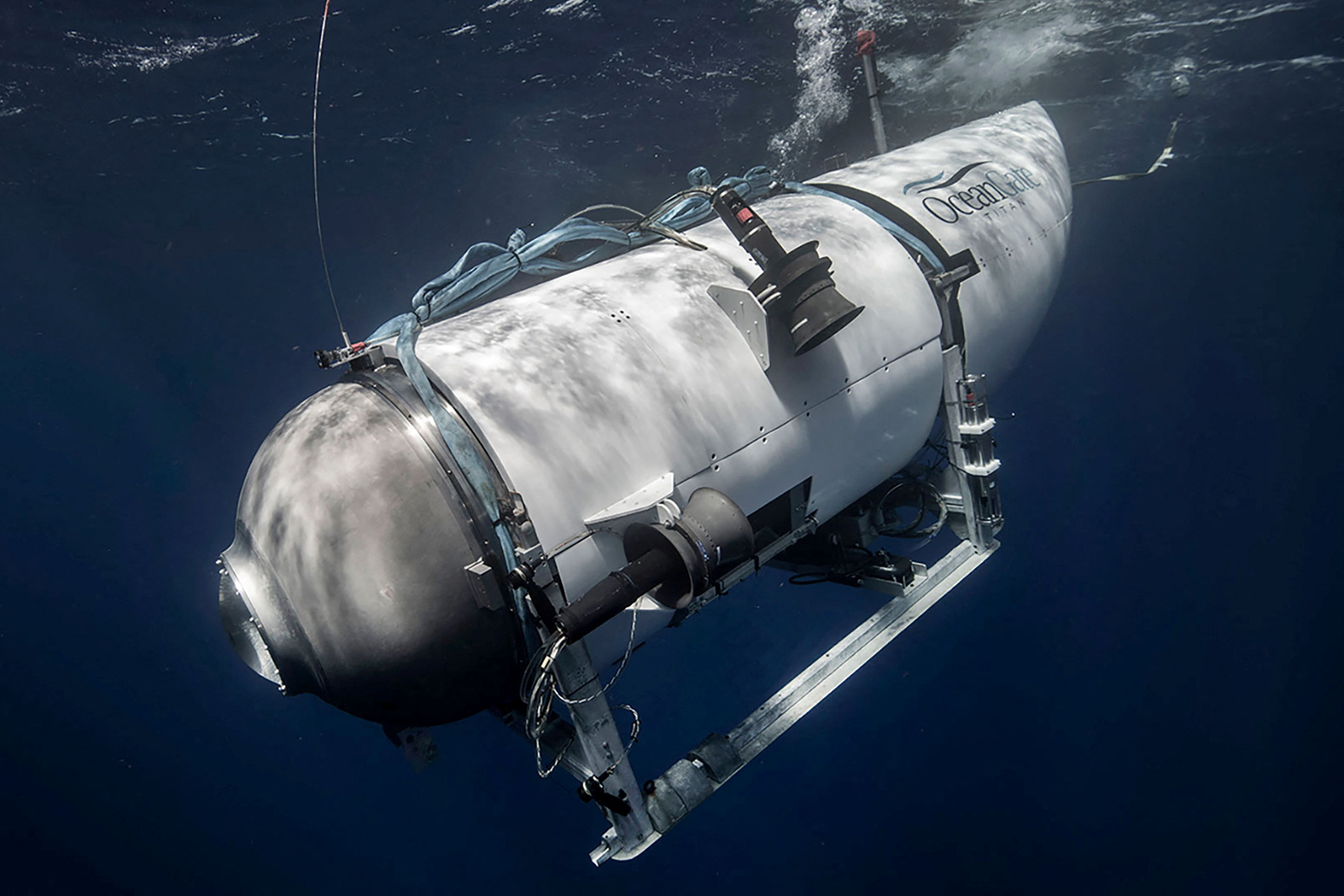
Titan was a deep-sea tourist submersible designed to take paying passengers and researchers to the wreck of the RMS Titanic, which lies about 3,800 metres below the surface of the North Atlantic Ocean.
The fatal implosion of OceanGate’s Titan submersible on June 18 2023 — in which all five people on board were killed — was the result of serious engineering flaws, inadequate testing and a company culture that discouraged dissent, the Transportation Safety Board of Canada found in its final investigation report.
Titan was a deep-sea tourist submersible designed to take paying passengers and researchers to the wreck of the RMS Titanic, which lies about 3,800 metres (12,500 feet) below the surface of the North Atlantic Ocean.
The submersible Titan imploded during a descent to the wreck of the Titanic, which struck an iceberg in 1912 and sank in the North Atlantic Ocean. The people who died in the incident included OceanGate CEO Stockton Rush, British businessman Hamish Harding, French explorer Paul-Henri Nargeolet, and Pakistani businessman and his son Suleman Dawood.
According to the TSB report released on Wednesday, the disaster seems to have taken place from a combination of technical and organisational shortcomings. The TSB Laboratory, which investigated the incident, has found that the Titan’s carbon fibre cylinder failed due to a decrease in its strength along with several defects in manufacturing, operations, storage, and transport. These issues caused damage to build up with each dive until the vessel imploded.
The board said OceanGate lacked sufficient evidence to determine whether the vessel could safely withstand repeated dives to Titanic depths.
A key finding during the investigation was how OceanGate relied on unconventional engineering practices and did relatively little testing of the final vessel. The TSB further found the company did not perform the thorough testing required in the submersible industry, where pressure vessels usually undergo hundreds or thousands of test cycles before being approved for use.
The craft successfully completed 13 dives, but the weaknesses in its materials led to its fatal 14th trip, the report claimed. While not all the debris was recovered, investigators estimate the hull failure occurred 5.397 seconds after the submersible crew sent a text message at a depth exceeding 3,000 metres.
The report states various testing issues with the craft, which was already on the verge of failure, weren’t the only cause leading to OceanGate’s expedition. OceanGate’s risk management was hampered by its organisational structure and composition, as well as the influence of power dynamics and social and psychological factors. Consequently, they failed to identify and address crucial risks related to the Titan’s structural integrity.
“Over the course of OceanGate’s operating history … employees with expertise in specific areas left the company or were dismissed after raising safety-related concerns or expressing differing perspectives from the CEO,” the report found, adding that confirmation bias was “affecting OceanGate’s decision making and risk management with respect to the structural integrity and lifespan of the Titan pressure hull”. Inspectors discovered the submersible industry was largely unregulated. They found no external checks on OceanGate’s risk assessment processes in any of the countries where it operated and no oversight from a classification society.
The TSB report claimed that in Canada, vessel oversight by Transport Canada (TC) is relatively common. It added that the lack of regulatory oversight led to safety deficiencies and increased risk for those involved in Titan’s operations. TC warned that without policy changes, vessels and crews could continue operating without minimum defences, resulting in unsafe conditions and potentially fatal accidents.
Yoan Marier, chair of the TSB, stated, “We’ve been advocating for stronger regulatory surveillance in the marine sector for years. Lives are at risk when safety gaps remain unaddressed.”
(The story was written by Navya Roshan, an intern at The Indian Express)
Stay updated with the latest - Click here to follow us on Instagram
The fatal implosion of OceanGate’s Titan submersible on June 18 2023 — in which all five people on board were killed — was the result of serious engineering flaws, inadequate testing and a company culture that discouraged dissent, the Transportation Safety Board of Canada found in its final investigation report.
Titan was a deep-sea tourist submersible designed to take paying passengers and researchers to the wreck of the RMS Titanic, which lies about 3,800 metres (12,500 feet) below the surface of the North Atlantic Ocean.
The submersible Titan imploded during a descent to the wreck of the Titanic, which struck an iceberg in 1912 and sank in the North Atlantic Ocean. The people who died in the incident included OceanGate CEO Stockton Rush, British businessman Hamish Harding, French explorer Paul-Henri Nargeolet, and Pakistani businessman and his son Suleman Dawood.
According to the TSB report released on Wednesday, the disaster seems to have taken place from a combination of technical and organisational shortcomings. The TSB Laboratory, which investigated the incident, has found that the Titan’s carbon fibre cylinder failed due to a decrease in its strength along with several defects in manufacturing, operations, storage, and transport. These issues caused damage to build up with each dive until the vessel imploded.
The board said OceanGate lacked sufficient evidence to determine whether the vessel could safely withstand repeated dives to Titanic depths.
A key finding during the investigation was how OceanGate relied on unconventional engineering practices and did relatively little testing of the final vessel. The TSB further found the company did not perform the thorough testing required in the submersible industry, where pressure vessels usually undergo hundreds or thousands of test cycles before being approved for use.
The craft successfully completed 13 dives, but the weaknesses in its materials led to its fatal 14th trip, the report claimed. While not all the debris was recovered, investigators estimate the hull failure occurred 5.397 seconds after the submersible crew sent a text message at a depth exceeding 3,000 metres.
The report states various testing issues with the craft, which was already on the verge of failure, weren’t the only cause leading to OceanGate’s expedition. OceanGate’s risk management was hampered by its organisational structure and composition, as well as the influence of power dynamics and social and psychological factors. Consequently, they failed to identify and address crucial risks related to the Titan’s structural integrity.
“Over the course of OceanGate’s operating history … employees with expertise in specific areas left the company or were dismissed after raising safety-related concerns or expressing differing perspectives from the CEO,” the report found, adding that confirmation bias was “affecting OceanGate’s decision making and risk management with respect to the structural integrity and lifespan of the Titan pressure hull”. Inspectors discovered the submersible industry was largely unregulated. They found no external checks on OceanGate’s risk assessment processes in any of the countries where it operated and no oversight from a classification society.
The TSB report claimed that in Canada, vessel oversight by Transport Canada (TC) is relatively common. It added that the lack of regulatory oversight led to safety deficiencies and increased risk for those involved in Titan’s operations. TC warned that without policy changes, vessels and crews could continue operating without minimum defences, resulting in unsafe conditions and potentially fatal accidents.
Yoan Marier, chair of the TSB, stated, “We’ve been advocating for stronger regulatory surveillance in the marine sector for years. Lives are at risk when safety gaps remain unaddressed.”
(The story was written by Navya Roshan, an intern at The Indian Express)