

Strait of Hormuz reopens after US-Iran MoU, but world has lost 1.15 billion barrels: Report
The oil market undoubtedly believes Trump’s timing is. Prices have fallen really low in recent days after the signing of the memorandum of understanding, as he predicted.
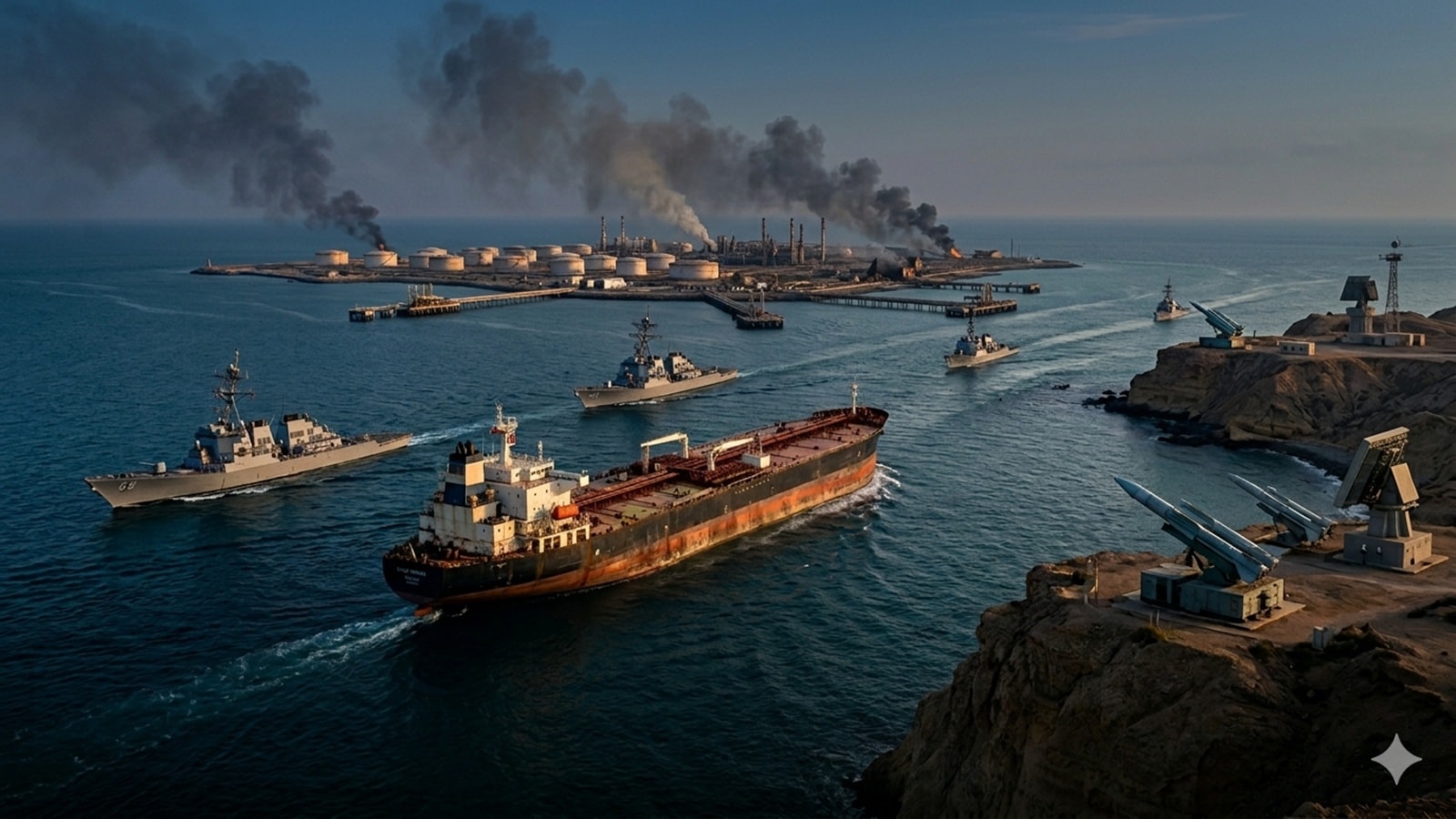
The Strait of Hormuz, the world’s most strategic oil chokepoint, reopened this week after the United States and Iran signed the Pakistan-mediated Memorandum of Understanding on June 17, but the global oil market may already be too damaged for the reopening to ease prices quickly.
The world lost approximately 1.15 billion barrels of oil supply during the 3.5-month US-Israeli war on Iran, CNN reported, citing analytics firm Kpler, leaving the global oil market “in a precarious state” and “rapidly approaching a breaking point”.
OECD strategic petroleum reserves (coordinated by member countries through the International Energy Agency) are at their lowest levels since 1990, while the US Strategic Petroleum Reserve has hit a 43-year low. Brent crude has fallen below $80 per barrel after the MoU signing, with Goldman Sachs cutting its fourth-quarter 2026 forecast to $80 (fhttps://indianexpress.com/article/world/donald-trump-u-turn-war-claims-iran-us-deal-10745542/rom $90) and Morgan Stanley estimating 50 per cent of Iranian production will return by September, 80 per cent by December.
For India, which sources 65-70 per cent of its crude oil through the Strait of Hormuz, the question is not whether prices will fall further but whether the reopening will arrive in time to prevent prolonged elevated fuel prices through the Indian summer driving season.
The oil market undoubtedly believes Trump’s timing is. Prices have fallen really low in recent days after the signing of the memorandum of understanding, as he predicted.
The world’s oil stockpiles have fallen sharply by 190 million barrels over recent months. An oil hub in Cushing, Oklahoma, that pipes fuel all around the United States, hit its operational stress level.
Many storage facilities across the world are nearing the critical threshold.
Reopening the Strait will not immediately solve the problem. It will restart the process of getting the oil flow back to normal.
The strait will need to be de-mined, empty tankers will need to start coming back into the area, production will need to restart, and oil will need to start the slow journey to its destination. None of that will happen quickly – it’s a process that the oil industry believes could take months before the flow of oil returns to something approaching “normal.”
Several industry analysts believe oil prices have moved too low. The market is underpricing the risk before the oil tanks can be restocked, CNN reported.
“The market has jumped 7 steps ahead of where we are now,” said Helima Croft, who is the head of global commodity strategy at RBC Capital Markets. “Everyone’s like: ‘This is over!’ But there’s a major logistical challenge to get back to where we were.”
“Regardless of what happens in the coming weeks in the Strait of Hormuz, US consumers are in for higher prices in the summer months,” said Matt Smith of Kpler. “It hasn’t played out that way yet because of the optimism about a deal. But market forces have to come into play here.”
It would take about a year to get back the 1.15 billion barrels of lost oil, even if the global oil market started producing 5 million more barrels approximately than what customers demanded, as the International Energy Agency predicts
As analyst Dan Pickering put it, physical barrels eventually catch up with you. The strait may be open, but the supply gap it leaves behind isn’t closing nearly as fast.
(The article has been written by Seekriti Saha, who is an intern at The Indian Express)
Stay updated with the latest - Click here to follow us on Instagram
The Strait of Hormuz, the world’s most strategic oil chokepoint, reopened this week after the United States and Iran signed the Pakistan-mediated Memorandum of Understanding on June 17, but the global oil market may already be too damaged for the reopening to ease prices quickly.
The world lost approximately 1.15 billion barrels of oil supply during the 3.5-month US-Israeli war on Iran, CNN reported, citing analytics firm Kpler, leaving the global oil market “in a precarious state” and “rapidly approaching a breaking point”.
OECD strategic petroleum reserves (coordinated by member countries through the International Energy Agency) are at their lowest levels since 1990, while the US Strategic Petroleum Reserve has hit a 43-year low. Brent crude has fallen below $80 per barrel after the MoU signing, with Goldman Sachs cutting its fourth-quarter 2026 forecast to $80 (fhttps://indianexpress.com/article/world/donald-trump-u-turn-war-claims-iran-us-deal-10745542/rom $90) and Morgan Stanley estimating 50 per cent of Iranian production will return by September, 80 per cent by December.
For India, which sources 65-70 per cent of its crude oil through the Strait of Hormuz, the question is not whether prices will fall further but whether the reopening will arrive in time to prevent prolonged elevated fuel prices through the Indian summer driving season.
The oil market undoubtedly believes Trump’s timing is. Prices have fallen really low in recent days after the signing of the memorandum of understanding, as he predicted.
The world’s oil stockpiles have fallen sharply by 190 million barrels over recent months. An oil hub in Cushing, Oklahoma, that pipes fuel all around the United States, hit its operational stress level.
Many storage facilities across the world are nearing the critical threshold.
Reopening the Strait will not immediately solve the problem. It will restart the process of getting the oil flow back to normal.
The strait will need to be de-mined, empty tankers will need to start coming back into the area, production will need to restart, and oil will need to start the slow journey to its destination. None of that will happen quickly – it’s a process that the oil industry believes could take months before the flow of oil returns to something approaching “normal.”
Several industry analysts believe oil prices have moved too low. The market is underpricing the risk before the oil tanks can be restocked, CNN reported.
“The market has jumped 7 steps ahead of where we are now,” said Helima Croft, who is the head of global commodity strategy at RBC Capital Markets. “Everyone’s like: ‘This is over!’ But there’s a major logistical challenge to get back to where we were.”
“Regardless of what happens in the coming weeks in the Strait of Hormuz, US consumers are in for higher prices in the summer months,” said Matt Smith of Kpler. “It hasn’t played out that way yet because of the optimism about a deal. But market forces have to come into play here.”
It would take about a year to get back the 1.15 billion barrels of lost oil, even if the global oil market started producing 5 million more barrels approximately than what customers demanded, as the International Energy Agency predicts
As analyst Dan Pickering put it, physical barrels eventually catch up with you. The strait may be open, but the supply gap it leaves behind isn’t closing nearly as fast.
(The article has been written by Seekriti Saha, who is an intern at The Indian Express)