

Trump claims ‘permanent’ reopening of Hormuz after ‘letter’ to China’s Xi amid Iran’s Red Sea warning
Trump made the remarks in a post on Truth Social, where he said China was “very happy” with the development and suggested improved cooperation between the two countries.
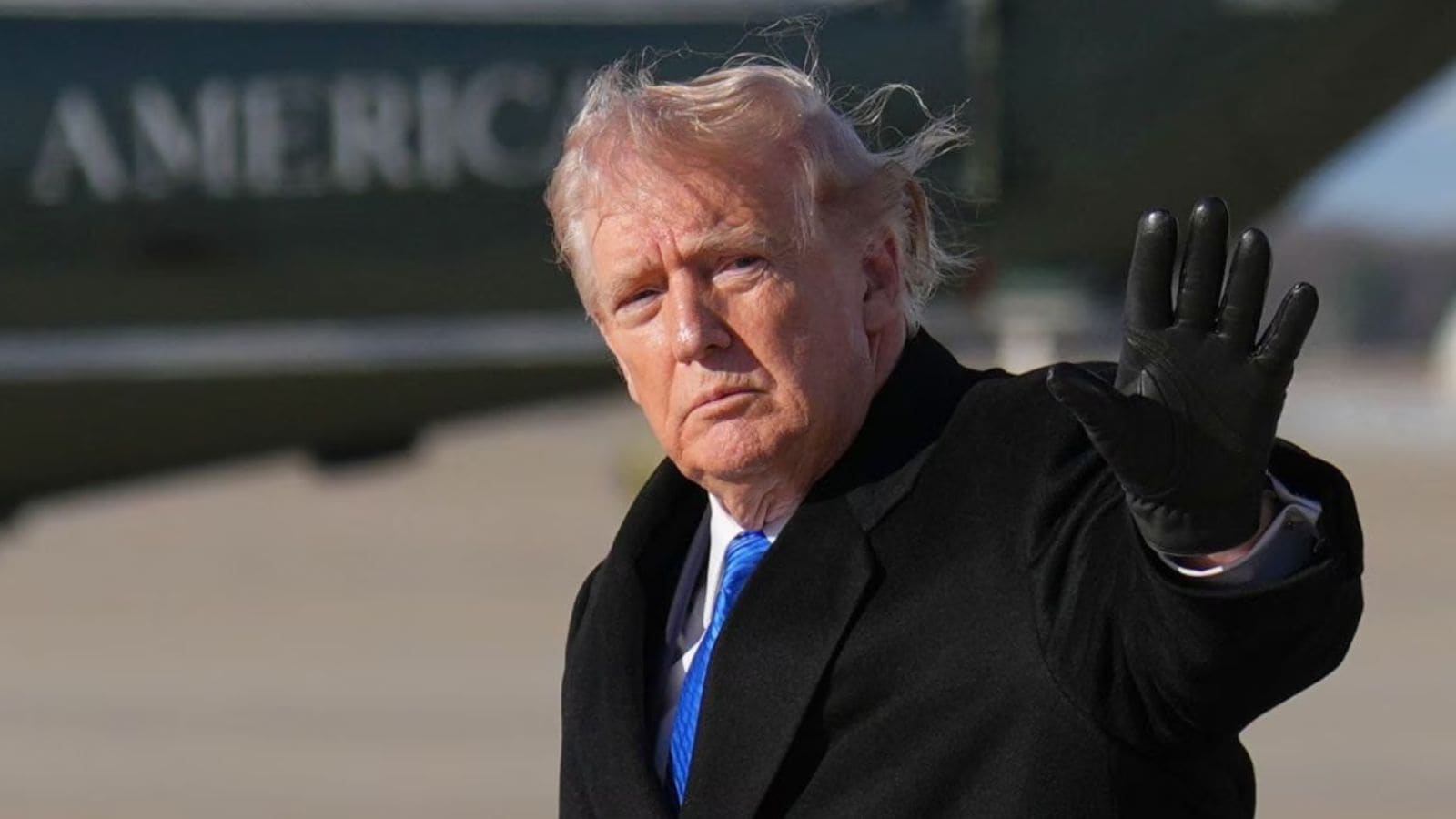
US President Donald Trump on Wednesday claimed that he is “permanently opening” the Strait of Hormuz and asserted that China has welcomed the move. He further stated that Beijing has agreed to refrain from supplying weapons to Iran.
Trump made the remarks in a post on Truth Social, where he said China was “very happy” with the development and suggested improved cooperation between the two countries.
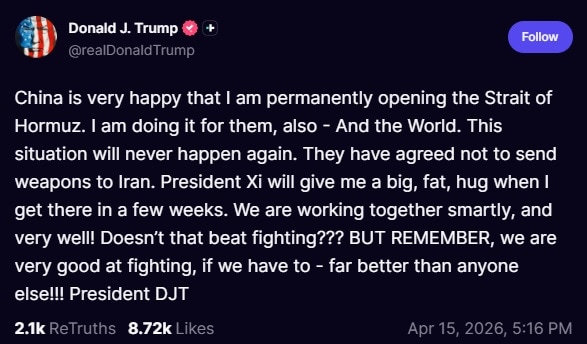
His post on Truth Social read, “China is very happy that I am permanently opening the Strait of Hormuz. I am doing it for them, also – And the World. This situation will never happen again. They have agreed not to send weapons to Iran. President Xi will give me a big, fat, hug when I get there in a few weeks. We are working together smartly, and very well! Doesn’t that beat fighting??? BUT REMEMBER, we are very good at fighting, if we have to – far better than anyone else!!! President DJT”.
The statement came as tensions escalated, with Iran warning of severe consequences if the US naval blockade continues. Ali Abdollahi, a senior Iranian military commander, said Tehran could halt all trade across key waterways, including the Persian Gulf, the Sea of Oman, and the Red Sea.
“Iran will act decisively to safeguard its sovereignty and national interests,” Abdollahi said, describing the blockade as a step that could undermine the ceasefire. His remarks were reported by Associated Press (AP), citing Iranian state media.
According to AP, diplomatic efforts to extend the fragile ceasefire between the United States and Iran are gaining traction ahead of its April 22 deadline. Mediators are working to prevent a breakdown of the truce, with both sides indicating “in principle” support for an extension to allow further negotiations.
The talks, however, remain complicated by the ongoing blockade and unresolved disputes. Key sticking points include Iran’s nuclear programme, security and control of the Strait of Hormuz, and compensation related to wartime damages.
The conflict, now entering its seventh week, has taken a heavy toll. The AP reports that at least 3,000 people have been killed in Iran, over 2,100 in Lebanon, 23 in Israel, and more than a dozen in Gulf Arab nations. Thirteen US service members have also been killed.
Meanwhile, the International Monetary Fund has lowered its global growth outlook, warning that an escalation could push the world economy closer to a recession.
The war in the Middle East is testing the resilience of the global economy again. Our latest World Economic Outlook projects global growth to slow to 3.1% in 2026, and inflation to increase to 4.4%. Read more: https://t.co/xzjO8VQRN2 pic.twitter.com/Fd9KqqLIDJ
— Kristalina Georgieva (@KGeorgieva) April 14, 2026
The situation around the Strait of Hormuz continues to unsettle global energy markets. The vital corridor typically handles around 20 per cent of the world’s oil and liquefied natural gas shipments, making any disruption highly consequential.
Although Europe has not yet experienced supply shortages, it is facing rising energy costs. Aviation authorities have also warned that jet fuel shortages could begin to surface in the coming weeks if the disruption persists.
The US naval blockade has sharply reduced maritime movement in the region. United States Central Command confirmed that no vessels crossed the blockade in its first 24 hours, with several ships turning back.
The move is aimed at curbing Iran’s oil exports, a key source of revenue during the conflict. According to AP, some of this trade has continued through so-called “dark” shipping routes designed to evade sanctions.
Meanwhile, Iran’s Fars News Agency reported that a sanctioned supertanker has crossed the Strait of Hormuz and is heading toward Imam Khomeini Port despite the blockade.
The vessel, identified as a Very Large Crude Carrier (VLCC), can carry up to two million barrels of crude oil. However, it remains unclear whether it was loaded or sailing without cargo. Fars also cited ship-tracking data indicating that another vessel carrying food supplies has entered the Gulf.
Even as diplomatic efforts continue, hostilities on the ground remain active. Israeli forces carried out fresh airstrikes and artillery shelling in southern Lebanon, including near Bint Jbeil, where clashes with Hezbollah have intensified.
The violence has persisted despite rare direct talks between Israeli and Lebanese officials. While Israeli representatives described the discussions as aligned against Hezbollah, Lebanese officials called for an immediate halt to the fighting. According to AP, more than one million people have been displaced in Lebanon since March.
Stay updated with the latest - Click here to follow us on Instagram
US President Donald Trump on Wednesday claimed that he is “permanently opening” the Strait of Hormuz and asserted that China has welcomed the move. He further stated that Beijing has agreed to refrain from supplying weapons to Iran.
Trump made the remarks in a post on Truth Social, where he said China was “very happy” with the development and suggested improved cooperation between the two countries.
His post on Truth Social read, “China is very happy that I am permanently opening the Strait of Hormuz. I am doing it for them, also – And the World. This situation will never happen again. They have agreed not to send weapons to Iran. President Xi will give me a big, fat, hug when I get there in a few weeks. We are working together smartly, and very well! Doesn’t that beat fighting??? BUT REMEMBER, we are very good at fighting, if we have to – far better than anyone else!!! President DJT”.
The statement came as tensions escalated, with Iran warning of severe consequences if the US naval blockade continues. Ali Abdollahi, a senior Iranian military commander, said Tehran could halt all trade across key waterways, including the Persian Gulf, the Sea of Oman, and the Red Sea.
“Iran will act decisively to safeguard its sovereignty and national interests,” Abdollahi said, describing the blockade as a step that could undermine the ceasefire. His remarks were reported by Associated Press (AP), citing Iranian state media.
According to AP, diplomatic efforts to extend the fragile ceasefire between the United States and Iran are gaining traction ahead of its April 22 deadline. Mediators are working to prevent a breakdown of the truce, with both sides indicating “in principle” support for an extension to allow further negotiations.
The talks, however, remain complicated by the ongoing blockade and unresolved disputes. Key sticking points include Iran’s nuclear programme, security and control of the Strait of Hormuz, and compensation related to wartime damages.
The conflict, now entering its seventh week, has taken a heavy toll. The AP reports that at least 3,000 people have been killed in Iran, over 2,100 in Lebanon, 23 in Israel, and more than a dozen in Gulf Arab nations. Thirteen US service members have also been killed.
Meanwhile, the International Monetary Fund has lowered its global growth outlook, warning that an escalation could push the world economy closer to a recession.
The war in the Middle East is testing the resilience of the global economy again. Our latest World Economic Outlook projects global growth to slow to 3.1% in 2026, and inflation to increase to 4.4%. Read more: https://t.co/xzjO8VQRN2 pic.twitter.com/Fd9KqqLIDJ
— Kristalina Georgieva (@KGeorgieva) April 14, 2026
The situation around the Strait of Hormuz continues to unsettle global energy markets. The vital corridor typically handles around 20 per cent of the world’s oil and liquefied natural gas shipments, making any disruption highly consequential.
Although Europe has not yet experienced supply shortages, it is facing rising energy costs. Aviation authorities have also warned that jet fuel shortages could begin to surface in the coming weeks if the disruption persists.
The US naval blockade has sharply reduced maritime movement in the region. United States Central Command confirmed that no vessels crossed the blockade in its first 24 hours, with several ships turning back.
The move is aimed at curbing Iran’s oil exports, a key source of revenue during the conflict. According to AP, some of this trade has continued through so-called “dark” shipping routes designed to evade sanctions.
Meanwhile, Iran’s Fars News Agency reported that a sanctioned supertanker has crossed the Strait of Hormuz and is heading toward Imam Khomeini Port despite the blockade.
The vessel, identified as a Very Large Crude Carrier (VLCC), can carry up to two million barrels of crude oil. However, it remains unclear whether it was loaded or sailing without cargo. Fars also cited ship-tracking data indicating that another vessel carrying food supplies has entered the Gulf.
Even as diplomatic efforts continue, hostilities on the ground remain active. Israeli forces carried out fresh airstrikes and artillery shelling in southern Lebanon, including near Bint Jbeil, where clashes with Hezbollah have intensified.
The violence has persisted despite rare direct talks between Israeli and Lebanese officials. While Israeli representatives described the discussions as aligned against Hezbollah, Lebanese officials called for an immediate halt to the fighting. According to AP, more than one million people have been displaced in Lebanon since March.