

US sinks Iran warship, returning from India, near Lanka; 87 killed
We estimate that the frigate had approximately 180 sailors aboard at the time of the incident: Top government official in Colombo
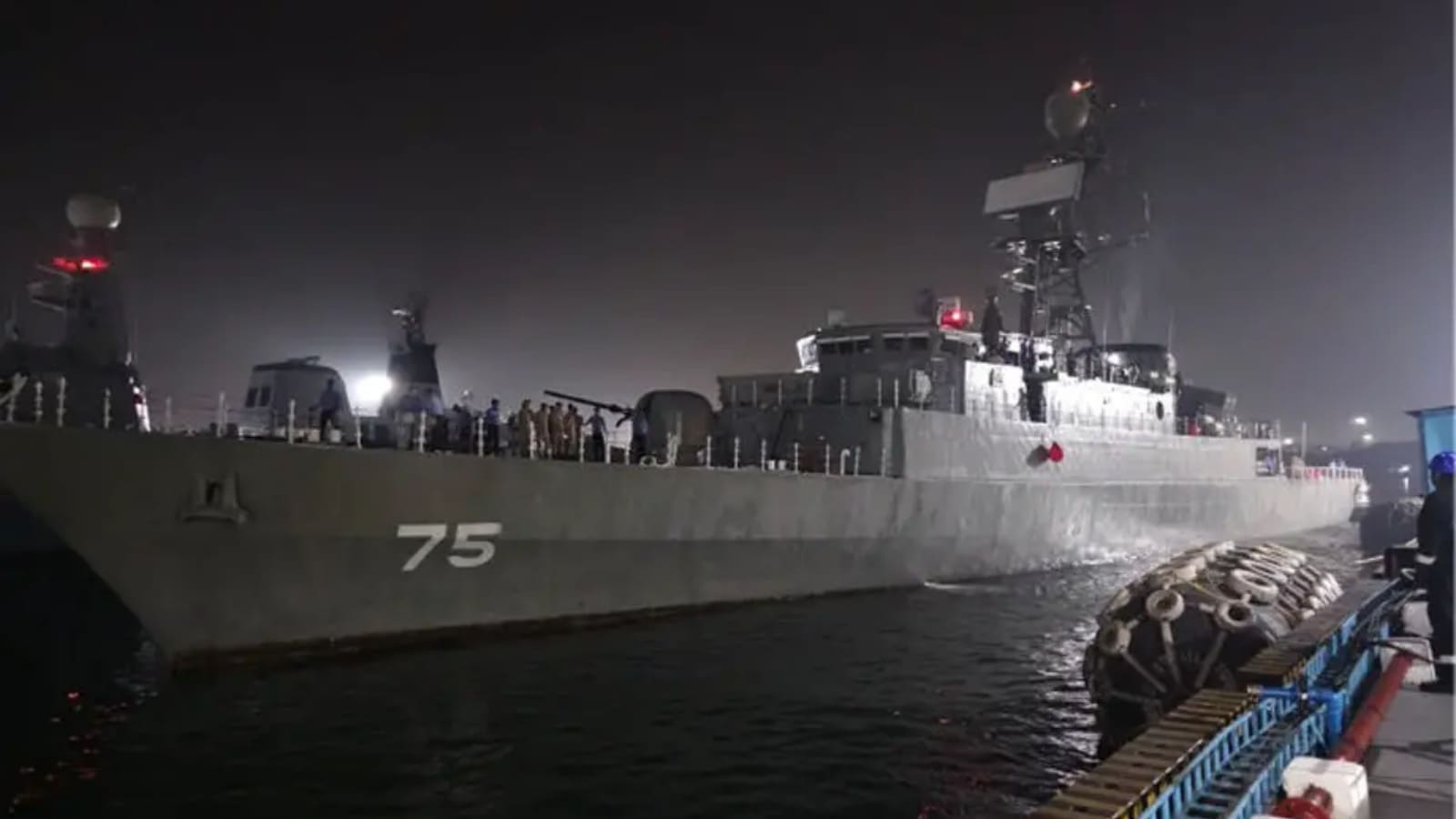
An Iranian warship, which was returning from Visakhapatnam following an exercise organised by the Indian Navy last month, was torpedoed by a United States submarine off the southern coast of Sri Lanka in the early hours of Wednesday. In a Pentagon briefing, US Defence Secretary Pete Hegseth said the strike on the warship was the first such attack on an enemy since World War II.
“An American submarine sunk an Iranian warship that thought it was safe in international waters,” Hegseth said. “Instead, it was sunk by a torpedo. Quiet death.”
Hospital authorities in the Sri Lankan port city of Galle said 87 bodies were brought in by military rescuers who responded to an early morning distress call. Another 32 were rescued and were being treated at the hospital, and about 60 people were likely unaccounted for from an estimated 180 people on board, Sri Lankan authorities said.
Sri Lankan Foreign Minister Vijitha Herath identified the Iranian vessel as the IRIS Dena.
The sinking occurred amid a rapidly escalating conflict involving the United States, Israel and Iran. Military strikes launched by the United States and Israel on February 28 killed Iran’s Supreme Leader, Ayatollah Ali Khamenei, along with several senior officials of the country’s regime.
The IRIS Dena, a Moudge-class frigate belonging to the Iranian Navy’s Southern Fleet, issued a distress call around 5.30 am local time while operating roughly 40 nautical miles off the coastal city of Galle, Sri Lankan defence officials told The Indian Express. Rescue operations by Sri Lanka’s navy and air force were underway throughout the morning.
The warship had participated in the International Fleet Review (IFR) and multilateral exercise, MILAN-2026, organised by the Indian Navy last month.
The US Navy destroyer USS Pinckney, which was also scheduled to take part in the IFR and MILAN, did not participate due to emergent requirements. A US P-8 aircraft had participated in the exercises.
Indian Defence sources said the incident falls within Sri Lanka’s assigned area of operation. “Any other Navy can only get involved if they seek assistance for the operation,” a source said.
Many of the 32 sailors rescued from the frigate were in a critical condition because of severe injuries and prolonged time in the water, according to two senior Sri Lankan government officials who spoke on condition of anonymity.
The wounded were transported to Karapitiya Teaching Hospital in Galle, the region’s largest medical facility, where emergency wards were placed on alert to receive casualties.
Foreign Minister Herath confirmed in parliament that Sri Lanka had launched a rescue mission and said the ship sank just outside Sri Lanka’s territorial waters but within the country’s designated search-and-rescue zone.
“We responded to the distress call under our international obligations,” Sri Lankan navy spokesman Commander Buddhika Sampath told the media. Two naval ships and a surveillance aircraft were dispatched to assist with the rescue.
A Sri Lankan official added, “The US Navy Ohio-class submarines routinely patrol the Indian Ocean from the American military base on Diego Garcia (a strategic island facility used for operations across the Middle East and Asia). We are examining sightings and maritime tracking data.”
Sri Lanka has maintained a policy of neutrality in international conflicts, but occupies a strategically significant location along major shipping routes in the Indian Ocean.
The waters south of Sri Lanka lie near some of the world’s busiest maritime corridors linking Asia, the Middle East and Europe. Naval vessels from multiple countries, including the United States, China and India, regularly transit or patrol the region.
Iranian naval deployments in the region have been relatively rare. The IRIS Dena had been participating in diplomatic naval activities in the weeks leading up to the incident. In February, the frigate attended the IFR in the Indian port city of Visakhapatnam, where it docked alongside ships from multiple countries. The Indian Navy had extended a warm welcome to the frigate as it arrived in Visakhapatnam in the third week of February.
This was highlighted by Congress’s Pawan Khera, who posted on X, “Today, an Iranian naval vessel – returning from the Milan 2026 International Fleet Review, where it had been invited by India – was sunk by a US submarine at the edge of Indian waters near Sri Lanka. Does India have no influence left in its own neighbourhood? Or has that space also been quietly ceded to Washington and Tel Aviv?”
The frigate, named after Mount Dena in southwestern Iran, was a domestically built warship designed for patrol and combat missions in regional waters. It carried a range of anti-ship missiles, naval guns and torpedo launchers, and also included a helicopter landing pad and radar systems capable of tracking multiple targets.
A military analyst based in Chennai said the vessel would have been heavily armed, carrying Qader anti-ship missiles, a 76-millimetre naval gun and torpedo systems, among other weapons.
A Pentagon video purporting to have captured the attack showed the warship being hit by a huge explosion, which blew apart the rear of the vessel, lifting it from the water, and caused it to begin sinking from the stern. General Dan Caine, the Chairman of the Joint Chiefs of Staff of the US, said that for the first time since 1945, a US Navy fast-attack submarine has sunk an enemy combatant ship using a single Mk 48 torpedo to achieve immediate effect, sending the warship to the bottom of the sea.
– With AP and Reuters
Stay updated with the latest - Click here to follow us on Instagram
An Iranian warship, which was returning from Visakhapatnam following an exercise organised by the Indian Navy last month, was torpedoed by a United States submarine off the southern coast of Sri Lanka in the early hours of Wednesday. In a Pentagon briefing, US Defence Secretary Pete Hegseth said the strike on the warship was the first such attack on an enemy since World War II.
“An American submarine sunk an Iranian warship that thought it was safe in international waters,” Hegseth said. “Instead, it was sunk by a torpedo. Quiet death.”
Hospital authorities in the Sri Lankan port city of Galle said 87 bodies were brought in by military rescuers who responded to an early morning distress call. Another 32 were rescued and were being treated at the hospital, and about 60 people were likely unaccounted for from an estimated 180 people on board, Sri Lankan authorities said.
Sri Lankan Foreign Minister Vijitha Herath identified the Iranian vessel as the IRIS Dena.
The sinking occurred amid a rapidly escalating conflict involving the United States, Israel and Iran. Military strikes launched by the United States and Israel on February 28 killed Iran’s Supreme Leader, Ayatollah Ali Khamenei, along with several senior officials of the country’s regime.
The IRIS Dena, a Moudge-class frigate belonging to the Iranian Navy’s Southern Fleet, issued a distress call around 5.30 am local time while operating roughly 40 nautical miles off the coastal city of Galle, Sri Lankan defence officials told The Indian Express. Rescue operations by Sri Lanka’s navy and air force were underway throughout the morning.
The warship had participated in the International Fleet Review (IFR) and multilateral exercise, MILAN-2026, organised by the Indian Navy last month.
The US Navy destroyer USS Pinckney, which was also scheduled to take part in the IFR and MILAN, did not participate due to emergent requirements. A US P-8 aircraft had participated in the exercises.
Indian Defence sources said the incident falls within Sri Lanka’s assigned area of operation. “Any other Navy can only get involved if they seek assistance for the operation,” a source said.
Many of the 32 sailors rescued from the frigate were in a critical condition because of severe injuries and prolonged time in the water, according to two senior Sri Lankan government officials who spoke on condition of anonymity.
The wounded were transported to Karapitiya Teaching Hospital in Galle, the region’s largest medical facility, where emergency wards were placed on alert to receive casualties.
Foreign Minister Herath confirmed in parliament that Sri Lanka had launched a rescue mission and said the ship sank just outside Sri Lanka’s territorial waters but within the country’s designated search-and-rescue zone.
“We responded to the distress call under our international obligations,” Sri Lankan navy spokesman Commander Buddhika Sampath told the media. Two naval ships and a surveillance aircraft were dispatched to assist with the rescue.
A Sri Lankan official added, “The US Navy Ohio-class submarines routinely patrol the Indian Ocean from the American military base on Diego Garcia (a strategic island facility used for operations across the Middle East and Asia). We are examining sightings and maritime tracking data.”
Sri Lanka has maintained a policy of neutrality in international conflicts, but occupies a strategically significant location along major shipping routes in the Indian Ocean.
The waters south of Sri Lanka lie near some of the world’s busiest maritime corridors linking Asia, the Middle East and Europe. Naval vessels from multiple countries, including the United States, China and India, regularly transit or patrol the region.
Iranian naval deployments in the region have been relatively rare. The IRIS Dena had been participating in diplomatic naval activities in the weeks leading up to the incident. In February, the frigate attended the IFR in the Indian port city of Visakhapatnam, where it docked alongside ships from multiple countries. The Indian Navy had extended a warm welcome to the frigate as it arrived in Visakhapatnam in the third week of February.
This was highlighted by Congress’s Pawan Khera, who posted on X, “Today, an Iranian naval vessel – returning from the Milan 2026 International Fleet Review, where it had been invited by India – was sunk by a US submarine at the edge of Indian waters near Sri Lanka. Does India have no influence left in its own neighbourhood? Or has that space also been quietly ceded to Washington and Tel Aviv?”
The frigate, named after Mount Dena in southwestern Iran, was a domestically built warship designed for patrol and combat missions in regional waters. It carried a range of anti-ship missiles, naval guns and torpedo launchers, and also included a helicopter landing pad and radar systems capable of tracking multiple targets.
A military analyst based in Chennai said the vessel would have been heavily armed, carrying Qader anti-ship missiles, a 76-millimetre naval gun and torpedo systems, among other weapons.
A Pentagon video purporting to have captured the attack showed the warship being hit by a huge explosion, which blew apart the rear of the vessel, lifting it from the water, and caused it to begin sinking from the stern. General Dan Caine, the Chairman of the Joint Chiefs of Staff of the US, said that for the first time since 1945, a US Navy fast-attack submarine has sunk an enemy combatant ship using a single Mk 48 torpedo to achieve immediate effect, sending the warship to the bottom of the sea.
– With AP and Reuters