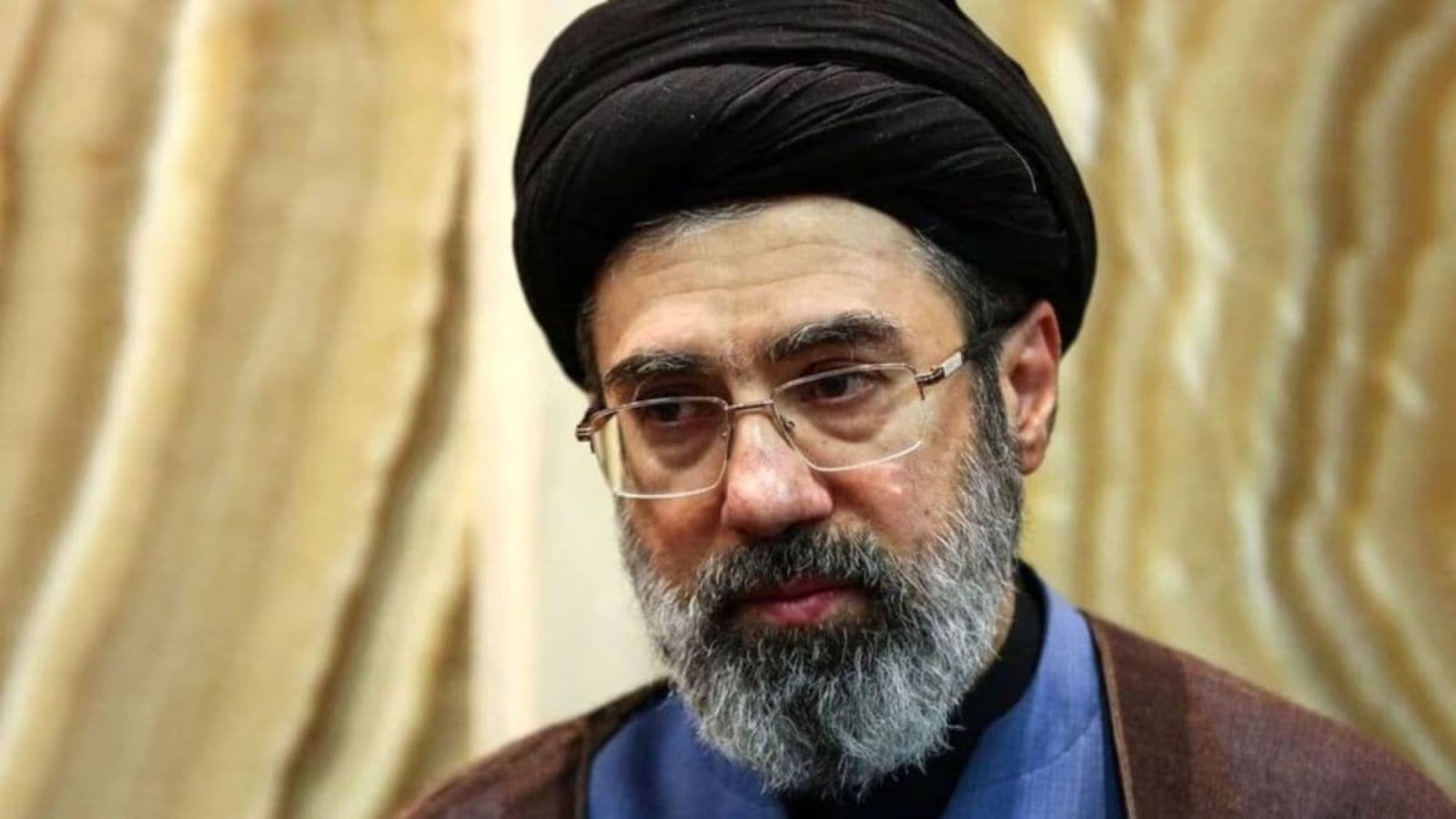


Mojtaba Khamenei undergoing extensive surgeries to face and limbs, may require prosthetics: Report
With Mojtaba Khamenei sidelined by severe injuries, power has shifted to the military. A new report points to a secret relay system and surgeries keeping Iran's leader hidden.
While Iran is still holding up against the US in the Iran war. However, the power balance have shifted from the Ayotollah to the military. According to a New York Times report, this happened due to the new Supreme Leader, Mojtaba Khamenei, undergoing extensive surgeries, rendering him unable to look over the administration of Iran.
Mojtaba, who took over the reins of Iran after the death of his father Ali Khamenei, is now grappling with serious injuries and multiple surgeries.
Mojtaba, appointed in March, has remained out of public view, with no audio or video appearances so far. In his absence, a group of seasoned commanders from the Islamic Revolutionary Guard Corps has emerged as the dominant force shaping Iran’s security, military strategy and foreign policy.
A close observer of Iran’s political circles described Khamenei’s role as more supervisory than decisive, likening it to a boardroom structure where key calls are made collectively. Senior figures aligned with the Guard now function as the core decision-making bloc, particularly on issues of war and diplomacy.
Khamenei has been in hiding since a February 28 airstrike by US and Israeli forces on his father’s compound, where he also resided. The attack killed several members of his immediate family and left him seriously wounded.
Since then, access to him has been tightly restricted. He is under constant medical care, surrounded primarily by doctors and healthcare staff. According to officials familiar with his condition, he has undergone multiple surgeries, including three operations on one leg, which is expected to require a prosthetic. He has also had surgery on one hand and is gradually regaining its use.
Severe burns to his face and lips have made speaking difficult, and further procedures, including plastic surgery, are expected, the NYT report stated. Despite these injuries, officials say he remains mentally alert and continues to engage in governance-albeit remotely.
Even senior officials, including President Masoud Pezeshkian, a trained heart surgeon, and the health minister have been involved in his treatment. However, high-ranking military commanders avoid visiting him in person due to fears that such movements could expose his location to Israeli intelligence.
With communication channels constrained, messages to Khamenei are passed through a network of couriers, moving across roads and highways until they reach his undisclosed location. His responses follow the same route back, reported NYT.
These logistical challenges, combined with his medical condition, have effectively led to a temporary transfer of operational authority to the military leadership. While political factions-including reformists and hard-liners-remain engaged in discussions, the Guard’s influence has grown significantly.
Analysts note that Khamenei’s longstanding ties with the Guard, forged during his time as a volunteer in the Iran-Iraq war, have further strengthened their position in the current structure.
Stay updated with the latest - Click here to follow us on Instagram
While Iran is still holding up against the US in the Iran war. However, the power balance have shifted from the Ayotollah to the military. According to a New York Times report, this happened due to the new Supreme Leader, Mojtaba Khamenei, undergoing extensive surgeries, rendering him unable to look over the administration of Iran.
Mojtaba, who took over the reins of Iran after the death of his father Ali Khamenei, is now grappling with serious injuries and multiple surgeries.
Mojtaba, appointed in March, has remained out of public view, with no audio or video appearances so far. In his absence, a group of seasoned commanders from the Islamic Revolutionary Guard Corps has emerged as the dominant force shaping Iran’s security, military strategy and foreign policy.
A close observer of Iran’s political circles described Khamenei’s role as more supervisory than decisive, likening it to a boardroom structure where key calls are made collectively. Senior figures aligned with the Guard now function as the core decision-making bloc, particularly on issues of war and diplomacy.
Khamenei has been in hiding since a February 28 airstrike by US and Israeli forces on his father’s compound, where he also resided. The attack killed several members of his immediate family and left him seriously wounded.
Since then, access to him has been tightly restricted. He is under constant medical care, surrounded primarily by doctors and healthcare staff. According to officials familiar with his condition, he has undergone multiple surgeries, including three operations on one leg, which is expected to require a prosthetic. He has also had surgery on one hand and is gradually regaining its use.
Severe burns to his face and lips have made speaking difficult, and further procedures, including plastic surgery, are expected, the NYT report stated. Despite these injuries, officials say he remains mentally alert and continues to engage in governance-albeit remotely.
Even senior officials, including President Masoud Pezeshkian, a trained heart surgeon, and the health minister have been involved in his treatment. However, high-ranking military commanders avoid visiting him in person due to fears that such movements could expose his location to Israeli intelligence.
With communication channels constrained, messages to Khamenei are passed through a network of couriers, moving across roads and highways until they reach his undisclosed location. His responses follow the same route back, reported NYT.
These logistical challenges, combined with his medical condition, have effectively led to a temporary transfer of operational authority to the military leadership. While political factions-including reformists and hard-liners-remain engaged in discussions, the Guard’s influence has grown significantly.
Analysts note that Khamenei’s longstanding ties with the Guard, forged during his time as a volunteer in the Iran-Iraq war, have further strengthened their position in the current structure.