

How US-Israel-Iran conflict impacted aviation: Emirates, Qatar Airways, Etihad suspend flights, prices surge
Iran-Israel war flights impact: Middle East airspace closures disrupt flights after US–Israel strikes on Iran, triggering cancellations, evacuations and rising fares across global routes.
Middle east flight cancellations: The escalating war involving the United States and Israel in Iran has severely disrupted flight operations across the Middle East, stranding tens of thousands of travellers and triggering widespread airspace closures, cancellations and emergency repatriation efforts.
With retaliatory strikes expanding into Gulf states, aviation experts warn that uncertainty remains high and disruptions could continue in the coming days and weeks — with ripple effects stretching well beyond the region.
Since the joint US–Israel strikes over the weekend, retaliatory attacks and rapid developments on the ground have created volatile conditions across the region. Iran has stated that hundreds of people have been killed.
Airspace closures across multiple Middle Eastern countries have forced airlines to either cancel services or reroute aircraft along significantly longer paths. Because Gulf airports function as major international transit hubs linking Europe, Africa and Asia, these operational changes are having global consequences.
According to an Associated Press report, long-haul carriers including Etihad Airways, Emirates, and Qatar Airways, have temporarily suspended certain routes, citing airspace closures and safety requirements.
Reports from Cirium and Flightradar24, which track global flight movements, have been citing figures of roughly 1,500 to 2,000 cancellations per day across the region since the escalation began on February 28.
CATCH THE LATEST UPDATES ON THE MIDDLE-EAST CRISIS
The US Department of State has urged all US citizens to immediately leave Iran and Israel, as well as Qatar, Bahrain, Egypt, Iraq, Jordan, Kuwait, Lebanon, Oman, the Palestinian territories, Saudi Arabia, Syria, the United Arab Emirates and Yemen using any available commercial transportation, the AP reported.
US Secretary of State Marco Rubio appealed to media outlets to help publicise evacuation options for Americans.
Meanwhile, China, Italy, France and Germany have initiated evacuation efforts for their citizens. Travellers are being advised to closely monitor updates from embassies, government advisories, airports and airlines.
Given the scale of cancellations and the number of stranded passengers, experts recommend reconsidering or postponing non-essential travel where possible.
Many airlines are offering refunds or free rebooking options, though these are typically limited to specific dates and routes. Travellers are being advised to review carrier policies carefully and consider purchasing refundable tickets for future trips to maintain flexibility.
Suzanne Morrow, CEO of InsureMyTrip, noted that acts of war and civil unrest are typically excluded from coverage because of their unpredictability, the AP reported. If an airline offers rebooking or refunds, additional claims may not be available, the report further mentioned.
The AP also quoted Christina Tunnah of World Nomads Travel Insurance, who stated that most policies exclude losses resulting from acts of war. Some compensation may be possible under “cancel for any reason” plans, but only if cancellation occurs within specific time frames.
Beyond outright cancellations, airlines are now navigating longer alternative routes to avoid conflict zones and restricted airspace.
Industry norms require airlines to pay overflight fees when traversing other nations’ airspace, further raising costs. These extended flight paths increase fuel consumption and operational expenses.
Crude oil prices are closely tied to jet fuel costs, which accounted for approximately 30 per cent of airline operating expenses as of 2024, according to research from the International Air Transport Association, the AP reported.
Passengers have already reported steep ticket price increases. Experts indicate that immediate spikes largely reflect supply-and-demand imbalances after thousands of flights were cancelled. Many routes within the coming week are sold out or show extremely high fares for remaining seats.
While prices for flights booked further in advance appear relatively lower at present, analysts warn that prolonged conflict could quickly alter those conditions.
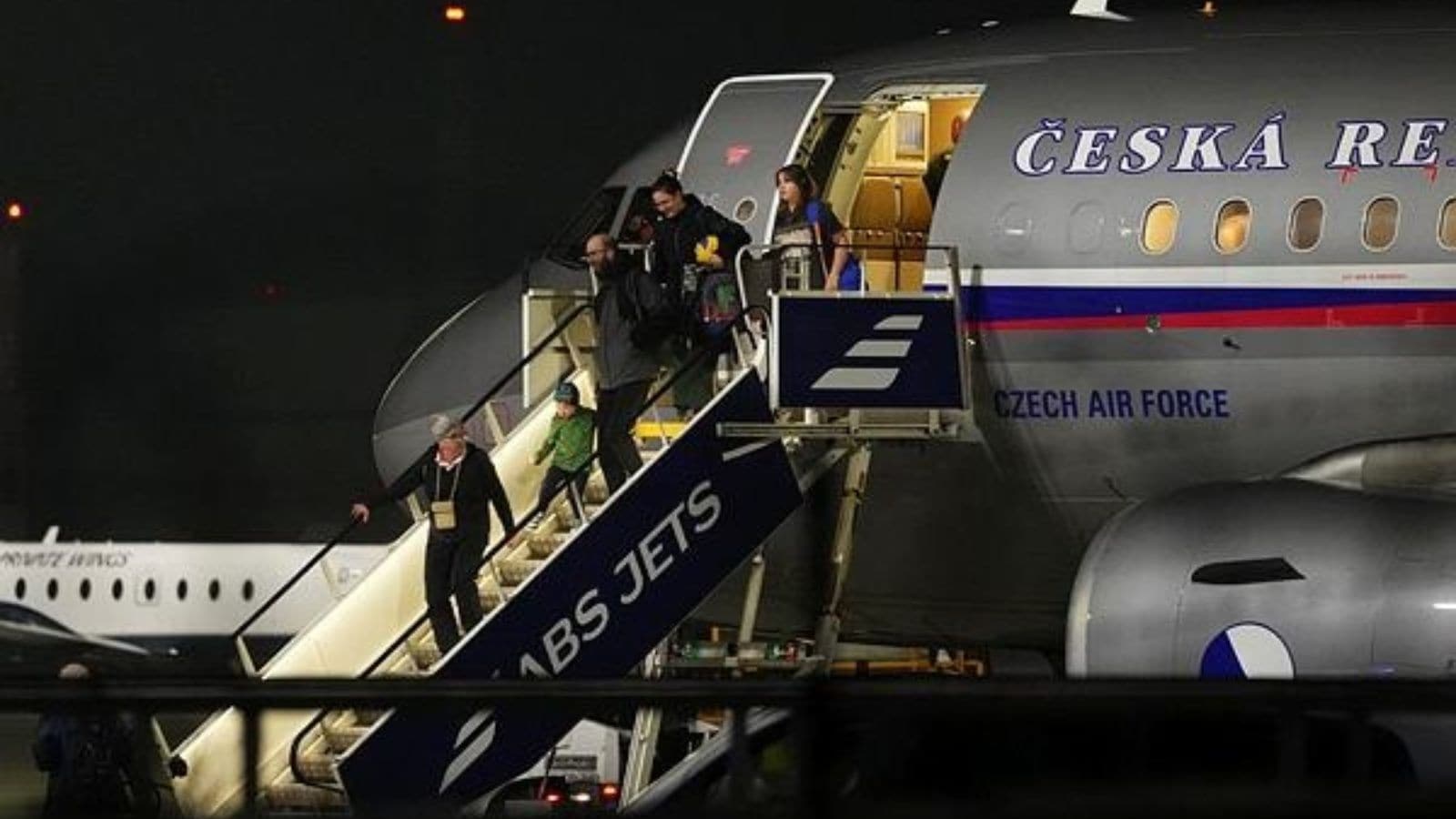
Repatriation efforts are accelerating amid mounting pressure to assist stranded travellers.
France’s foreign minister announced that several repatriation flights from the Middle East are expected on Wednesday.
Indian carrier SpiceJet confirmed it will operate eight special flights from Fujairah in the United Arab Emirates on Wednesday to bring stranded passengers home. The airline said it will run four services to Delhi, three to Mumbai and one to Kochi.
On Tuesday, SpiceJet had already operated four special flights from Fujairah to Delhi, Mumbai and Kochi.
Stay updated with the latest - Click here to follow us on Instagram
Middle east flight cancellations: The escalating war involving the United States and Israel in Iran has severely disrupted flight operations across the Middle East, stranding tens of thousands of travellers and triggering widespread airspace closures, cancellations and emergency repatriation efforts.
With retaliatory strikes expanding into Gulf states, aviation experts warn that uncertainty remains high and disruptions could continue in the coming days and weeks — with ripple effects stretching well beyond the region.
Since the joint US–Israel strikes over the weekend, retaliatory attacks and rapid developments on the ground have created volatile conditions across the region. Iran has stated that hundreds of people have been killed.
Airspace closures across multiple Middle Eastern countries have forced airlines to either cancel services or reroute aircraft along significantly longer paths. Because Gulf airports function as major international transit hubs linking Europe, Africa and Asia, these operational changes are having global consequences.
According to an Associated Press report, long-haul carriers including Etihad Airways, Emirates, and Qatar Airways, have temporarily suspended certain routes, citing airspace closures and safety requirements.
Reports from Cirium and Flightradar24, which track global flight movements, have been citing figures of roughly 1,500 to 2,000 cancellations per day across the region since the escalation began on February 28.
CATCH THE LATEST UPDATES ON THE MIDDLE-EAST CRISIS
The US Department of State has urged all US citizens to immediately leave Iran and Israel, as well as Qatar, Bahrain, Egypt, Iraq, Jordan, Kuwait, Lebanon, Oman, the Palestinian territories, Saudi Arabia, Syria, the United Arab Emirates and Yemen using any available commercial transportation, the AP reported.
US Secretary of State Marco Rubio appealed to media outlets to help publicise evacuation options for Americans.
Meanwhile, China, Italy, France and Germany have initiated evacuation efforts for their citizens. Travellers are being advised to closely monitor updates from embassies, government advisories, airports and airlines.
Given the scale of cancellations and the number of stranded passengers, experts recommend reconsidering or postponing non-essential travel where possible.
Many airlines are offering refunds or free rebooking options, though these are typically limited to specific dates and routes. Travellers are being advised to review carrier policies carefully and consider purchasing refundable tickets for future trips to maintain flexibility.
Suzanne Morrow, CEO of InsureMyTrip, noted that acts of war and civil unrest are typically excluded from coverage because of their unpredictability, the AP reported. If an airline offers rebooking or refunds, additional claims may not be available, the report further mentioned.
The AP also quoted Christina Tunnah of World Nomads Travel Insurance, who stated that most policies exclude losses resulting from acts of war. Some compensation may be possible under “cancel for any reason” plans, but only if cancellation occurs within specific time frames.
Beyond outright cancellations, airlines are now navigating longer alternative routes to avoid conflict zones and restricted airspace.
Industry norms require airlines to pay overflight fees when traversing other nations’ airspace, further raising costs. These extended flight paths increase fuel consumption and operational expenses.
Crude oil prices are closely tied to jet fuel costs, which accounted for approximately 30 per cent of airline operating expenses as of 2024, according to research from the International Air Transport Association, the AP reported.
Passengers have already reported steep ticket price increases. Experts indicate that immediate spikes largely reflect supply-and-demand imbalances after thousands of flights were cancelled. Many routes within the coming week are sold out or show extremely high fares for remaining seats.
While prices for flights booked further in advance appear relatively lower at present, analysts warn that prolonged conflict could quickly alter those conditions.
Repatriation efforts are accelerating amid mounting pressure to assist stranded travellers.
France’s foreign minister announced that several repatriation flights from the Middle East are expected on Wednesday.
Indian carrier SpiceJet confirmed it will operate eight special flights from Fujairah in the United Arab Emirates on Wednesday to bring stranded passengers home. The airline said it will run four services to Delhi, three to Mumbai and one to Kochi.
On Tuesday, SpiceJet had already operated four special flights from Fujairah to Delhi, Mumbai and Kochi.