

Silent coup? IRGC sidelines Pezeshkian for ‘de facto’ control of Iran: Report
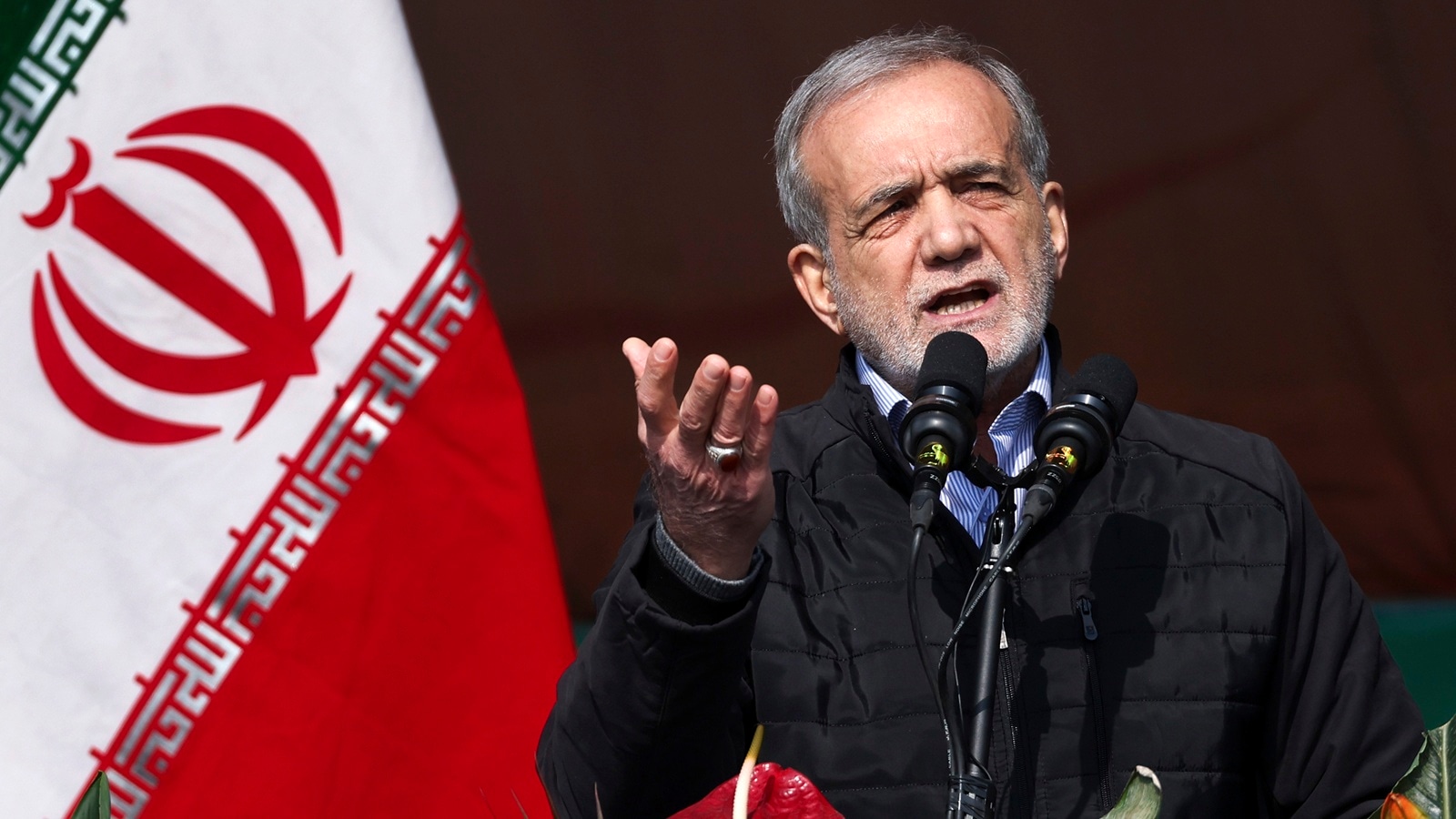
Iran is facing a "complete political stalemate" as the IRGC has reportedly seized de facto control over governance from President Pezeshkian.
Iran’s Islamic Revolutionary Guard Corps (IRGC) has taken de facto control over key areas of governance in the country, sources told Iran International, a Persian language news channel and digital platform based in London.
The report also claimed that there was mounting friction between President Masoud Pezeshkian’s administration and Iran’s military establishment, which had reportedly led to a “complete political stalemate”.
Officials familiar with the situation told Iran International the IRGC has effectively obstructed several presidential decisions, including key appointments and has tightened its grip around the central power structure. This has limited the government’s ability to function in its executive role. Alleged discontent in the inner circle of Ayotollah Mojtaba Khamenei has also contributed to the governance crisis.
A recent attempt by Pezeshkian to appoint a new intelligence minister reportedly failed after direct intervention from IRGC commander Ahmad Vahidi, the report said.
Traditionally, Iran’s president nominates candidates for the post of Intelligence Minister only after receiving approval from the Supreme Leader, who holds ultimate authority over critical security matters. However, uncertainty surrounding the condition and location of Supreme Leader Mojtaba Khamenei in recent weeks appears to have further complicated the process. This has allowed the IRGC to consolidate control over the security apparatus.
Sources indicate that Vahidi argued that sensitive leadership roles should remain under IRGC oversight for the time being, given the wartime environment.
Iran International sources also point to a tightening security ring around Mojtaba Khamenei among the reasons for the tightening grip of the IRGC. The report stated that a council of senior IRGC officials now dominates core decision-making.
Attempts by Pezeshkian to secure a direct meeting with him have gone unanswered, with communication channels effectively cut off. There is also growing speculation that concerns about Mojtaba Khamenei’s health may be influencing the current power dynamics.
Tensions are also said to be escalating within Khamenei’s inner circle, the report stated. Some insiders are reportedly seeking to remove Ali Asghar Hejazi, a senior security official in the Supreme Leader’s office. The dispute stems from Hejazi’s opposition to Mojtaba Khamenei’s possible succession.
He is believed to have previously warned members of the Assembly of Experts that Mojtaba lacks the necessary credentials and argued against any move toward hereditary leadership.
Stay updated with the latest - Click here to follow us on Instagram
Iran’s Islamic Revolutionary Guard Corps (IRGC) has taken de facto control over key areas of governance in the country, sources told Iran International, a Persian language news channel and digital platform based in London.
The report also claimed that there was mounting friction between President Masoud Pezeshkian’s administration and Iran’s military establishment, which had reportedly led to a “complete political stalemate”.
Officials familiar with the situation told Iran International the IRGC has effectively obstructed several presidential decisions, including key appointments and has tightened its grip around the central power structure. This has limited the government’s ability to function in its executive role. Alleged discontent in the inner circle of Ayotollah Mojtaba Khamenei has also contributed to the governance crisis.
A recent attempt by Pezeshkian to appoint a new intelligence minister reportedly failed after direct intervention from IRGC commander Ahmad Vahidi, the report said.
Traditionally, Iran’s president nominates candidates for the post of Intelligence Minister only after receiving approval from the Supreme Leader, who holds ultimate authority over critical security matters. However, uncertainty surrounding the condition and location of Supreme Leader Mojtaba Khamenei in recent weeks appears to have further complicated the process. This has allowed the IRGC to consolidate control over the security apparatus.
Sources indicate that Vahidi argued that sensitive leadership roles should remain under IRGC oversight for the time being, given the wartime environment.
Iran International sources also point to a tightening security ring around Mojtaba Khamenei among the reasons for the tightening grip of the IRGC. The report stated that a council of senior IRGC officials now dominates core decision-making.
Attempts by Pezeshkian to secure a direct meeting with him have gone unanswered, with communication channels effectively cut off. There is also growing speculation that concerns about Mojtaba Khamenei’s health may be influencing the current power dynamics.
Tensions are also said to be escalating within Khamenei’s inner circle, the report stated. Some insiders are reportedly seeking to remove Ali Asghar Hejazi, a senior security official in the Supreme Leader’s office. The dispute stems from Hejazi’s opposition to Mojtaba Khamenei’s possible succession.
He is believed to have previously warned members of the Assembly of Experts that Mojtaba lacks the necessary credentials and argued against any move toward hereditary leadership.