

After Strait of Hormuz, it’s Bab el-Mandab now. What happens if the ‘Gate of Tears’ is blocked?
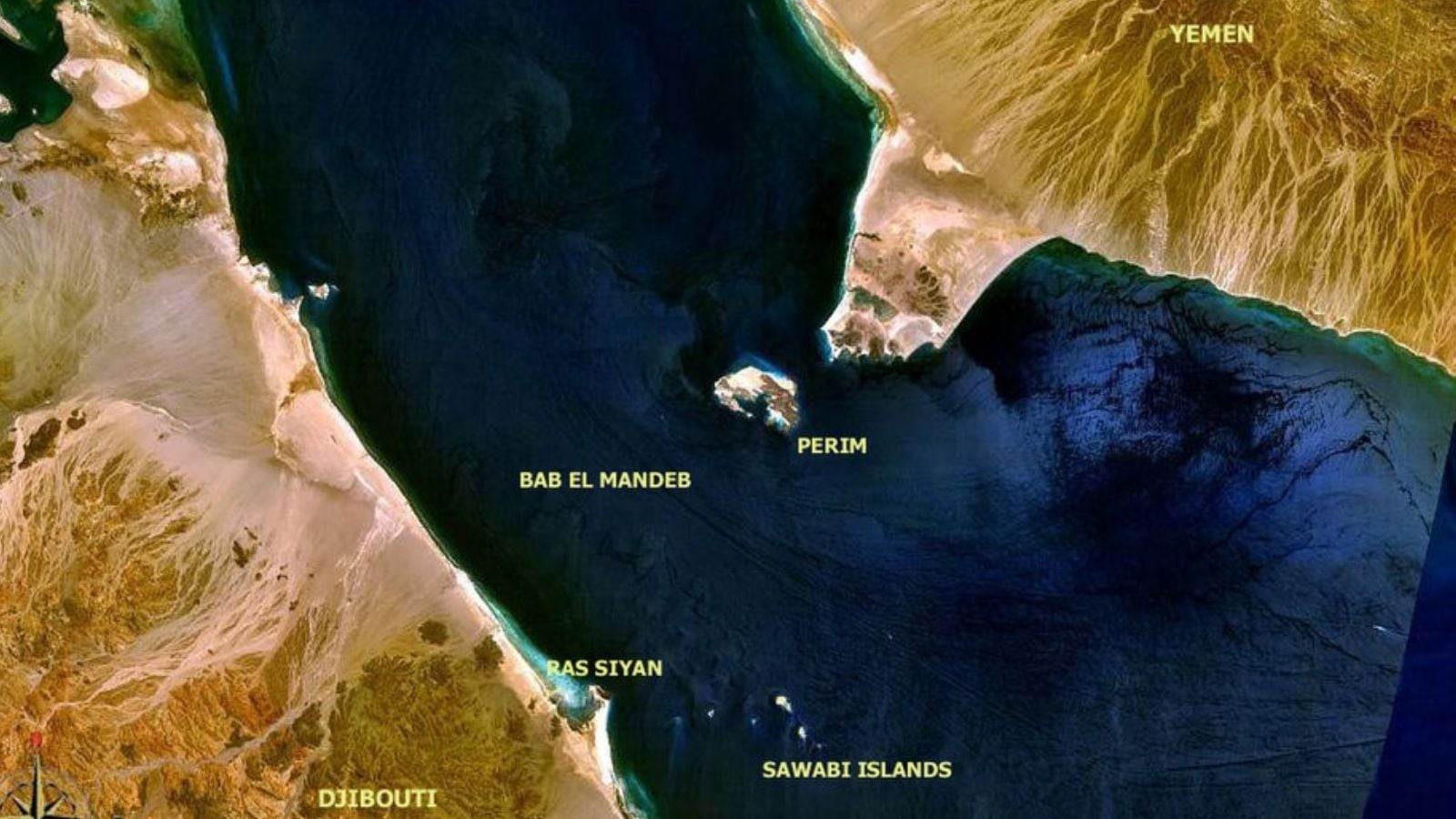
The Bab el-Mandab, also known as the “Gate of Tears” in Arabic, lies at the southern tip of the Red Sea, between Yemen and the Horn of Africa. It connects the Red Sea to the Gulf of Aden and further to the Indian Ocean.
Since the war began a month ago from today (Sunday), much of the world’s focus has been on the Strait of Hormuz — and for good reason. This crucial shipping lane is responsible for around 20 per cent of global liquid petroleum consumption and global LNG trade.
However, with Iran-backed Yemeni Houthis now entering the Middle East war, the region’s oil exports and shipping face an even greater risk.
The concern has grown after the Houthis confirmed on Saturday that they launched ballistic missiles at Israel — their first such attack since the war began. The group said it targeted “sensitive Israeli military sites.”
The Houthis are a key part of Iran’s “Axis of Resistance,” a network of regional proxy groups that also includes Hamas in Gaza and Hezbollah in Lebanon. It is important to note that the rebel group also controls the Yemeni capital of Sanaa, which is located close to the Bab el-Mandab in the Red Sea — a key reason why concerns are now rising.
What is the Bab el-Mandab – the second chokepoint under threat
The Bab el-Mandab, also known as the “Gate of Tears” in Arabic, lies at the southern tip of the Red Sea, between Yemen and the Horn of Africa. It connects the Red Sea to the Gulf of Aden and further to the Indian Ocean. It accounts for roughly 10 to 12 per cent of global oil and natural gas shipments.
What makes this passage even more important is its link to the Suez Canal, a critical waterway that connects it to the Mediterranean Sea, as well as the SUMED pipeline.
This strategic chokepoint plays a key role in the transport of petroleum and natural gas from the Persian Gulf, especially for shipments that pass through the Suez Canal via the Bab el-Mandab.
The Strait of Hormuz has effectively been closed for a month. Now, with the Houthis joining the war, concerns have increased over possible attacks on Red Sea shipping — something the group has done before.
After Israel launched military action in Gaza following the October 7, 2023, attacks, the Houthis began targeting merchant ships in the Red Sea. They attacked more than 100 ships and sank two vessels between November 2023 and January 2025, before announcing a pause in attacks last November.
“If the Houthis increase attacks on commercial shipping, as they have in the past, it would further push up oil prices and destabilise all of maritime security,” said Ahmed Nagi, a senior Yemen analyst at the International Crisis Group, as reported by AP. He added that “the impact would not be limited to the energy market.”
“More than 30 million tonnes of natural gas passed through the strait in the first 11 months of 2023, along with large volumes of container traffic and about 12 per cent of total seaborne-traded oil,” CNN reported, citing the US Energy Information Agency.
Farea Al-Muslimi, a research fellow in Middle East and north Africa programme at the Chatham House thinktank, told the Guardian: “The decision by the Houthis to join the broader Middle East conflict marks a serious and deeply concerning escalation.
“The potential impact on key commercial maritime routes, especially in the Red Sea and the Bab el-Mandab strait, cannot be overstated. At the same time, vital economic and military infrastructure across the Gulf region may become increasingly exposed.”
If this passage were to be closed, along with the already shut Strait of Hormuz, global shipping companies would be forced to divert vessels around the Cape of Good Hope. This would add about 4,000 to 6,000 nautical miles to the journey and delay shipments by 14 to 20 days. Such a detour would not only increase travel time but also significantly raise freight costs.
While the Strait of Hormuz is essential for India’s energy supplies, the Red Sea route is equally important for its exports, especially to Europe.
Nearly 80 per cent of India’s merchandise trade with Europe moves through this corridor. The European Union alone accounts for more than 15 per cent of India’s total goods exports, which are valued at roughly $450 billion each year.
Stay updated with the latest - Click here to follow us on Instagram
Since the war began a month ago from today (Sunday), much of the world’s focus has been on the Strait of Hormuz — and for good reason. This crucial shipping lane is responsible for around 20 per cent of global liquid petroleum consumption and global LNG trade.
However, with Iran-backed Yemeni Houthis now entering the Middle East war, the region’s oil exports and shipping face an even greater risk.
The concern has grown after the Houthis confirmed on Saturday that they launched ballistic missiles at Israel — their first such attack since the war began. The group said it targeted “sensitive Israeli military sites.”
The Houthis are a key part of Iran’s “Axis of Resistance,” a network of regional proxy groups that also includes Hamas in Gaza and Hezbollah in Lebanon. It is important to note that the rebel group also controls the Yemeni capital of Sanaa, which is located close to the Bab el-Mandab in the Red Sea — a key reason why concerns are now rising.
What is the Bab el-Mandab – the second chokepoint under threat
The Bab el-Mandab, also known as the “Gate of Tears” in Arabic, lies at the southern tip of the Red Sea, between Yemen and the Horn of Africa. It connects the Red Sea to the Gulf of Aden and further to the Indian Ocean. It accounts for roughly 10 to 12 per cent of global oil and natural gas shipments.
What makes this passage even more important is its link to the Suez Canal, a critical waterway that connects it to the Mediterranean Sea, as well as the SUMED pipeline.
This strategic chokepoint plays a key role in the transport of petroleum and natural gas from the Persian Gulf, especially for shipments that pass through the Suez Canal via the Bab el-Mandab.
The Strait of Hormuz has effectively been closed for a month. Now, with the Houthis joining the war, concerns have increased over possible attacks on Red Sea shipping — something the group has done before.
After Israel launched military action in Gaza following the October 7, 2023, attacks, the Houthis began targeting merchant ships in the Red Sea. They attacked more than 100 ships and sank two vessels between November 2023 and January 2025, before announcing a pause in attacks last November.
“If the Houthis increase attacks on commercial shipping, as they have in the past, it would further push up oil prices and destabilise all of maritime security,” said Ahmed Nagi, a senior Yemen analyst at the International Crisis Group, as reported by AP. He added that “the impact would not be limited to the energy market.”
“More than 30 million tonnes of natural gas passed through the strait in the first 11 months of 2023, along with large volumes of container traffic and about 12 per cent of total seaborne-traded oil,” CNN reported, citing the US Energy Information Agency.
Farea Al-Muslimi, a research fellow in Middle East and north Africa programme at the Chatham House thinktank, told the Guardian: “The decision by the Houthis to join the broader Middle East conflict marks a serious and deeply concerning escalation.
“The potential impact on key commercial maritime routes, especially in the Red Sea and the Bab el-Mandab strait, cannot be overstated. At the same time, vital economic and military infrastructure across the Gulf region may become increasingly exposed.”
If this passage were to be closed, along with the already shut Strait of Hormuz, global shipping companies would be forced to divert vessels around the Cape of Good Hope. This would add about 4,000 to 6,000 nautical miles to the journey and delay shipments by 14 to 20 days. Such a detour would not only increase travel time but also significantly raise freight costs.
While the Strait of Hormuz is essential for India’s energy supplies, the Red Sea route is equally important for its exports, especially to Europe.
Nearly 80 per cent of India’s merchandise trade with Europe moves through this corridor. The European Union alone accounts for more than 15 per cent of India’s total goods exports, which are valued at roughly $450 billion each year.