

Elections and defections unshackle Canada’s liberals under Carney
Mark Carney secures a narrow majority in Canada’s Parliament after key by-elections, strengthening Liberal control and enabling a more assertive legislative and trade agenda.
Written by Ian Austen
After months of backroom political intrigue, Canadian Prime Minister Mark Carney on Monday gained a majority in the House of Commons after special parliamentary elections, solidifying the Liberal Party’s hold on power.
Since late last year, five members of opposition parties have joined the Liberals, one as recently as last week, bringing Carney within a single vote of the 172 needed for a majority. CBC News projected Monday night that Liberal candidates won all three elections, giving Carney a majority.
With his newfound control, Carney will have broader latitude with his legislative agenda, which is focused on reducing Canada’s dependency on the United States, and give him a stronger footing with which to deal with President Donald Trump, especially on trade.
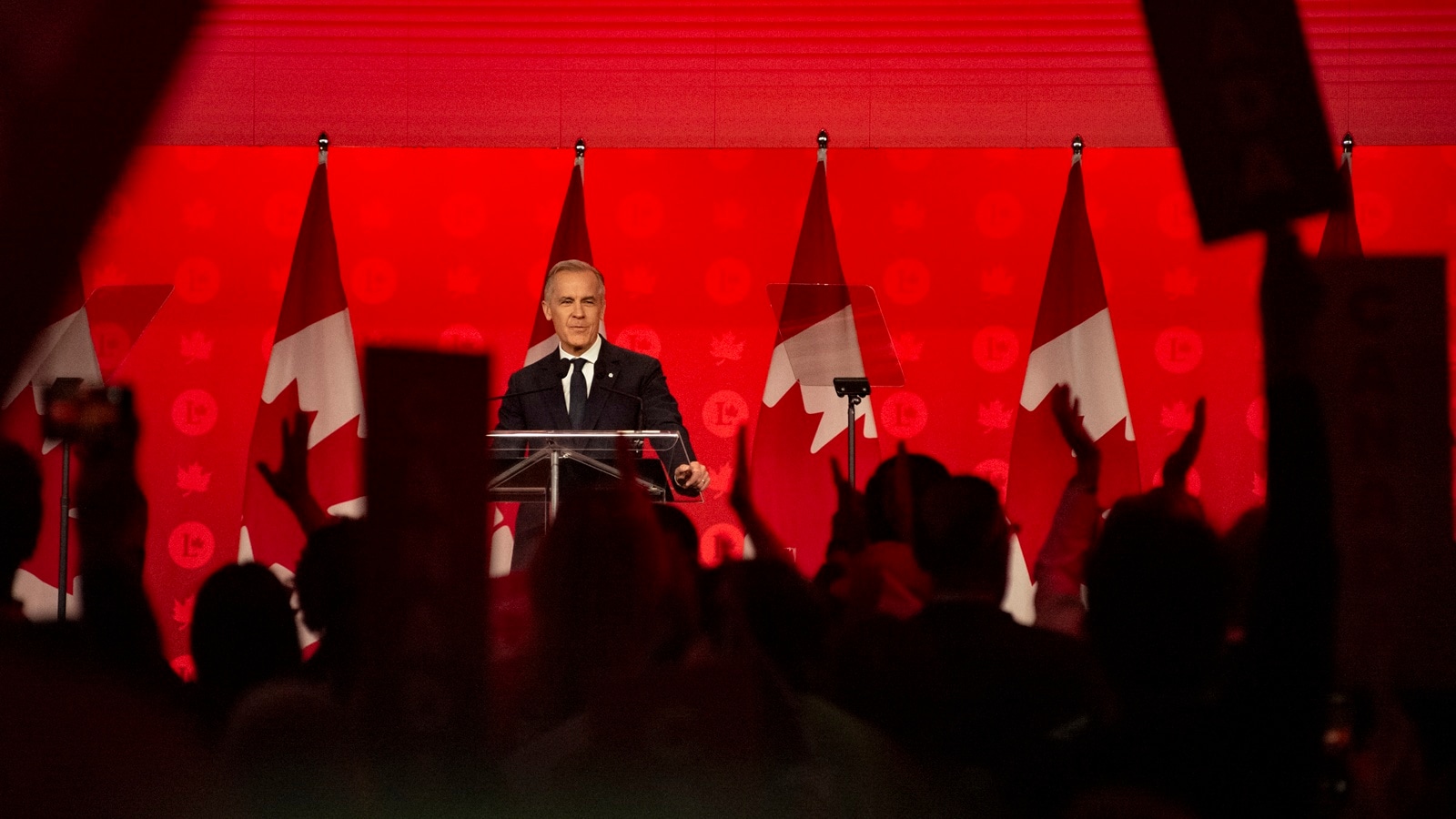
During his keynote speech to about 4,000 delegates at a Liberal Party convention in Montreal on Saturday, Carney indirectly spoke about the floor crossings.
“This is not the time for politics as usual, for petty differences, for political points scoring,” Carney said as the partisan crowd rose to its feet and cheered. “United, we will build Canada strong. A Canada for all. A Canada strong that no one can ever take.”
In the federal election last April, the Liberals retained power under Carney, a former central banker in Canada and England who was in his first campaign. But the party fell short of a majority in the House of Commons, Parliament’s lower house, which has 343 seats. (The Senate in Canada is appointed.)
As the head of a minority government, Carney has always been at risk of suddenly losing power if some members of other parties defeated the government on confidence motions or on its budgets.
Winning just one of the three special votes on Monday would have left the Liberals technically in control, but with constraints. The speaker of the House of Commons, who is drawn from the Liberal ranks, can vote only to break ties and traditionally can only support the government on confidence matters.
The Liberals will enjoy significant advantages, however, from winning all three of the votes, which will give them an unqualified, if narrow majority. In particular, they will eventually be able to take control of the House of Commons committees. The opposition parties have used committees to slow the progress of much of Carney’s legislation, such as bills on bail reform, cybersecurity and border security. They have also combined their voting power on committees to hold special hearings intended to embarrass the government.
The clear majority also means Carney will no longer have to tailor bills to make them acceptable to his opponents.
Carney had been careful not to declare victory before the elections. So it remains unclear what new measures he may now propose.
Two of the special votes are in Toronto constituencies in which Liberal members of Parliament have resigned. One of them was vacated by Chrystia Freeland, who became the most prominent member of Justin Trudeau’s Cabinet during his time in office. Her resignation as finance minister in December 2024 set off the chain of events that included Trudeau stepping down and Carney entering politics. The CBC projected that the Liberals had won that vote, as well as another election in Toronto.
The third election, in a Montreal suburb, was ordered by the Supreme Court of Canada after a Liberal candidate won it by a single vote last year. Early Tuesday, the CBC projected that the Liberal candidate had won that one also.
Four of the five members of Parliament who left their parties to bring Carney’s so close to a majority were Conservatives.
The other defector, Lori Idlout, came from the New Democratic Party, which fared badly in the last election.
The decampments and the resulting Liberal majority are another blow to Pierre Poilievre, the Conservative leader who suffered the political embarrassment of losing his own seat in the House of Commons in last April’s election.
Poilievre regained a parliamentary seat through a special election last year. Previous Conservative governments welcomed floor crossers. But after a socially conservative member of Parliament joined the Liberals last week, Poilievre condemned the practice as undemocratic.
The defections may have been driven less by Poilievre’s policies than by Conservatives dissatisfied with his combativeness as opposition leader. When Chris d’Entremont, a Conservative from Nova Scotia, became the first floor crosser last November, he was explicit that he left the Conservatives because of Poilievre’s aggressive and highly partisan approach to politics.
Poilievre’s style is in sharp contrast to Carney’s businesslike and pragmatic approach. It is popular with most Conservatives, who overwhelmingly backed Poilievre’s leadership at a convention in January. But it finds less favour among voters who live outside of Conservative strongholds such as rural Alberta.
A Nanos poll this month found that Carney was the preferred prime minister of 54% of people surveyed. Only 23% favor Poilievre.
This article originally appeared in The New York Times.
Stay updated with the latest - Click here to follow us on Instagram
Written by Ian Austen
After months of backroom political intrigue, Canadian Prime Minister Mark Carney on Monday gained a majority in the House of Commons after special parliamentary elections, solidifying the Liberal Party’s hold on power.
Since late last year, five members of opposition parties have joined the Liberals, one as recently as last week, bringing Carney within a single vote of the 172 needed for a majority. CBC News projected Monday night that Liberal candidates won all three elections, giving Carney a majority.
With his newfound control, Carney will have broader latitude with his legislative agenda, which is focused on reducing Canada’s dependency on the United States, and give him a stronger footing with which to deal with President Donald Trump, especially on trade.
During his keynote speech to about 4,000 delegates at a Liberal Party convention in Montreal on Saturday, Carney indirectly spoke about the floor crossings.
“This is not the time for politics as usual, for petty differences, for political points scoring,” Carney said as the partisan crowd rose to its feet and cheered. “United, we will build Canada strong. A Canada for all. A Canada strong that no one can ever take.”
In the federal election last April, the Liberals retained power under Carney, a former central banker in Canada and England who was in his first campaign. But the party fell short of a majority in the House of Commons, Parliament’s lower house, which has 343 seats. (The Senate in Canada is appointed.)
As the head of a minority government, Carney has always been at risk of suddenly losing power if some members of other parties defeated the government on confidence motions or on its budgets.
Winning just one of the three special votes on Monday would have left the Liberals technically in control, but with constraints. The speaker of the House of Commons, who is drawn from the Liberal ranks, can vote only to break ties and traditionally can only support the government on confidence matters.
The Liberals will enjoy significant advantages, however, from winning all three of the votes, which will give them an unqualified, if narrow majority. In particular, they will eventually be able to take control of the House of Commons committees. The opposition parties have used committees to slow the progress of much of Carney’s legislation, such as bills on bail reform, cybersecurity and border security. They have also combined their voting power on committees to hold special hearings intended to embarrass the government.
The clear majority also means Carney will no longer have to tailor bills to make them acceptable to his opponents.
Carney had been careful not to declare victory before the elections. So it remains unclear what new measures he may now propose.
Two of the special votes are in Toronto constituencies in which Liberal members of Parliament have resigned. One of them was vacated by Chrystia Freeland, who became the most prominent member of Justin Trudeau’s Cabinet during his time in office. Her resignation as finance minister in December 2024 set off the chain of events that included Trudeau stepping down and Carney entering politics. The CBC projected that the Liberals had won that vote, as well as another election in Toronto.
The third election, in a Montreal suburb, was ordered by the Supreme Court of Canada after a Liberal candidate won it by a single vote last year. Early Tuesday, the CBC projected that the Liberal candidate had won that one also.
Four of the five members of Parliament who left their parties to bring Carney’s so close to a majority were Conservatives.
The other defector, Lori Idlout, came from the New Democratic Party, which fared badly in the last election.
The decampments and the resulting Liberal majority are another blow to Pierre Poilievre, the Conservative leader who suffered the political embarrassment of losing his own seat in the House of Commons in last April’s election.
Poilievre regained a parliamentary seat through a special election last year. Previous Conservative governments welcomed floor crossers. But after a socially conservative member of Parliament joined the Liberals last week, Poilievre condemned the practice as undemocratic.
The defections may have been driven less by Poilievre’s policies than by Conservatives dissatisfied with his combativeness as opposition leader. When Chris d’Entremont, a Conservative from Nova Scotia, became the first floor crosser last November, he was explicit that he left the Conservatives because of Poilievre’s aggressive and highly partisan approach to politics.
Poilievre’s style is in sharp contrast to Carney’s businesslike and pragmatic approach. It is popular with most Conservatives, who overwhelmingly backed Poilievre’s leadership at a convention in January. But it finds less favour among voters who live outside of Conservative strongholds such as rural Alberta.
A Nanos poll this month found that Carney was the preferred prime minister of 54% of people surveyed. Only 23% favor Poilievre.
This article originally appeared in The New York Times.