

Balen Shah: The Rapper who is Nepal’s new Prime Minister
Once known for protest rap against corruption and inequality, Balen Shah now finds himself leading the very system he once challenged
Those supposed to protect the country are idiots
The leaders are all thieves, looting the country
For over half a decade, these searing lyrics have echoed through Nepal’s underground hip-hop scene in Balidaan (Sacrifice), a song by rapper-turned-politician Balendra Shah, better known by his stage name Balen, who took aim at the country’s political establishment with this song. The rap about Himalayan nation’s poverty, its underdevelopment and the corrupt politicians, is filled with verses carrying the anger of a generation that has felt abandoned. In this rap piece, while Balen highlighted the hopelessness of someone who was tired of the system and its inequalities, in Sadak Balak (Street Kid), which released much earlier, he sang of life on the margins and people struggling for basic necessities. There was also Tathya (Fact), which explored the themes of exploitative media and injustice. The songs travelled fast and furiously on social media.
Today, 35-year-old Balen is at the centre of the same system he once went on to diss. He has said in his interviews that he wants to try and change it from within after challenging the status quo. Leading a political movement by aligning with Rashtriya Swatantra Party (RSP), which has secured a landslide victory in Nepal’s general elections in the first election since Gen Z protests brought down the government. The protests had intensified into rampant unrest and torching incidents that had left 70 people dead and forced the resignation of KP Sharma Oli, four-time Prime Minister of the Communist Party.
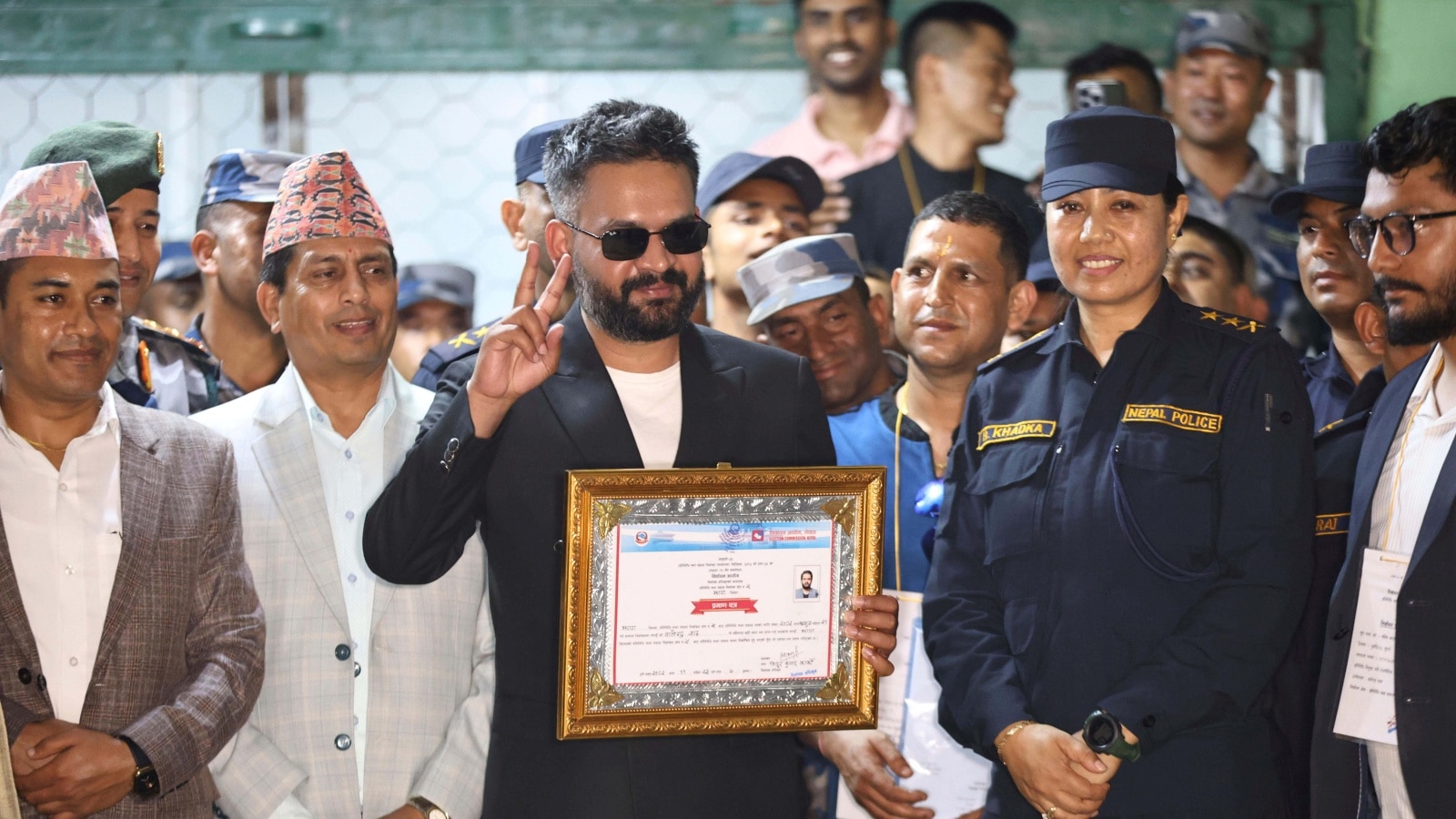
Balen, who often dresses in black, signature rectangular sunglasses and has become known in Nepal as a ‘disrupter’ defeated Oli from Jhapa 5 constituency in Eastern Nepal by 50,000 votes. He is now set to be the new Prime Minister of Nepal and will be the youngest to hold the office.
The underground rapper, in fact, has emerged as one of the most unusual political stories in recent times. Balen, who comes from the Madhesi community (from southern Nepal that borders India from Bihar) and also speaks in Maithili, a language commonly spoken in Bihar and Jharkhand, is the son of a homemaker and an ayurvedic doctor. He was interested in music as a child but was always fascinated with writing poetry. He has spoken about how on his way to school, he felt anguished by the poverty he saw, weighing it against his own sheltered life. When high bandwidth internet came to Nepal, he got access to the world of hip hop and was deeply inspired by the unfiltered storytelling of popular American rappers 50 Cent and Tupac Shakur, especially the latter’s songs about poverty and inequality.
In 2013, he was part of a local rap battle – a space where rappers compete through improvised verses and sharp wordplay – which made him a star in Nepali underground hip hop scene. He won the dual. But making music full-time was not going to be easy or enough for survival. So Balen also pursued a professional career. He finished his civil engineering in Kathmandu and was working as one when a deadly earthquake of 7.8 magnitude hit Nepal in 2015. It claimed almost 1,900 lives. Balen and his colleagues worked on reconstruction of many homes. He then went on to do a masters degree in structural engineering from Bengaluru.
Alongside, he also remained a musician and activist, significant to Nepal’s cultural space and not directly its politics. But that shift took place in 2022, when Balen decided to run for mayor from Kathmandu as an independent candidate. Here was a political newbie attempting to place himself in a space where he could fight corruption and government inefficiency. Interestingly, the resentment was already embedded in his music. The message resonated with the voters. At 32, Balen became the mayor of Kathmandu, defeating candidates from both Communist Party of Nepal (Unified Marxist-Leninist) as well as the Nepali Congress.
Last year, in February, he released Nepal Haseko (Nepal smiles), a song about a hopeful future in Nepal. The song that came with over a crore views had the line, I want to see Nepal smiling; I want to see Nepalis living happily. In September 2025, when Nepal was rattled by Gen Z protests, which began after an internet ban, the song had a rebirth, and was elevated to anthem status. It even found a Gen Z remix and in the run-up to the election it was played at rallies and his roadshows. Balen would also dance often on the bonnet of his car in the rallies.
It is interesting how Balen’s criticism of the system and his dissatisfaction through his musical verses turned him into an important symbol of dissent. He was demanding change. He even vented against nations with close ties to Nepal, including India. All of it was shared on social media and expletives were used. Balen has 35 lakh followers on Facebook.
At a recent rally before the election, Balen in a black outfit and black Nepali dhaka topi, removed what are now called ‘Balen Shah glasses’, looked at those gathered and said, ‘I love you’. The people have loved him back. The rapper who decided to be a politician, is poised to be the new Prime Minister of Nepal.
Stay updated with the latest - Click here to follow us on Instagram
Those supposed to protect the country are idiots
The leaders are all thieves, looting the country
For over half a decade, these searing lyrics have echoed through Nepal’s underground hip-hop scene in Balidaan (Sacrifice), a song by rapper-turned-politician Balendra Shah, better known by his stage name Balen, who took aim at the country’s political establishment with this song. The rap about Himalayan nation’s poverty, its underdevelopment and the corrupt politicians, is filled with verses carrying the anger of a generation that has felt abandoned. In this rap piece, while Balen highlighted the hopelessness of someone who was tired of the system and its inequalities, in Sadak Balak (Street Kid), which released much earlier, he sang of life on the margins and people struggling for basic necessities. There was also Tathya (Fact), which explored the themes of exploitative media and injustice. The songs travelled fast and furiously on social media.
Today, 35-year-old Balen is at the centre of the same system he once went on to diss. He has said in his interviews that he wants to try and change it from within after challenging the status quo. Leading a political movement by aligning with Rashtriya Swatantra Party (RSP), which has secured a landslide victory in Nepal’s general elections in the first election since Gen Z protests brought down the government. The protests had intensified into rampant unrest and torching incidents that had left 70 people dead and forced the resignation of KP Sharma Oli, four-time Prime Minister of the Communist Party.
Balen, who often dresses in black, signature rectangular sunglasses and has become known in Nepal as a ‘disrupter’ defeated Oli from Jhapa 5 constituency in Eastern Nepal by 50,000 votes. He is now set to be the new Prime Minister of Nepal and will be the youngest to hold the office.
The underground rapper, in fact, has emerged as one of the most unusual political stories in recent times. Balen, who comes from the Madhesi community (from southern Nepal that borders India from Bihar) and also speaks in Maithili, a language commonly spoken in Bihar and Jharkhand, is the son of a homemaker and an ayurvedic doctor. He was interested in music as a child but was always fascinated with writing poetry. He has spoken about how on his way to school, he felt anguished by the poverty he saw, weighing it against his own sheltered life. When high bandwidth internet came to Nepal, he got access to the world of hip hop and was deeply inspired by the unfiltered storytelling of popular American rappers 50 Cent and Tupac Shakur, especially the latter’s songs about poverty and inequality.
In 2013, he was part of a local rap battle – a space where rappers compete through improvised verses and sharp wordplay – which made him a star in Nepali underground hip hop scene. He won the dual. But making music full-time was not going to be easy or enough for survival. So Balen also pursued a professional career. He finished his civil engineering in Kathmandu and was working as one when a deadly earthquake of 7.8 magnitude hit Nepal in 2015. It claimed almost 1,900 lives. Balen and his colleagues worked on reconstruction of many homes. He then went on to do a masters degree in structural engineering from Bengaluru.
Alongside, he also remained a musician and activist, significant to Nepal’s cultural space and not directly its politics. But that shift took place in 2022, when Balen decided to run for mayor from Kathmandu as an independent candidate. Here was a political newbie attempting to place himself in a space where he could fight corruption and government inefficiency. Interestingly, the resentment was already embedded in his music. The message resonated with the voters. At 32, Balen became the mayor of Kathmandu, defeating candidates from both Communist Party of Nepal (Unified Marxist-Leninist) as well as the Nepali Congress.
Last year, in February, he released Nepal Haseko (Nepal smiles), a song about a hopeful future in Nepal. The song that came with over a crore views had the line, I want to see Nepal smiling; I want to see Nepalis living happily. In September 2025, when Nepal was rattled by Gen Z protests, which began after an internet ban, the song had a rebirth, and was elevated to anthem status. It even found a Gen Z remix and in the run-up to the election it was played at rallies and his roadshows. Balen would also dance often on the bonnet of his car in the rallies.
It is interesting how Balen’s criticism of the system and his dissatisfaction through his musical verses turned him into an important symbol of dissent. He was demanding change. He even vented against nations with close ties to Nepal, including India. All of it was shared on social media and expletives were used. Balen has 35 lakh followers on Facebook.
At a recent rally before the election, Balen in a black outfit and black Nepali dhaka topi, removed what are now called ‘Balen Shah glasses’, looked at those gathered and said, ‘I love you’. The people have loved him back. The rapper who decided to be a politician, is poised to be the new Prime Minister of Nepal.