

Why are flamingos leading protests in Albania against Jared Kushner’s luxury resort?
Flamingos have become symbols of protest in Albania against a luxury resort linked to Jared Kushner and Ivanka Trump. Here's why.
Flamingos have emerged as the unlikely symbol of resistance in Albania, where thousands are protesting a luxury resort project linked to Jared Kushner and Ivanka Trump.
What began as an environmental campaign to protect a sensitive bird habitat has evolved into one of Albania’s most visible anti-establishment protest movements in recent years.
According to ABC News, the controversy dates back to 2021, when Kushner and his wife, Ivanka Trump, visited the Albanian island of Sazan during a private yacht trip. Ivanka later described swimming to the island and hiking barefoot across its terrain, saying the experience inspired plans to develop the area.
The project, proposed through Miami-based investment firm Affinity Partners, includes a luxury resort on Sazan Island and a larger coastal development near the Vjosa-Narta Lagoon. ABC News reported that the Albanian government granted preliminary approval to the project in December 2024.
Kushner has previously described the proposed development as a family-oriented destination, while developers have said the project will prioritise environmental stewardship and responsible development. He has served as a senior adviser during Donald Trump’s first presidency and played a central role in the Abraham Accords.
The answer lies in the ecological significance of the Vjosa-Narta Lagoon.
According to ABC News, Albania’s relatively undeveloped coastline has become an important habitat for wildlife, including more than 200 migratory bird species, Mediterranean monk seals and nesting sea turtles. Flamingos are among the most recognisable residents of the lagoon, with ornithologists estimating that more than one per cent of the global flamingo population can be found in Albania.
Environmental groups argue that construction activity threatens this fragile ecosystem. Conservation organisation Protection and Preservation of Natural Environment in Albania (PPNEA) has alleged that heavy machinery entered protected areas without the necessary permits and caused damage to dunes designated as natural monuments.
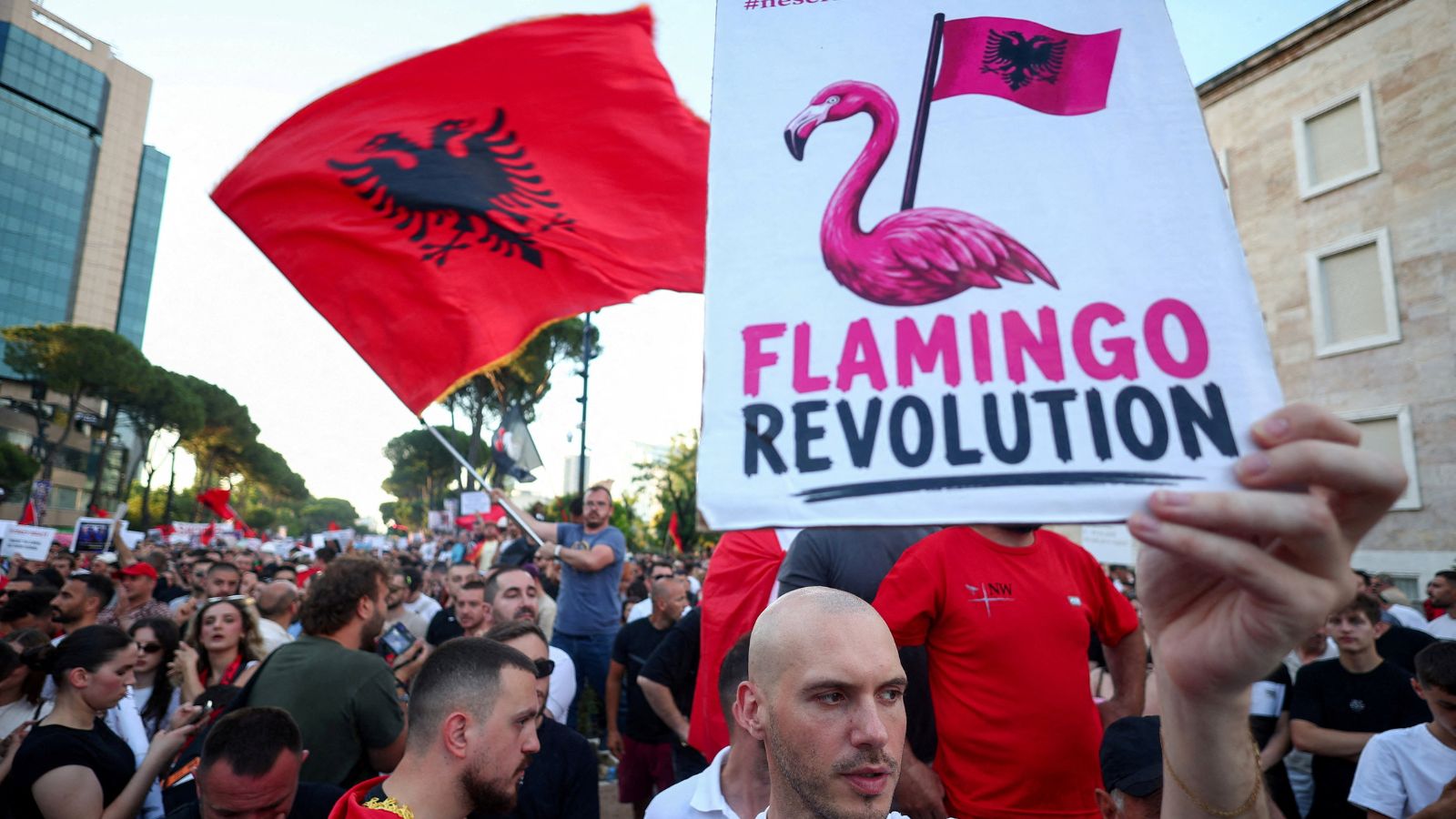
As a result, protesters adopted the flamingo as a symbol of their campaign, leading to a movement some activists have dubbed the “Flamingo Revolution”.
What began as opposition to a tourism project has gradually evolved into a wider expression of public frustration.
According to reporting by the Balkan Investigative Reporting Network (BIRN), public anger intensified after a protester opposing the project was allegedly dragged away by private security guards at the construction site. Images and videos of the incident circulated widely, triggering larger demonstrations in the capital, Tirana.
Protesters have since directed criticism not only at the development itself but also at Albanian Prime Minister Edi Rama’s government. Demonstrators accuse authorities of favouring wealthy investors while ignoring public concerns about environmental protection, transparency and governance.
BIRN reported that the movement has drawn support from environmental activists, students, nationalists, left-wing groups and civil society organisations. Protesters have also demanded the repeal of legislation that allows exceptions for projects designated as being of “strategic” importance.
Beyond concerns about wildlife, the flamingo has taken on a broader symbolic role.
BIRN reported that demonstrations have featured artwork depicting flamingos and pelicans confronting political leaders, transforming the birds into emblems of resistance against what protesters describe as decades of corruption, overdevelopment and shrinking public spaces.
For many participants, the protests are no longer solely about protecting a bird habitat. Instead, the flamingo has come to represent wider concerns about environmental degradation, unequal enforcement of laws and the influence of powerful political and business interests in Albania.
The controversy has also attracted scrutiny from Albania’s anti-corruption authorities.
According to ABC News, the country’s anti-corruption agency has confirmed that it has opened an investigation related to the development project, although details have not been disclosed.
Developers associated with the resort have rejected claims that the project will damage the environment, stating that their plans focus on responsible stewardship and environmental enhancement. Ivanka Trump has similarly argued that any development should be integrated carefully into the surrounding landscape.
As protests continue, the flamingo remains at the centre of a movement that has grown beyond a dispute over a luxury resort into a broader debate about development, environmental protection and political accountability in Albania.
Stay updated with the latest - Click here to follow us on Instagram
Flamingos have emerged as the unlikely symbol of resistance in Albania, where thousands are protesting a luxury resort project linked to Jared Kushner and Ivanka Trump.
What began as an environmental campaign to protect a sensitive bird habitat has evolved into one of Albania’s most visible anti-establishment protest movements in recent years.
According to ABC News, the controversy dates back to 2021, when Kushner and his wife, Ivanka Trump, visited the Albanian island of Sazan during a private yacht trip. Ivanka later described swimming to the island and hiking barefoot across its terrain, saying the experience inspired plans to develop the area.
The project, proposed through Miami-based investment firm Affinity Partners, includes a luxury resort on Sazan Island and a larger coastal development near the Vjosa-Narta Lagoon. ABC News reported that the Albanian government granted preliminary approval to the project in December 2024.
Kushner has previously described the proposed development as a family-oriented destination, while developers have said the project will prioritise environmental stewardship and responsible development. He has served as a senior adviser during Donald Trump’s first presidency and played a central role in the Abraham Accords.
The answer lies in the ecological significance of the Vjosa-Narta Lagoon.
According to ABC News, Albania’s relatively undeveloped coastline has become an important habitat for wildlife, including more than 200 migratory bird species, Mediterranean monk seals and nesting sea turtles. Flamingos are among the most recognisable residents of the lagoon, with ornithologists estimating that more than one per cent of the global flamingo population can be found in Albania.
Environmental groups argue that construction activity threatens this fragile ecosystem. Conservation organisation Protection and Preservation of Natural Environment in Albania (PPNEA) has alleged that heavy machinery entered protected areas without the necessary permits and caused damage to dunes designated as natural monuments.
As a result, protesters adopted the flamingo as a symbol of their campaign, leading to a movement some activists have dubbed the “Flamingo Revolution”.
What began as opposition to a tourism project has gradually evolved into a wider expression of public frustration.
According to reporting by the Balkan Investigative Reporting Network (BIRN), public anger intensified after a protester opposing the project was allegedly dragged away by private security guards at the construction site. Images and videos of the incident circulated widely, triggering larger demonstrations in the capital, Tirana.
Protesters have since directed criticism not only at the development itself but also at Albanian Prime Minister Edi Rama’s government. Demonstrators accuse authorities of favouring wealthy investors while ignoring public concerns about environmental protection, transparency and governance.
BIRN reported that the movement has drawn support from environmental activists, students, nationalists, left-wing groups and civil society organisations. Protesters have also demanded the repeal of legislation that allows exceptions for projects designated as being of “strategic” importance.
Beyond concerns about wildlife, the flamingo has taken on a broader symbolic role.
BIRN reported that demonstrations have featured artwork depicting flamingos and pelicans confronting political leaders, transforming the birds into emblems of resistance against what protesters describe as decades of corruption, overdevelopment and shrinking public spaces.
For many participants, the protests are no longer solely about protecting a bird habitat. Instead, the flamingo has come to represent wider concerns about environmental degradation, unequal enforcement of laws and the influence of powerful political and business interests in Albania.
The controversy has also attracted scrutiny from Albania’s anti-corruption authorities.
According to ABC News, the country’s anti-corruption agency has confirmed that it has opened an investigation related to the development project, although details have not been disclosed.
Developers associated with the resort have rejected claims that the project will damage the environment, stating that their plans focus on responsible stewardship and environmental enhancement. Ivanka Trump has similarly argued that any development should be integrated carefully into the surrounding landscape.
As protests continue, the flamingo remains at the centre of a movement that has grown beyond a dispute over a luxury resort into a broader debate about development, environmental protection and political accountability in Albania.