

Spiky but sweet: The surprising reason Google featured cactuses in today’s Mother’s Day Doodle
Mother's Day 2026: The Google Doodle swaps traditional roses for cactuses to symbolise the protective and enduring nature of a mother's love. Explore the history of Mother's Day, from ancient Roman rituals to Anna Jarvis's 1908 tribute.
Mother’s Day is observed on the second Sunday of May across the US and India. This year, the day will be celebrated on May 10. Marking the day, Google unveiled a special Doodle dedicated to mothers everywhere.
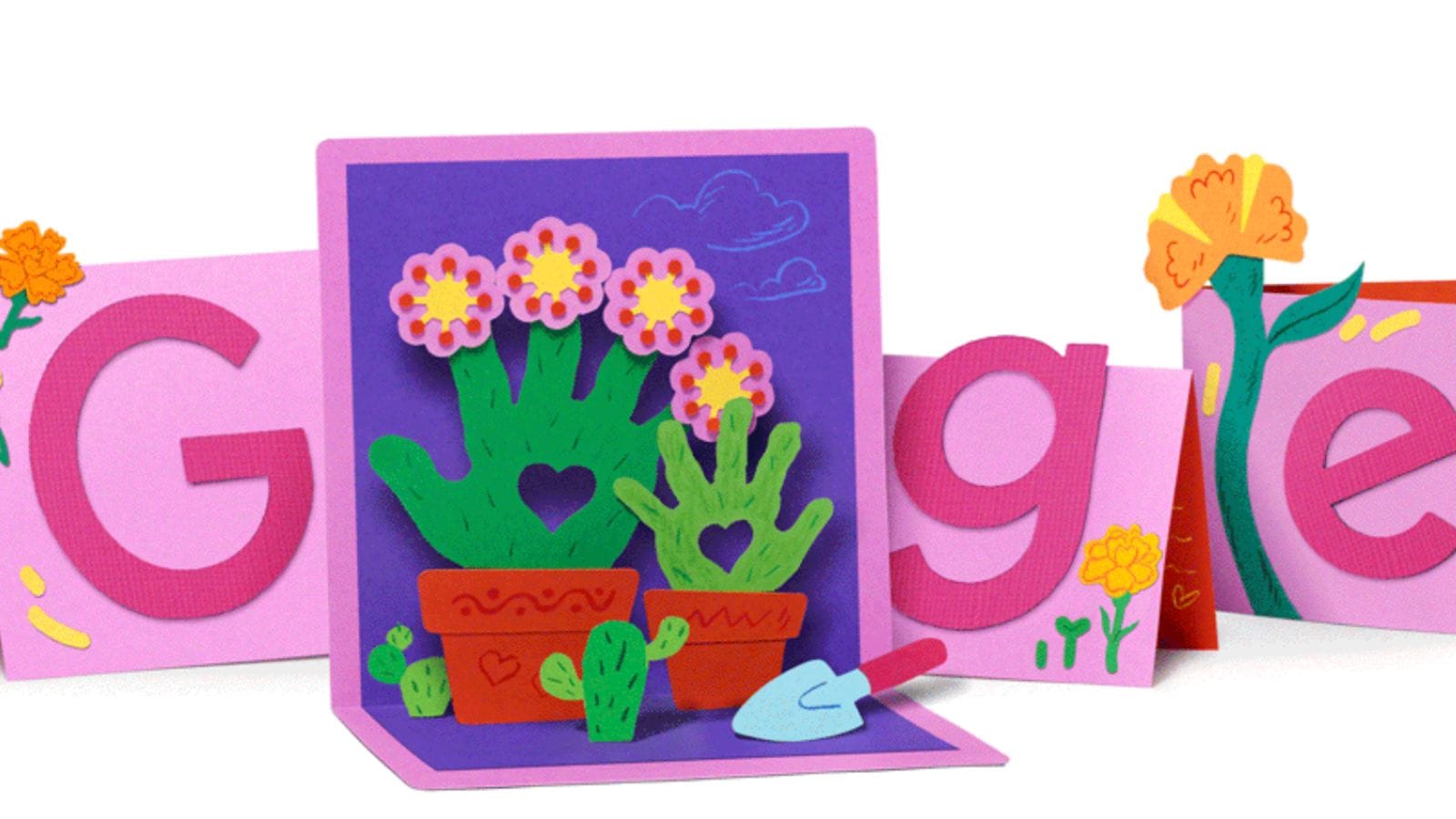
“This Doodle celebrates Mother’s Day with a handcrafted card featuring paper-cut letters, a carnation, and a cacti – a symbol of protection and unconditional love,” Google said. The innovative doodle featured a garden theme, with each letter designed on folded, calendar-like paper, while the two ‘O’s were depicted as animated cactuses adorned with flowers that waved when clicked.
In India, the United States, Australia, Canada, and many other countries, Mother’s Day falls on the second Sunday of May. However, the date differs across the world. The United Kingdom and several European nations observe “Mothering Sunday” on the fourth Sunday of Lent, typically celebrated in March.
Other countries follow unique traditions as well. Thailand marks the occasion on August 12, coinciding with Queen Sirikit’s birthday, while Ethiopia celebrates motherhood during autumn through a multi-day festival known as Antrosht.
The origins of Mother’s Day trace back to ancient civilisations. The Greeks and Romans organised spring festivals dedicated to mother goddesses such as Rhea, the mother of Zeus, and Cybele, also called Magna Mater or the “Great Mother.” Devotees would offer flowers and honey cakes during dawn rituals.
The modern version of Mother’s Day gained prominence in the early 1900s through the efforts of American social activist Anna Jarvis. In 1908, she organised the first official Mother’s Day event to pay tribute to her mother, who had devoted herself to community service during the American Civil War.
The observance was eventually formalised as the second Sunday of May, the same date on which Anna Jarvis’s mother had died. Today, Mother’s Day extends beyond honouring biological mothers. Many people also celebrate grandmothers, stepmothers, foster mothers, aunts, and other maternal figures who play nurturing roles in their lives.
Mother’s Day is observed on the second Sunday of May across the US and India. This year, the day will be celebrated on May 10. Marking the day, Google unveiled a special Doodle dedicated to mothers everywhere.
“This Doodle celebrates Mother’s Day with a handcrafted card featuring paper-cut letters, a carnation, and a cacti – a symbol of protection and unconditional love,” Google said. The innovative doodle featured a garden theme, with each letter designed on folded, calendar-like paper, while the two ‘O’s were depicted as animated cactuses adorned with flowers that waved when clicked.
In India, the United States, Australia, Canada, and many other countries, Mother’s Day falls on the second Sunday of May. However, the date differs across the world. The United Kingdom and several European nations observe “Mothering Sunday” on the fourth Sunday of Lent, typically celebrated in March.
Other countries follow unique traditions as well. Thailand marks the occasion on August 12, coinciding with Queen Sirikit’s birthday, while Ethiopia celebrates motherhood during autumn through a multi-day festival known as Antrosht.
The origins of Mother’s Day trace back to ancient civilisations. The Greeks and Romans organised spring festivals dedicated to mother goddesses such as Rhea, the mother of Zeus, and Cybele, also called Magna Mater or the “Great Mother.” Devotees would offer flowers and honey cakes during dawn rituals.
The modern version of Mother’s Day gained prominence in the early 1900s through the efforts of American social activist Anna Jarvis. In 1908, she organised the first official Mother’s Day event to pay tribute to her mother, who had devoted herself to community service during the American Civil War.
The observance was eventually formalised as the second Sunday of May, the same date on which Anna Jarvis’s mother had died. Today, Mother’s Day extends beyond honouring biological mothers. Many people also celebrate grandmothers, stepmothers, foster mothers, aunts, and other maternal figures who play nurturing roles in their lives.