

From smart walking sticks to wellness rings: Best gadgets for senior citizens
Smart wearables, connected home devices, and accessibility-focused gadgets are increasingly making everyday life easier, safer, and more convenient for elderly users.
Technology aimed at senior citizens is gradually shifting towards devices designed around comfort, accessibility, and convenience. From smart walking sticks with SOS alerts to robot vacuum cleaners that reduce physical effort at home, a growing number of gadgets are now focusing on practical everyday support for elderly users.
At the same time, health-focused wearables and voice assistants are making it easier for senior citizens to stay connected, monitor wellness, and manage routine activities independently. Many of these devices are now widely available in India through online platforms and retail stores, making senior-friendly technology more accessible than before.
Here are some devices and brands focusing on health tracking, mobility, communication, and home assistance for ageing users in India.
Smart walking sticks are gradually becoming more common among senior citizens, especially for those who need additional support while moving around. Unlike traditional walking canes, these devices often include features such as built-in LED torches, emergency SOS alarms, foldable designs, and anti-slip grips. As a result, they can help improve visibility during nighttime walks while also offering a quick way to call for attention during emergencies.
In the last few years, several companies have introduced walking sticks with unique technologies to facilitate mobility for elders. Among the notable devices are Antara AGEasy and the MCP Jindal Smart Walking Stick. The Antara AGEasy Foldable Walking Stick comes with an SOS alarm feature and is designed to provide support for senior citizens while walking. It also includes a skid-resistant rubber tip for better grip across smooth indoor floors, uneven outdoor paths and wet surfaces. Meanwhile, the MCP Jindal Smart Walking Stick features an LED torch, FM radio, rechargeable battery and an SOS siren alarm for emergencies. The walking stick also includes adjustable height support and is available in both foldable and rigid designs.
Smart rings are gradually becoming an alternative to smartwatches for users who prefer more compact and less distracting wearable devices. These rings can track sleep patterns, heart rate, stress levels, activity and recovery metrics while remaining lightweight.
Samsung expanded its wearable ecosystem with the Galaxy Ring, focusing on sleep tracking, wellness insights, and AI-powered health monitoring. Oura is known for its smart rings designed around sleep, recovery, and discreet health monitoring. The brand focuses on long-term wellness insights through screen-free wearables.
Voice-activated devices enable hands-free control over a range of everyday tasks, which can be useful for senior citizens. Instead of navigating touchscreens, users can simply speak commands to ask about the weather, set medication reminders, and make phone calls. In addition, these smart speakers can help elderly users stay connected with family members while making routine activities easier and more accessible through voice interaction.
Amazon offers the Echo lineup powered by Alexa, its voice assistant platform that supports English, Hindi and Hinglish in India. Google, meanwhile, integrates Google Assistant into its Nest speakers, giving users access to services such as Google Search, Maps, Calendar, and YouTube through voice commands.
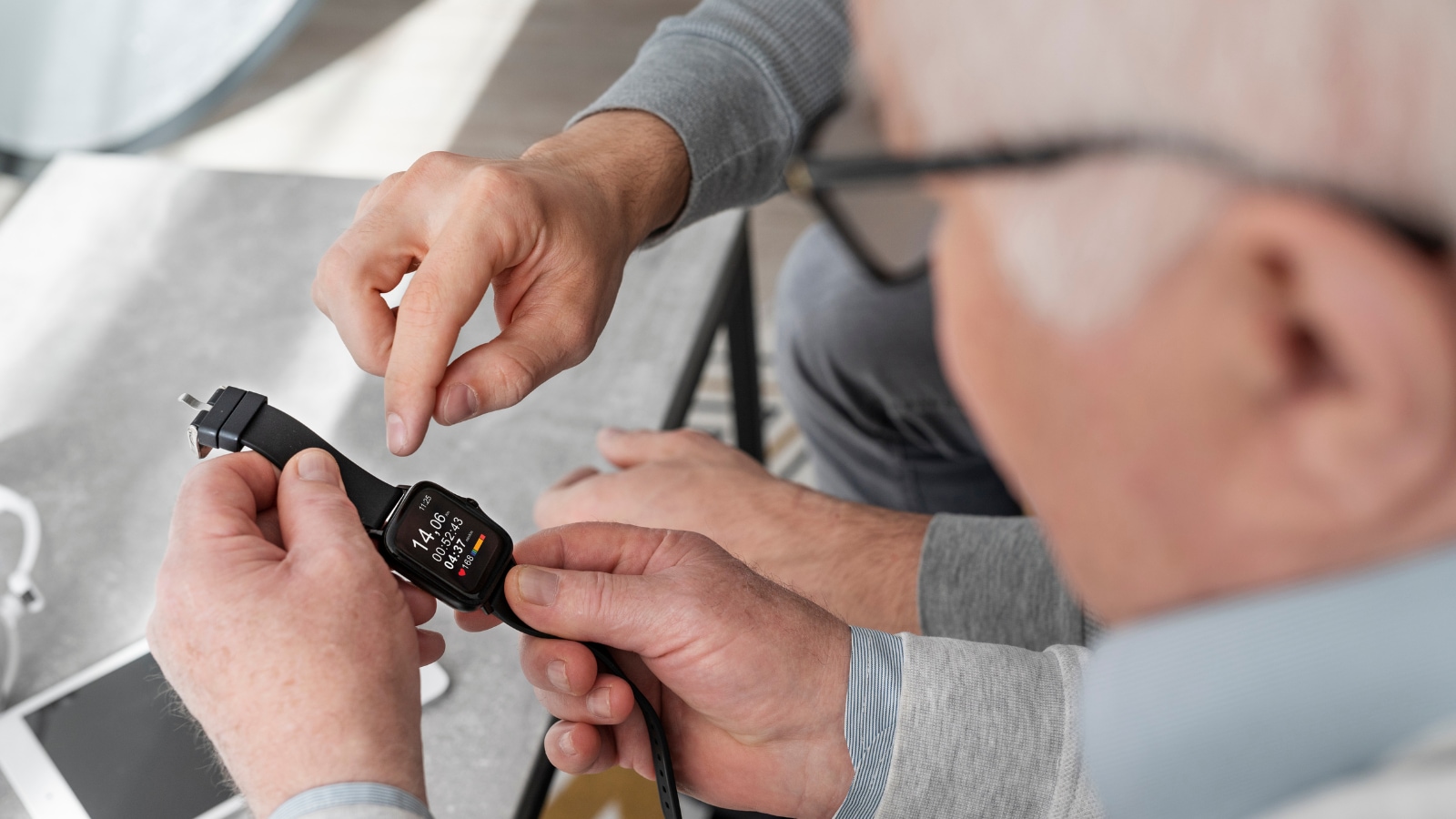
Health-focused smartwatches are increasingly being used by senior citizens because they allow users to monitor important health metrics directly from their wrists. Many smartwatches now support features such as heart-rate tracking, blood oxygen monitoring, sleep analysis, fall detection, emergency SOS alerts and medication reminders. In addition, these devices can help elderly users stay connected through calling and notification features while reducing the need to constantly use smartphones.
Apple offers the Apple Watch lineup with features such as fall detection, emergency SOS, ECG support and health monitoring integrated within the Apple ecosystem. Meanwhile, Samsung focuses heavily on wellness and fitness tracking through its Galaxy Watch series, offering features such as sleep tracking, heart rate monitoring and blood oxygen measurement.
Modern hearing aids are increasingly incorporating Bluetooth connectivity, allowing senior citizens to stream phone calls, television audio or music directly into their hearing devices. In addition, several newer models support app-based controls, enabling family members to adjust settings without requiring repeated clinic visits.
Signia focuses on digital hearing solutions with features such as Bluetooth audio streaming, rechargeable designs and app-based hearing customisation. They combine advanced acoustic architecture with flexible digital connectivity options across iOS and Android ecosystems. Phonak is known for premium hearing aids designed around speech clarity and wireless connectivity. Its devices often support direct streaming for calls, television and smartphones.
Phones designed for senior citizens usually focus on accessibility rather than advanced specifications. Features such as large buttons, high-contrast displays, loud speakers and simplified interfaces can make calling and messaging easier for elderly users with vision challenges. Some devices also include emergency SOS buttons, hearing aid compatibility and a simplified “easy mode” interface that reduces clutter on the screen while enlarging icons and texts.
Nokia continues to offer keypad and flip phones focused on simplicity, long battery life and reliable calling features suited for elderly users. Easyfone specialises in devices designed specifically for the elderly, with features such as SOS calling, simplified menus, loud audio and remote assistance support.
Robot vacuum cleaners are increasingly being seen as useful home appliances for senior citizens because they reduce the physical effort involved in daily cleaning. Instead of bending frequently, carrying heavy vacuum cleaners or manually sweeping floors, these devices automatically navigate rooms, collect dust and even mop surfaces with minimal supervision. Many newer robot vacuums also support scheduled cleaning, obstacle detection, and voice assistant integration, which can make routine household maintenance manageable for elderly users or families caring for ageing parents.
Dreame focuses on robotic vacuum cleaners and smart cleaning appliances. Its devices are known for features such as LiDAR navigation, strong suction power, and self-emptying docks. ECOVACS is best known for its Deebot robotic vacuum lineup. The brand focuses on automated cleaning features, including smart mapping, obstacle avoidance and vacuum-and-mop combinations.
Video doorbells and indoor smart cameras can help senior citizens monitor visitors more safely without opening doors unnecessarily. At the same time, family members can remotely check in when needed, particularly if elderly parents live alone. Many of these devices now support features such as motion alerts, two-way communication, avoidance, and night vision, making them useful additions for home safety.
Qubo is part of the Hero Group and focuses on connected home and security products tailored for Indian users. TP-Link, meanwhile, is widely known for routers and smart home products, with its Tapo range covering cameras, smart plugs and home monitoring devices.
(This article has been curated by Shivani P Menon, who is an intern with The Indian Express)
Technology aimed at senior citizens is gradually shifting towards devices designed around comfort, accessibility, and convenience. From smart walking sticks with SOS alerts to robot vacuum cleaners that reduce physical effort at home, a growing number of gadgets are now focusing on practical everyday support for elderly users.
At the same time, health-focused wearables and voice assistants are making it easier for senior citizens to stay connected, monitor wellness, and manage routine activities independently. Many of these devices are now widely available in India through online platforms and retail stores, making senior-friendly technology more accessible than before.
Here are some devices and brands focusing on health tracking, mobility, communication, and home assistance for ageing users in India.
Smart walking sticks are gradually becoming more common among senior citizens, especially for those who need additional support while moving around. Unlike traditional walking canes, these devices often include features such as built-in LED torches, emergency SOS alarms, foldable designs, and anti-slip grips. As a result, they can help improve visibility during nighttime walks while also offering a quick way to call for attention during emergencies.
In the last few years, several companies have introduced walking sticks with unique technologies to facilitate mobility for elders. Among the notable devices are Antara AGEasy and the MCP Jindal Smart Walking Stick. The Antara AGEasy Foldable Walking Stick comes with an SOS alarm feature and is designed to provide support for senior citizens while walking. It also includes a skid-resistant rubber tip for better grip across smooth indoor floors, uneven outdoor paths and wet surfaces. Meanwhile, the MCP Jindal Smart Walking Stick features an LED torch, FM radio, rechargeable battery and an SOS siren alarm for emergencies. The walking stick also includes adjustable height support and is available in both foldable and rigid designs.
Smart rings are gradually becoming an alternative to smartwatches for users who prefer more compact and less distracting wearable devices. These rings can track sleep patterns, heart rate, stress levels, activity and recovery metrics while remaining lightweight.
Samsung expanded its wearable ecosystem with the Galaxy Ring, focusing on sleep tracking, wellness insights, and AI-powered health monitoring. Oura is known for its smart rings designed around sleep, recovery, and discreet health monitoring. The brand focuses on long-term wellness insights through screen-free wearables.
Voice-activated devices enable hands-free control over a range of everyday tasks, which can be useful for senior citizens. Instead of navigating touchscreens, users can simply speak commands to ask about the weather, set medication reminders, and make phone calls. In addition, these smart speakers can help elderly users stay connected with family members while making routine activities easier and more accessible through voice interaction.
Amazon offers the Echo lineup powered by Alexa, its voice assistant platform that supports English, Hindi and Hinglish in India. Google, meanwhile, integrates Google Assistant into its Nest speakers, giving users access to services such as Google Search, Maps, Calendar, and YouTube through voice commands.
Health-focused smartwatches are increasingly being used by senior citizens because they allow users to monitor important health metrics directly from their wrists. Many smartwatches now support features such as heart-rate tracking, blood oxygen monitoring, sleep analysis, fall detection, emergency SOS alerts and medication reminders. In addition, these devices can help elderly users stay connected through calling and notification features while reducing the need to constantly use smartphones.
Apple offers the Apple Watch lineup with features such as fall detection, emergency SOS, ECG support and health monitoring integrated within the Apple ecosystem. Meanwhile, Samsung focuses heavily on wellness and fitness tracking through its Galaxy Watch series, offering features such as sleep tracking, heart rate monitoring and blood oxygen measurement.
Modern hearing aids are increasingly incorporating Bluetooth connectivity, allowing senior citizens to stream phone calls, television audio or music directly into their hearing devices. In addition, several newer models support app-based controls, enabling family members to adjust settings without requiring repeated clinic visits.
Signia focuses on digital hearing solutions with features such as Bluetooth audio streaming, rechargeable designs and app-based hearing customisation. They combine advanced acoustic architecture with flexible digital connectivity options across iOS and Android ecosystems. Phonak is known for premium hearing aids designed around speech clarity and wireless connectivity. Its devices often support direct streaming for calls, television and smartphones.
Phones designed for senior citizens usually focus on accessibility rather than advanced specifications. Features such as large buttons, high-contrast displays, loud speakers and simplified interfaces can make calling and messaging easier for elderly users with vision challenges. Some devices also include emergency SOS buttons, hearing aid compatibility and a simplified “easy mode” interface that reduces clutter on the screen while enlarging icons and texts.
Nokia continues to offer keypad and flip phones focused on simplicity, long battery life and reliable calling features suited for elderly users. Easyfone specialises in devices designed specifically for the elderly, with features such as SOS calling, simplified menus, loud audio and remote assistance support.
Robot vacuum cleaners are increasingly being seen as useful home appliances for senior citizens because they reduce the physical effort involved in daily cleaning. Instead of bending frequently, carrying heavy vacuum cleaners or manually sweeping floors, these devices automatically navigate rooms, collect dust and even mop surfaces with minimal supervision. Many newer robot vacuums also support scheduled cleaning, obstacle detection, and voice assistant integration, which can make routine household maintenance manageable for elderly users or families caring for ageing parents.
Dreame focuses on robotic vacuum cleaners and smart cleaning appliances. Its devices are known for features such as LiDAR navigation, strong suction power, and self-emptying docks. ECOVACS is best known for its Deebot robotic vacuum lineup. The brand focuses on automated cleaning features, including smart mapping, obstacle avoidance and vacuum-and-mop combinations.
Video doorbells and indoor smart cameras can help senior citizens monitor visitors more safely without opening doors unnecessarily. At the same time, family members can remotely check in when needed, particularly if elderly parents live alone. Many of these devices now support features such as motion alerts, two-way communication, avoidance, and night vision, making them useful additions for home safety.
Qubo is part of the Hero Group and focuses on connected home and security products tailored for Indian users. TP-Link, meanwhile, is widely known for routers and smart home products, with its Tapo range covering cameras, smart plugs and home monitoring devices.
(This article has been curated by Shivani P Menon, who is an intern with The Indian Express)