

Wimbledon joins US Open, Australian Open in introducing VAR-like technology
Last year, Wimbledon removed line judges after 176 years and introduced the Electronic Line Calling (ELC) system.
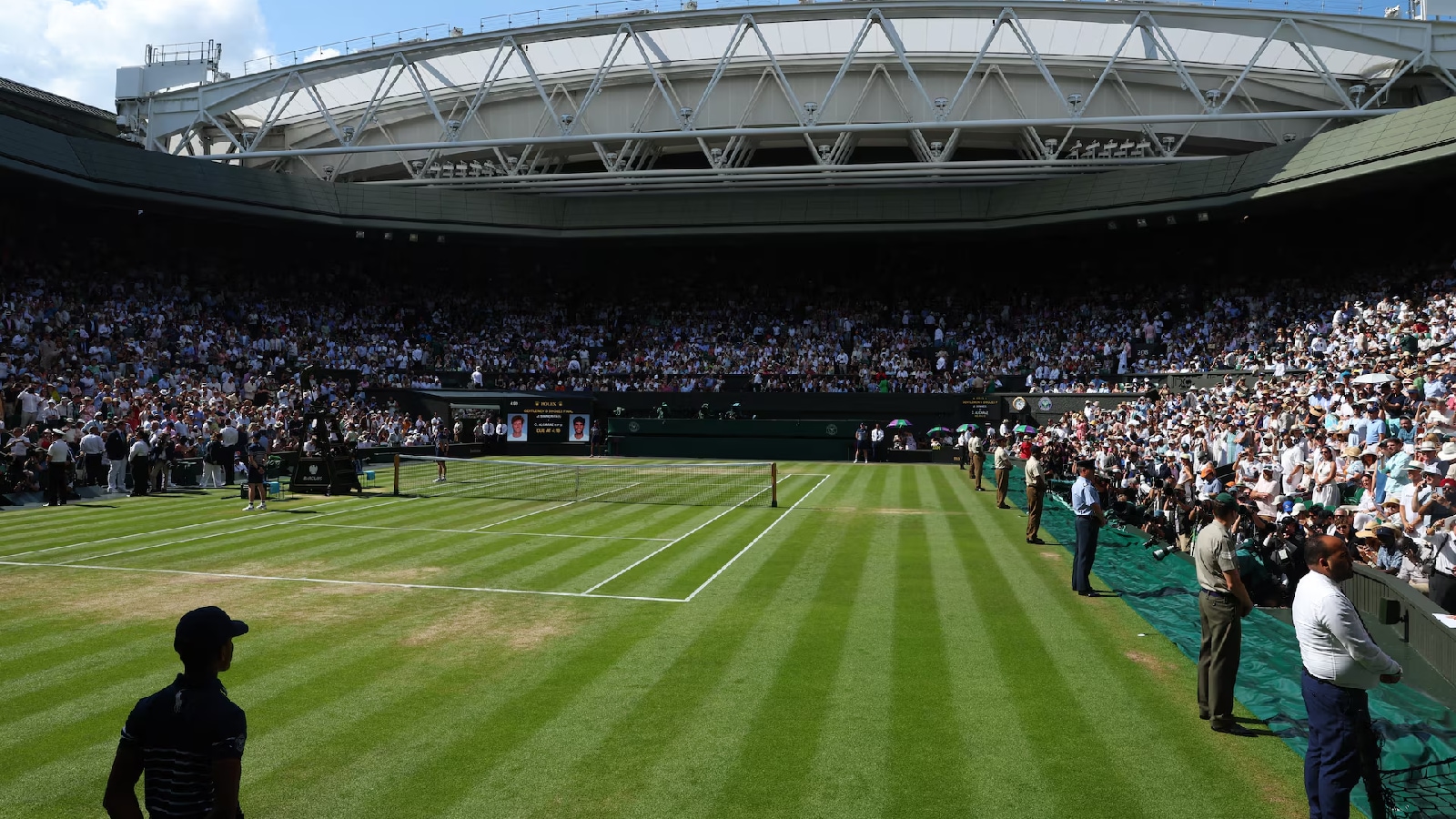
Wimbledon announced on Saturday that from the 2026 edition onwards, they will introduce the Video Review Technology (VRT) for the first time ever. The announcement was made with 100 days to go before the Championship begins on June 29. Wimbledon now joins the US Open and the Australian Open in allowing players to challenge certain calls made by the chair umpire.
Last year, Wimbledon removed line judges after 176 years and introduced the Electronic Line Calling (ELC) system. But that change immediately came with teething troubles. Emma Radacanu, playing in a home Grand Slam against the World No 1 Aryna Sabalenka, suffered a loss in straight sets and blamed the ELC for getting crucial calls wrong.
‘It’s kind of disappointing, the tournament here, that the calls can be so wrong, but for the most part they’ve been OK. I’ve had a few in my other matches, too, that have been very wrong. Hopefully they can fix that,” Radacanu had said last year. Jack Draper, another home favourite, also complained about the decisions made by the ELC.
But the biggest incident happened during Russian Anastasia Pavlyuchenkova’s match against Britain’s Sonay Kartal. The Russian believed that a volley from her opponent had flown well past the baseline, but no call came from the ELC and there was no way of contesting the call with the chair umpire. The point was replayed as the umpire learned that the ELC system was not in use at the time. Pavlyuchenkova complained that the ‘game was stolen from her’, but eventually ended up winning the match.
VRT is already in use at two of the four Slams and various ATP/WTA 1000 events. At Wimbledon, the technology will be available on six courts and will allow players to contest certain calls made by the chair umpire.
Players can take as many reviews as they want. Centre Court and the No. 1 Court will be able to use the technology for the whole tournament and the other four courts (No 2, 3, 12 and 18) will be able to use the VRT up until the conclusion of singles matches on those courts.
Some of these calls include double bounces, whether a racket or player has touched the net, or any hindrance calls. “Players will be allowed to review specific judgement calls made by the Chair Umpire (such as, for example, ‘not-up’, ‘foul shot’, ‘touch’) either on a point-ending call, when a player immediately stops play, or immediately after the completion of a point (in the case of hindrance). Reviews will either uphold or overturn the original call,” Wimbledon said in a statement on their website.
The hindrance call that Wimbledon will now allow, though, comes with its own challenges, as was demonstrated when Jack Draper lost at Indian Wells to Daniil Medvedev. The score was 6-1, 5-5 in Medvedev’s favour. During a rally, Draper made a shot and lifted his hands up, indicating annoyance: the reason – he believed the ball had gone past the baseline. But Medvedev returned and the rally went on for three more shots before Draper won the point.
But then Medvedev called for the chair umpire and requested a hindrance call – a call that went in his favour even though the outcome of the point had nothing to do with the hindrance he had suffered earlier in the point. VRT had, in that moment, become an outcome-dependent system – if Medvedev had won the point, he would not have called for a hindrance call. The electronic system, brought in to make refereeing perfect, continues to brandish newer ways of errors.
The French Open continues to be the last Grand Slam that refuses to add technology into the mix. They continue to use line judges and have yet to adopt the VRT. BBC Sport reported that the French Open’s reluctance to change their ways was based on a system that was prevalent for 134 years, coupled with an unwillingness to lose human control.
“I think we are right to keep our referees and line judges at Roland Garros,” said Gilles Moretton, president of the French Tennis Federation (FFT). “The federation wants to keep our referees for as long as we can. I hope we’ll be able to maintain it in our tournaments in the future.”
Wimbledon announced on Saturday that from the 2026 edition onwards, they will introduce the Video Review Technology (VRT) for the first time ever. The announcement was made with 100 days to go before the Championship begins on June 29. Wimbledon now joins the US Open and the Australian Open in allowing players to challenge certain calls made by the chair umpire.
Last year, Wimbledon removed line judges after 176 years and introduced the Electronic Line Calling (ELC) system. But that change immediately came with teething troubles. Emma Radacanu, playing in a home Grand Slam against the World No 1 Aryna Sabalenka, suffered a loss in straight sets and blamed the ELC for getting crucial calls wrong.
‘It’s kind of disappointing, the tournament here, that the calls can be so wrong, but for the most part they’ve been OK. I’ve had a few in my other matches, too, that have been very wrong. Hopefully they can fix that,” Radacanu had said last year. Jack Draper, another home favourite, also complained about the decisions made by the ELC.
But the biggest incident happened during Russian Anastasia Pavlyuchenkova’s match against Britain’s Sonay Kartal. The Russian believed that a volley from her opponent had flown well past the baseline, but no call came from the ELC and there was no way of contesting the call with the chair umpire. The point was replayed as the umpire learned that the ELC system was not in use at the time. Pavlyuchenkova complained that the ‘game was stolen from her’, but eventually ended up winning the match.
VRT is already in use at two of the four Slams and various ATP/WTA 1000 events. At Wimbledon, the technology will be available on six courts and will allow players to contest certain calls made by the chair umpire.
Players can take as many reviews as they want. Centre Court and the No. 1 Court will be able to use the technology for the whole tournament and the other four courts (No 2, 3, 12 and 18) will be able to use the VRT up until the conclusion of singles matches on those courts.
Some of these calls include double bounces, whether a racket or player has touched the net, or any hindrance calls. “Players will be allowed to review specific judgement calls made by the Chair Umpire (such as, for example, ‘not-up’, ‘foul shot’, ‘touch’) either on a point-ending call, when a player immediately stops play, or immediately after the completion of a point (in the case of hindrance). Reviews will either uphold or overturn the original call,” Wimbledon said in a statement on their website.
The hindrance call that Wimbledon will now allow, though, comes with its own challenges, as was demonstrated when Jack Draper lost at Indian Wells to Daniil Medvedev. The score was 6-1, 5-5 in Medvedev’s favour. During a rally, Draper made a shot and lifted his hands up, indicating annoyance: the reason – he believed the ball had gone past the baseline. But Medvedev returned and the rally went on for three more shots before Draper won the point.
But then Medvedev called for the chair umpire and requested a hindrance call – a call that went in his favour even though the outcome of the point had nothing to do with the hindrance he had suffered earlier in the point. VRT had, in that moment, become an outcome-dependent system – if Medvedev had won the point, he would not have called for a hindrance call. The electronic system, brought in to make refereeing perfect, continues to brandish newer ways of errors.
The French Open continues to be the last Grand Slam that refuses to add technology into the mix. They continue to use line judges and have yet to adopt the VRT. BBC Sport reported that the French Open’s reluctance to change their ways was based on a system that was prevalent for 134 years, coupled with an unwillingness to lose human control.
“I think we are right to keep our referees and line judges at Roland Garros,” said Gilles Moretton, president of the French Tennis Federation (FFT). “The federation wants to keep our referees for as long as we can. I hope we’ll be able to maintain it in our tournaments in the future.”