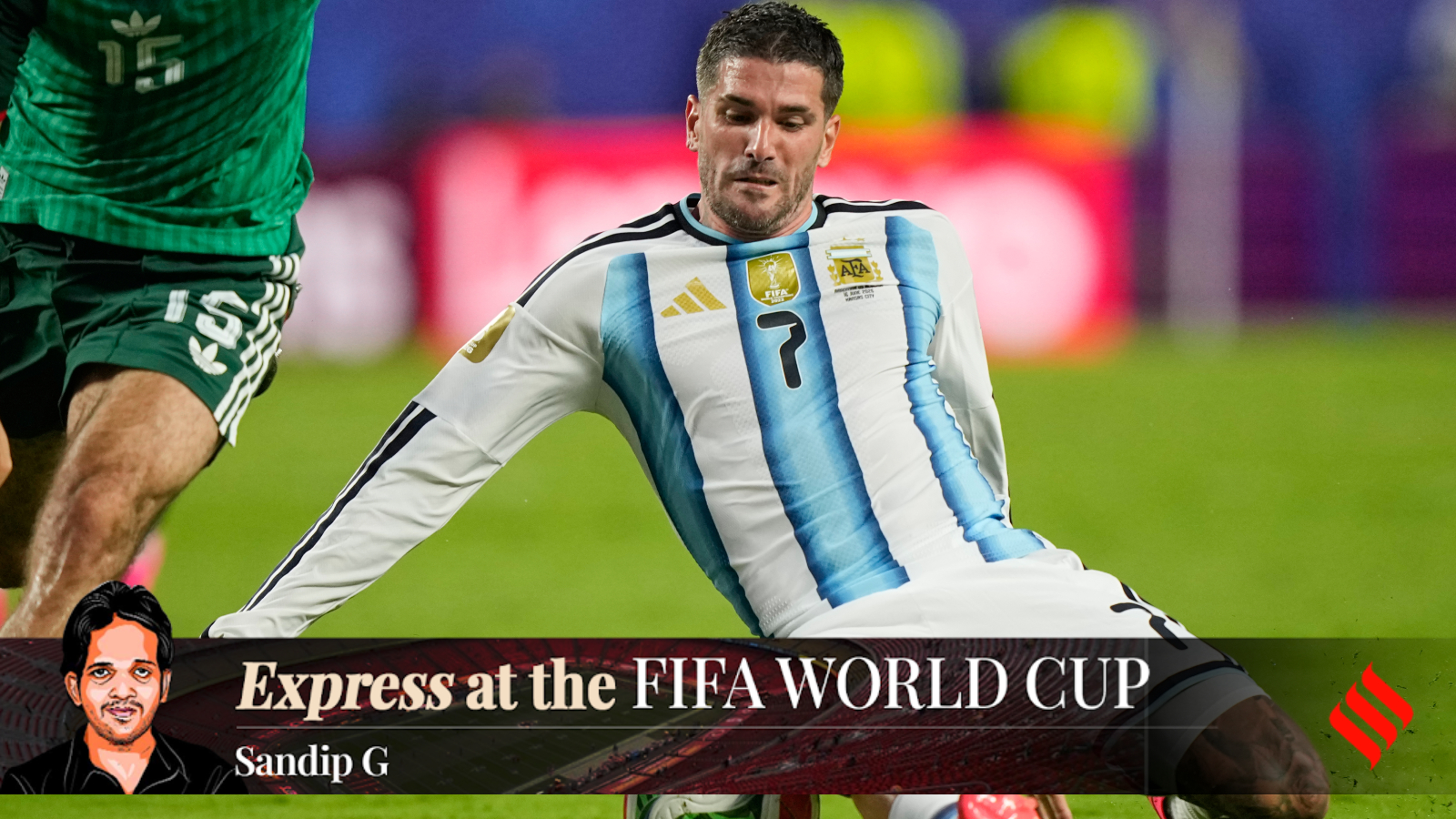


Rodrigo de Paul: A bodyguard, a troubleshooter, the tired legs that make Messi magic work
Nicknamed Lionel Messi's bodyguard, Rodrigo de Paul is unwaveringly committed to Messi weave his magic without burden.
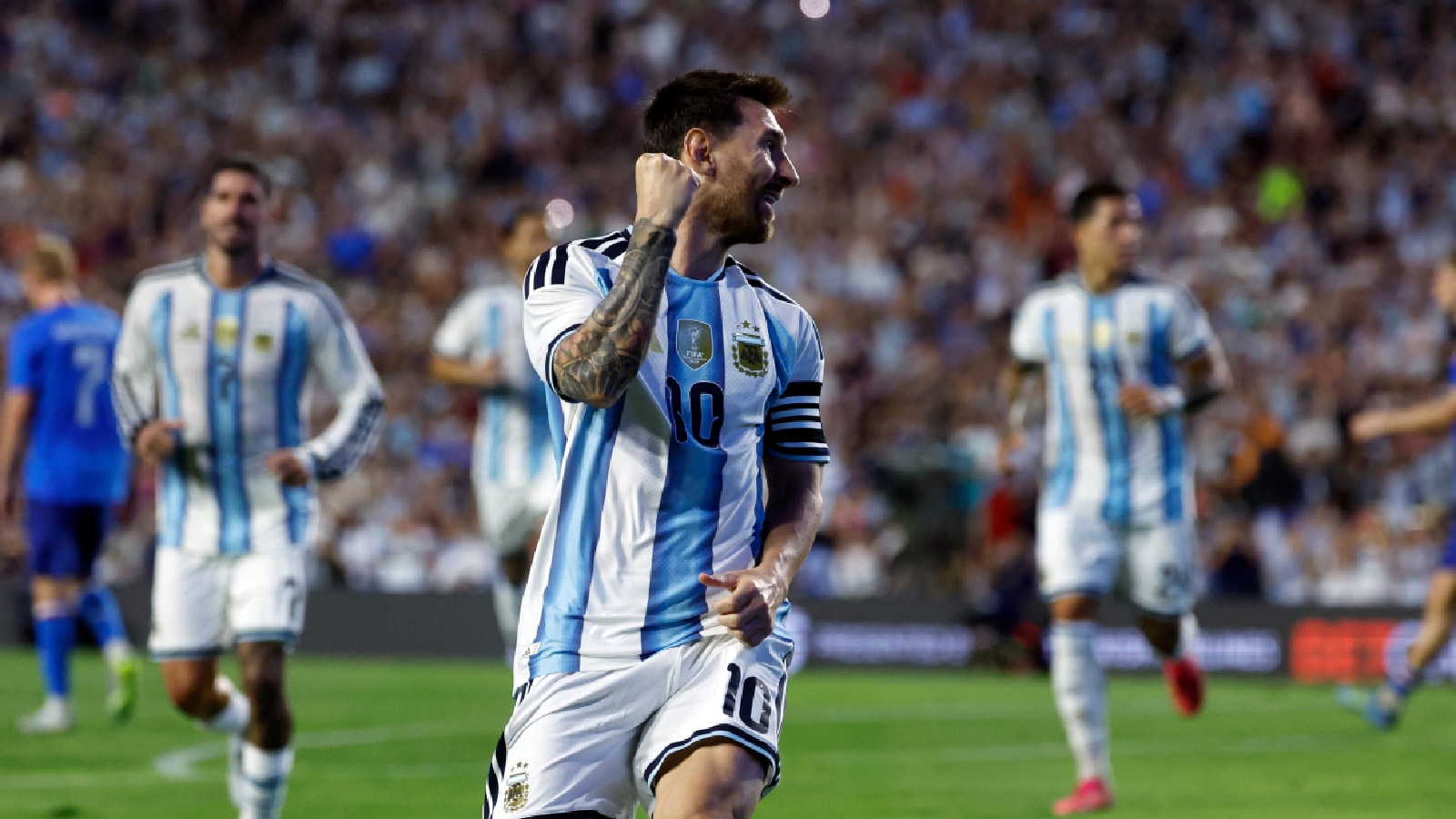
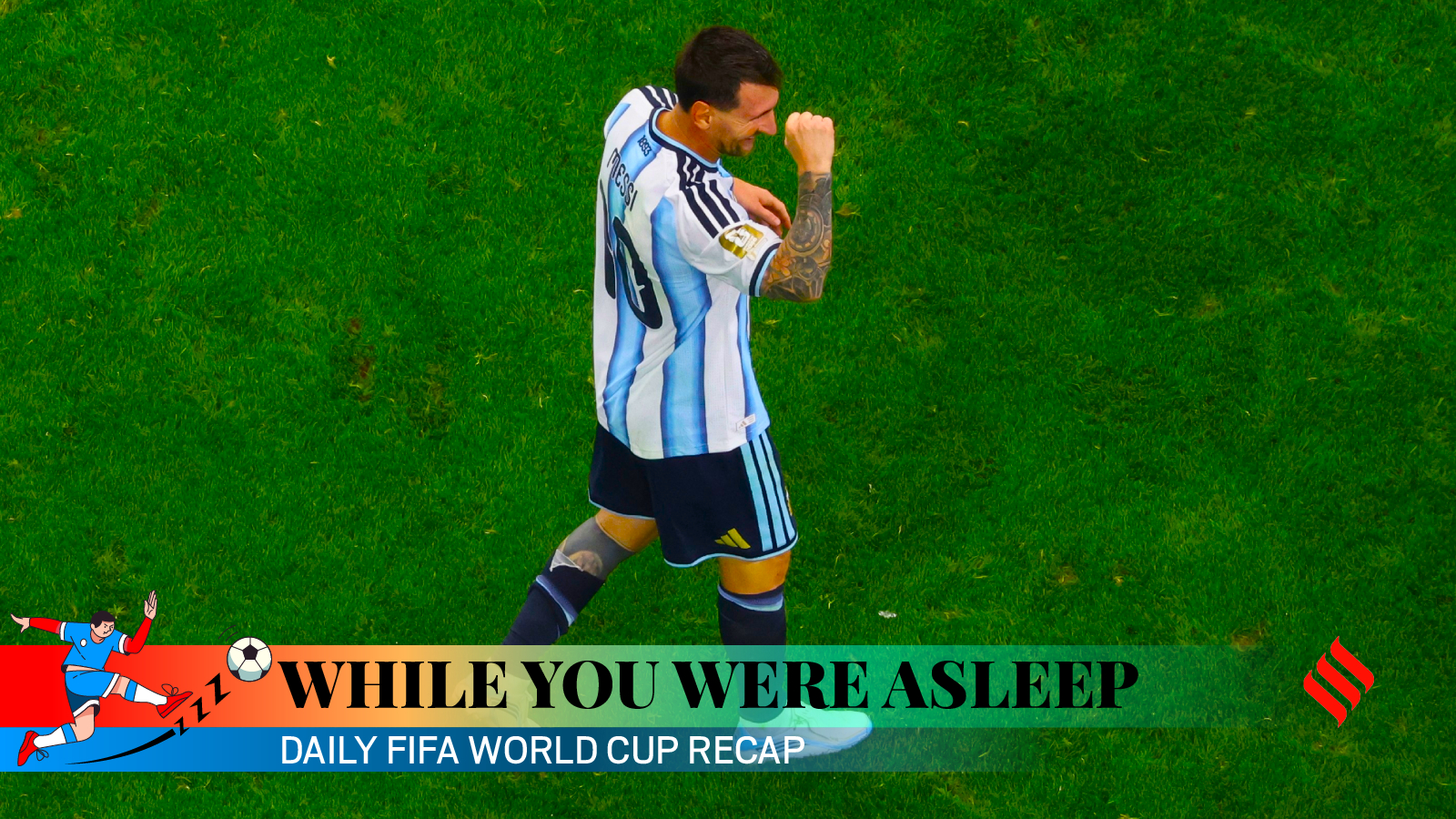
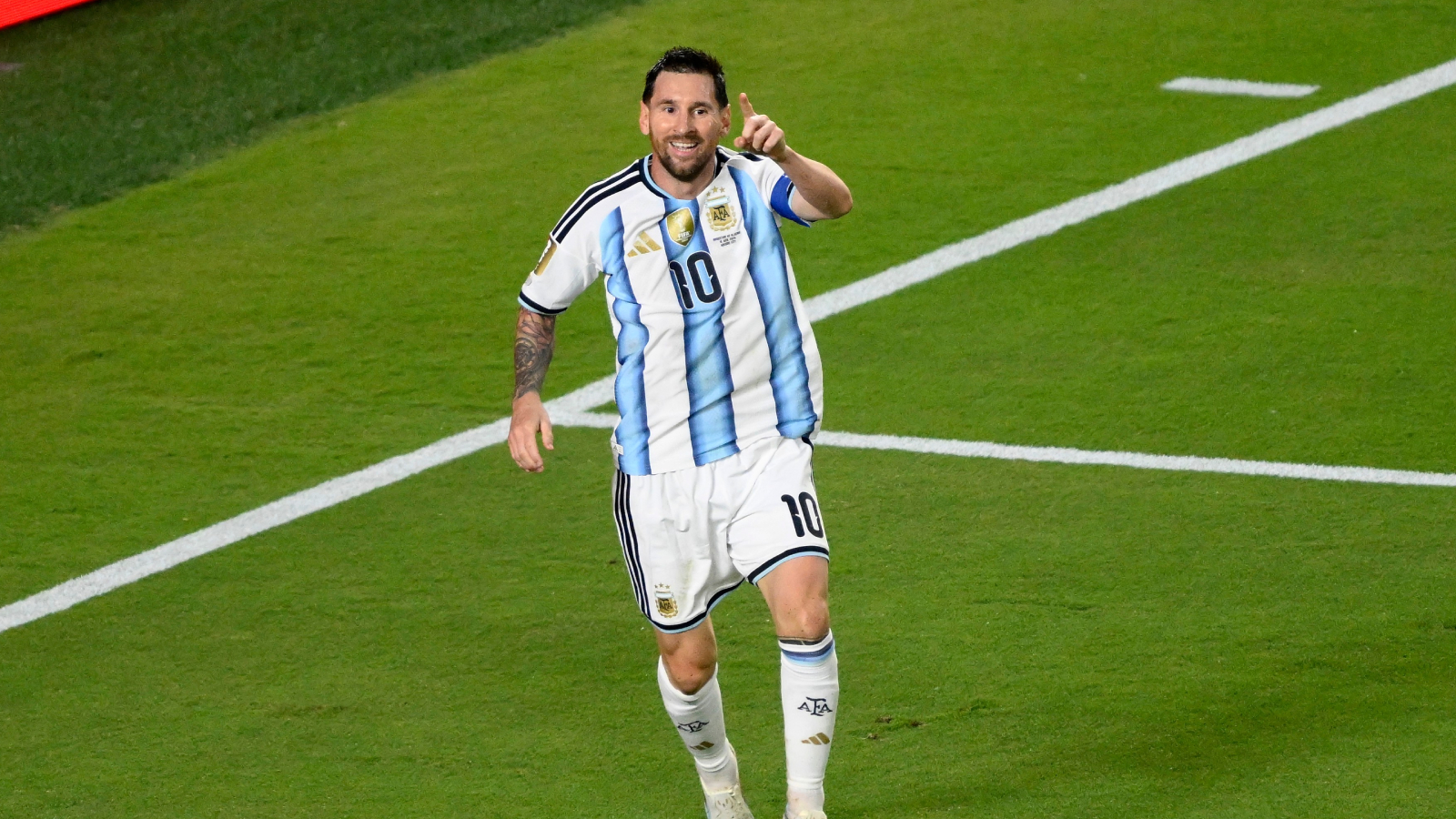
Lionel Messi and Rodrigo de Paul are not just structural parts of the same sentence, but de Paul is the verb that makes Messi the subject moving. Messi can be watched in isolation, at walking pace, with an impermeable halo around him, a fulfilling experience in itself. But to admire Messi, the viewer should admire de Paul too. It is difficult because they are not often together, not in each other’s shadows, not indulging in one-twos or interplays, and not passing the ball to each other or assisting. But you miss de Paul, you miss a part of Messi too.
To watch de Paul is to watch where Messi should have been; to understand de Paul is to understand what Messi should have been doing. Messi roams, but de Paul ensures that he leaves no vacuum. He fills the space. Messi doesn’t press. He needn’t, because there is de Paul pressing for two men. Messi doesn’t run, because de Paul is running for him, covering his own distance as well as Messi’s. Messi doesn’t lunge into tackles, again there is De Paul, who incidentally began his career as a goalkeeper for a small club in his hometown Sarandí, a suburb of Buenos Aires.
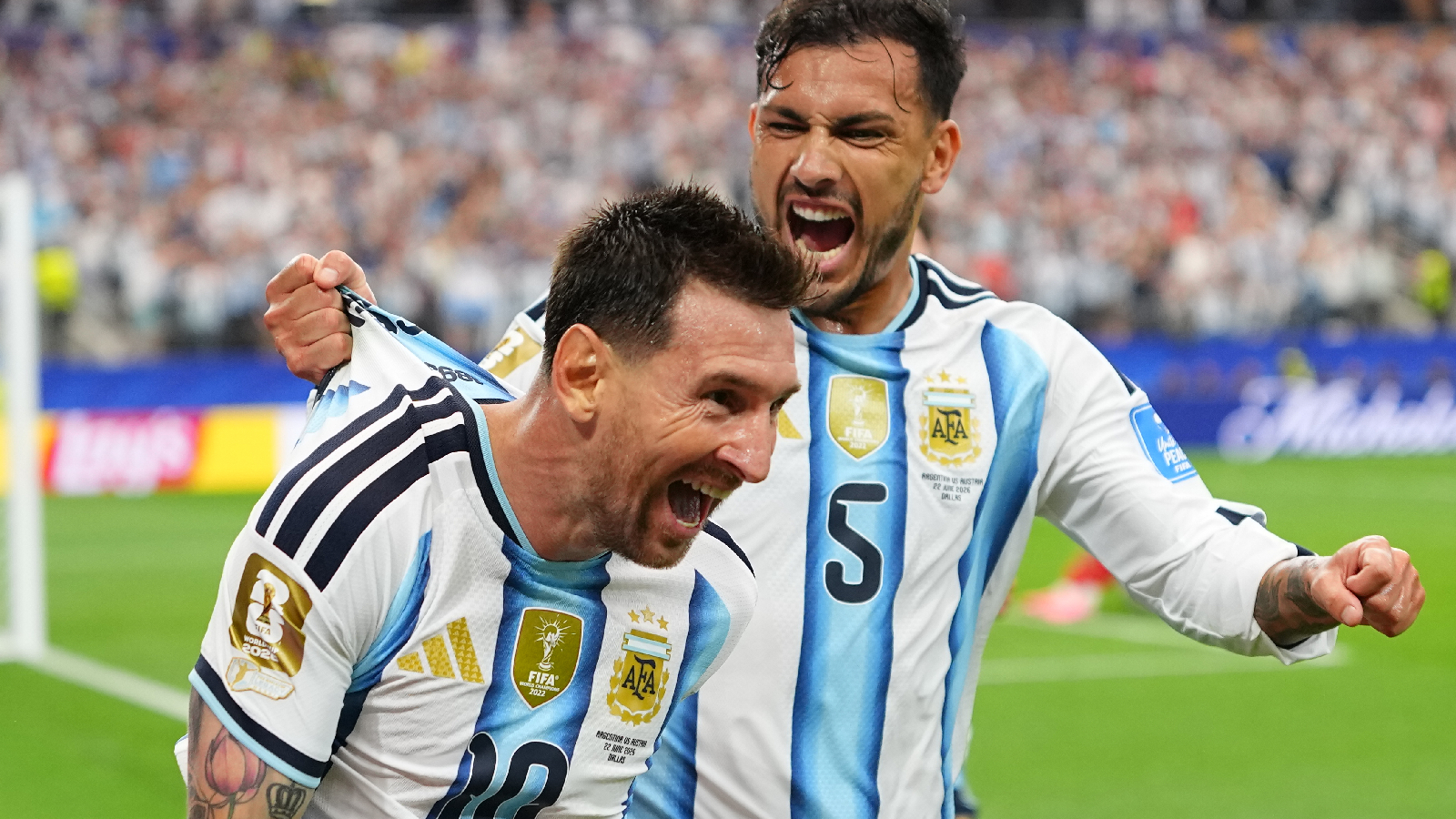
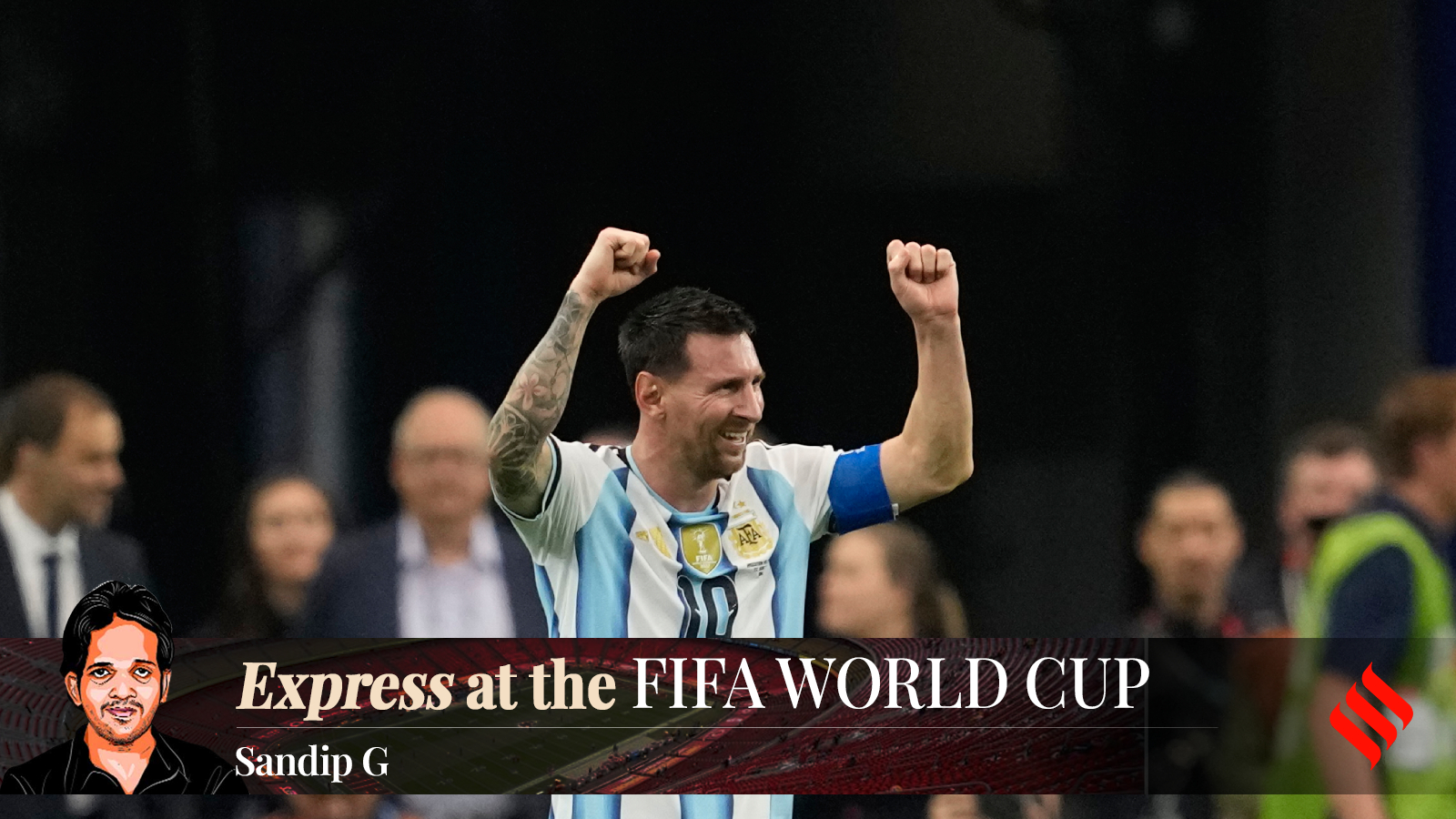
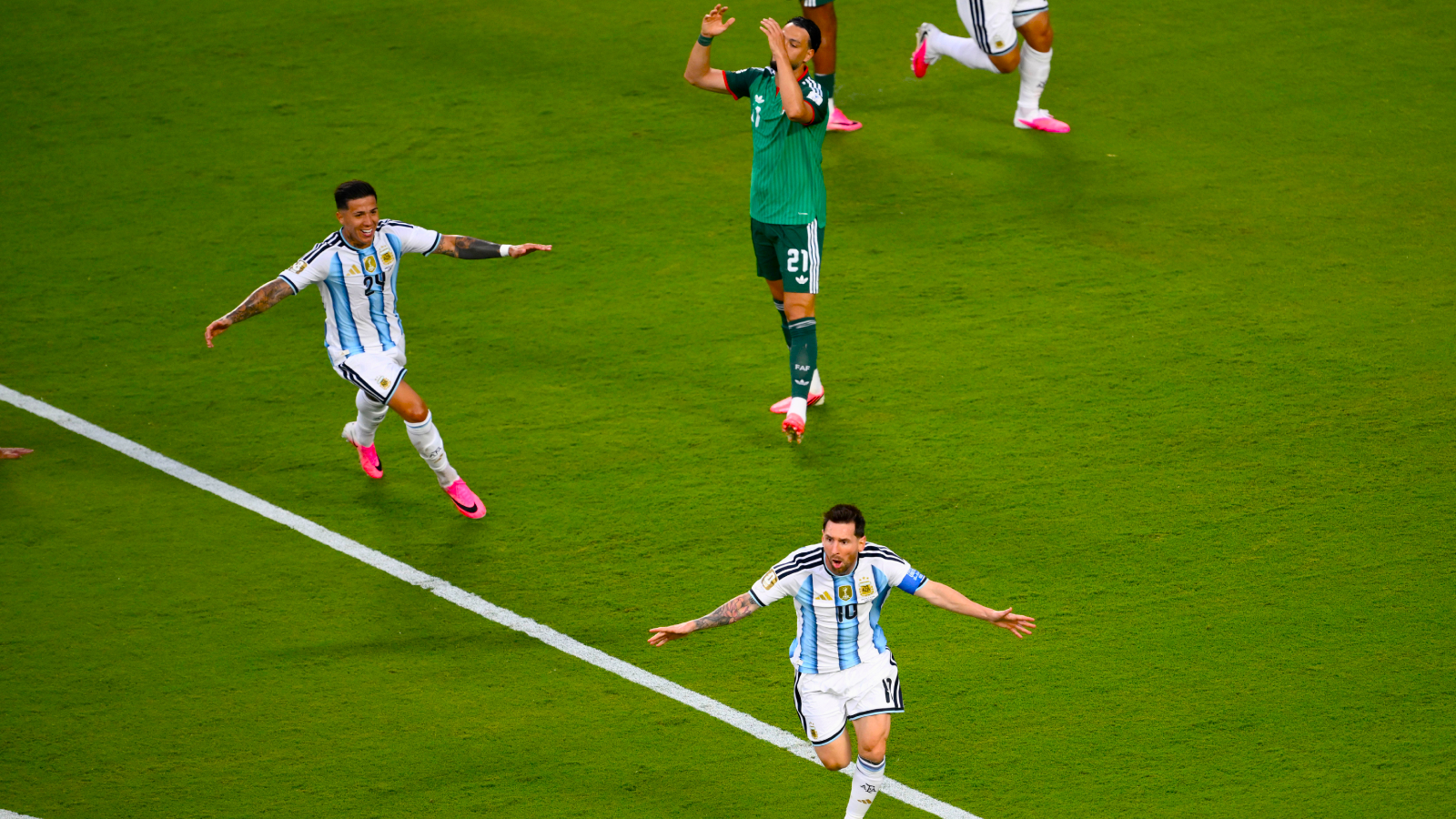
Messi doesn’t appeal for fouls committed on him, because de Paul does the talking. “I care a lot about Leo, and I know he cares a lot about me,” he said before the World Cup. When Messi scored his record-breaking 17th goal, he searched for de Paul’s face, and when he found him, he embraced him like best friends would.
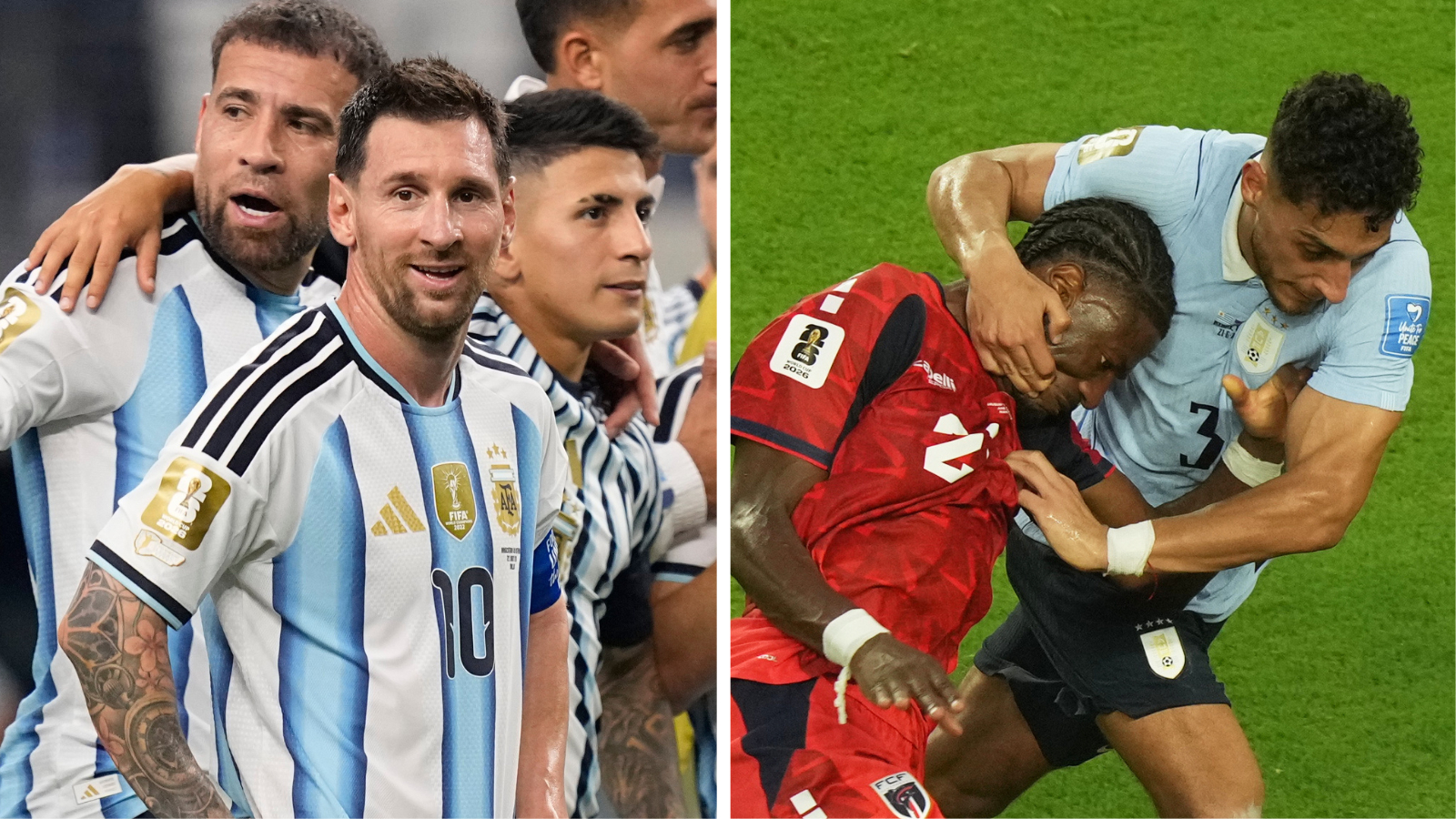
The Argentinian press have coined a non-quirky but fitting epithet for him. The bodyguard. Messi’s protective shield. Not only in the sense that he compensates for Messi’s declining physical prowess, but he is the first to badger the referees when Messi is fouled, he makes a mental note of those that had fouled him, and waits for his ripe moment to exact revenge. Messi’s revenge is his revenge too. He sketches the men inhibiting Messi-world, and takes it upon himself to bind them. Perhaps, there should be a new name for his role—The Rodrigo role. He likens himself to a “spare tyre”. His teammates have a more fitting description—the engine. He runs an average of 11 kilometres a game; Messi’s is around 7. Against Algeria, de Paul ran 10.21 km, compensating for Messi’s laggardly 7.2.
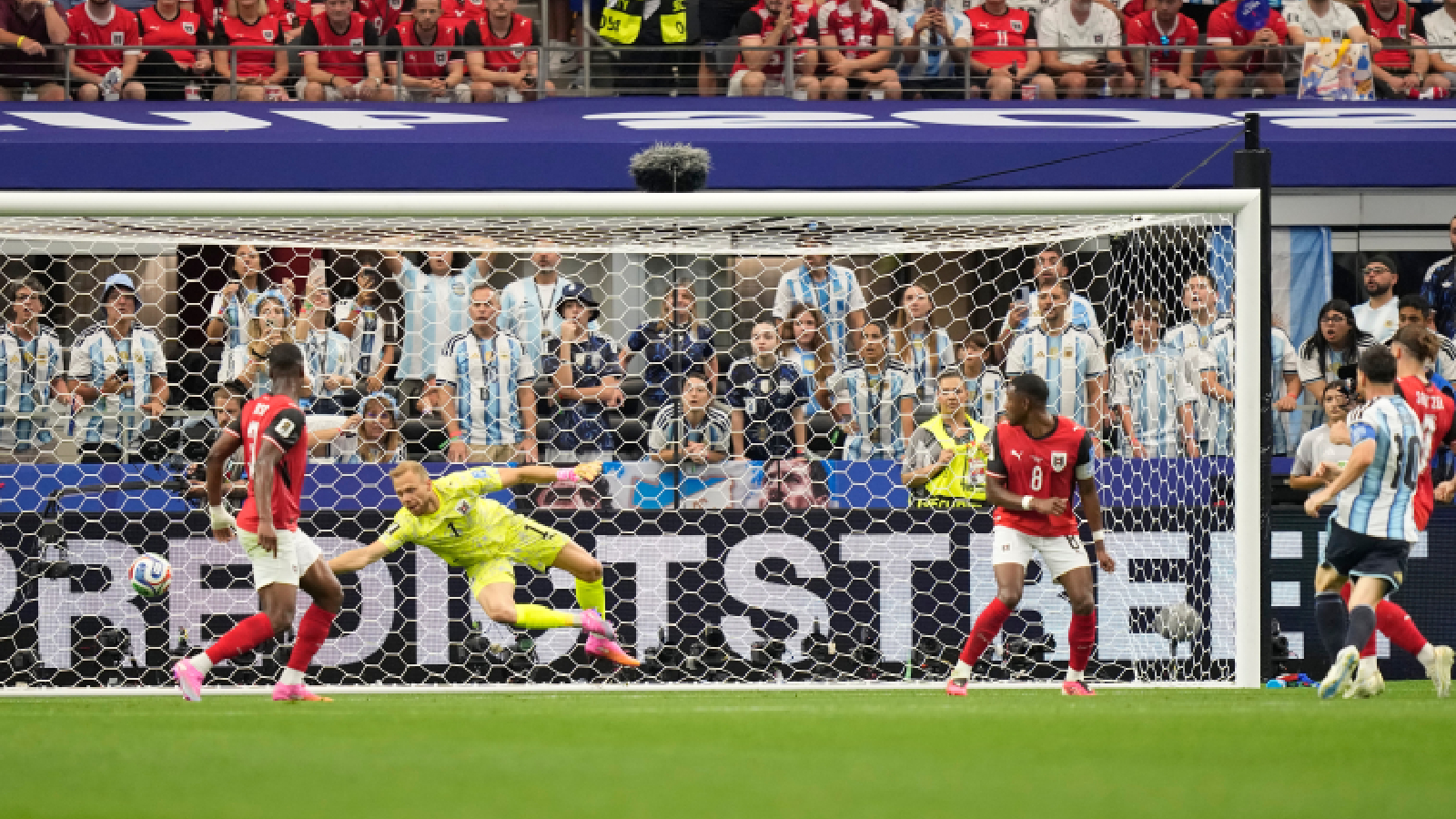
There were numerous instances of de Paul’s unflinching commitment to Messi. Against Austria, he was constantly checking and controlling David Alaba, the left-sided centre-back, the most experienced hand, tasked to confiscate Messi. He pressed him, drew him into challenging him and sucked out all his energy. Sometimes, he lost the ball, but would keep chasing Alaba or whoever there was, and distract them from Messi. He suffocates, so that Messi could breathe. The steel that makes the silk shine.
He is so vital to Messi that Inter Miami didn’t bother grooming another midfielder to enable Messi blaze in his sunset. They simply brought him. He is as essential to him, as Xavi Hernandez and Andres Iniesta were to Messi in Barcelona. Even more profound because Messi was at the peak of his physical prowess then.
The 32-year-old, often, goes uncelebrated like most defensive midfielders. He berates himself as an “inferior midfielder who is good with two other midfielders around me.” The self-deprecating self-assessment has a grain of truth about it.
He is not an out-and-out No 6 in the N’golo Kante mould; he is not the conductor of the orchestra like Xavi or Kevin de Bruyne; he is not a box-to-box enforcer like Declan Rice. He is a sum of all their parts, and performs one of the toughest jobs in the sport. To be two men at the same time.
But primarily, he makes the greatest footballer spread his greatness a little longer, a little bit more. Messi has the assurance that there is de Paul performing his duties. And de Paul, he says, has the guarantee that there is Messi to produce supernatural feats. “Playing with him (Messi) is like playing Truco (a popular South American trick card game) having the ace of spades in every hand,” De Paul told Argentina channel Ole. “If you know beforehand that you are always going to have that card, you play more at ease, more calm. Messi is the one who takes care of me — he’d come down and tell me ‘come here’, ‘get like this’, it’s the opposite.”
ALSO READ | Record-breaking Lionel Messi’s longevity is truly remarkable
Their friendship off the field translates onto the pitch too. “Having such a good relationship with him led to us looking for each other a lot on the field and understanding each other so much,” de Paul said in an interview with TyC Sports in 2022. “What happened on the field happened outside. That relationship was always nurturing, to the point where now we understand each other just by looking at each other.”
They had never played together until 2018, just before the World Cup. Their personalities are different. De Paul is an extrovert: Messi is withdrawn. Perhaps the polarity brought them together. They bonded over playing the card game, truco, songs and training. “We do warm up games where you dribble, jump a hoop, shoot. I say: ‘Leo; I’ll take you on.’ He loves that. That humanises him. You can see him as existing in another dimension but he’s a man,” he once told The Guardian. And de Paul is the man that helps the “man” to become a superman.
Lionel Messi and Rodrigo de Paul are not just structural parts of the same sentence, but de Paul is the verb that makes Messi the subject moving. Messi can be watched in isolation, at walking pace, with an impermeable halo around him, a fulfilling experience in itself. But to admire Messi, the viewer should admire de Paul too. It is difficult because they are not often together, not in each other’s shadows, not indulging in one-twos or interplays, and not passing the ball to each other or assisting. But you miss de Paul, you miss a part of Messi too.
To watch de Paul is to watch where Messi should have been; to understand de Paul is to understand what Messi should have been doing. Messi roams, but de Paul ensures that he leaves no vacuum. He fills the space. Messi doesn’t press. He needn’t, because there is de Paul pressing for two men. Messi doesn’t run, because de Paul is running for him, covering his own distance as well as Messi’s. Messi doesn’t lunge into tackles, again there is De Paul, who incidentally began his career as a goalkeeper for a small club in his hometown Sarandí, a suburb of Buenos Aires.
Messi doesn’t appeal for fouls committed on him, because de Paul does the talking. “I care a lot about Leo, and I know he cares a lot about me,” he said before the World Cup. When Messi scored his record-breaking 17th goal, he searched for de Paul’s face, and when he found him, he embraced him like best friends would.
The Argentinian press have coined a non-quirky but fitting epithet for him. The bodyguard. Messi’s protective shield. Not only in the sense that he compensates for Messi’s declining physical prowess, but he is the first to badger the referees when Messi is fouled, he makes a mental note of those that had fouled him, and waits for his ripe moment to exact revenge. Messi’s revenge is his revenge too. He sketches the men inhibiting Messi-world, and takes it upon himself to bind them. Perhaps, there should be a new name for his role—The Rodrigo role. He likens himself to a “spare tyre”. His teammates have a more fitting description—the engine. He runs an average of 11 kilometres a game; Messi’s is around 7. Against Algeria, de Paul ran 10.21 km, compensating for Messi’s laggardly 7.2.
There were numerous instances of de Paul’s unflinching commitment to Messi. Against Austria, he was constantly checking and controlling David Alaba, the left-sided centre-back, the most experienced hand, tasked to confiscate Messi. He pressed him, drew him into challenging him and sucked out all his energy. Sometimes, he lost the ball, but would keep chasing Alaba or whoever there was, and distract them from Messi. He suffocates, so that Messi could breathe. The steel that makes the silk shine.
He is so vital to Messi that Inter Miami didn’t bother grooming another midfielder to enable Messi blaze in his sunset. They simply brought him. He is as essential to him, as Xavi Hernandez and Andres Iniesta were to Messi in Barcelona. Even more profound because Messi was at the peak of his physical prowess then.
The 32-year-old, often, goes uncelebrated like most defensive midfielders. He berates himself as an “inferior midfielder who is good with two other midfielders around me.” The self-deprecating self-assessment has a grain of truth about it.
He is not an out-and-out No 6 in the N’golo Kante mould; he is not the conductor of the orchestra like Xavi or Kevin de Bruyne; he is not a box-to-box enforcer like Declan Rice. He is a sum of all their parts, and performs one of the toughest jobs in the sport. To be two men at the same time.
But primarily, he makes the greatest footballer spread his greatness a little longer, a little bit more. Messi has the assurance that there is de Paul performing his duties. And de Paul, he says, has the guarantee that there is Messi to produce supernatural feats. “Playing with him (Messi) is like playing Truco (a popular South American trick card game) having the ace of spades in every hand,” De Paul told Argentina channel Ole. “If you know beforehand that you are always going to have that card, you play more at ease, more calm. Messi is the one who takes care of me — he’d come down and tell me ‘come here’, ‘get like this’, it’s the opposite.”
ALSO READ | Record-breaking Lionel Messi’s longevity is truly remarkable
Their friendship off the field translates onto the pitch too. “Having such a good relationship with him led to us looking for each other a lot on the field and understanding each other so much,” de Paul said in an interview with TyC Sports in 2022. “What happened on the field happened outside. That relationship was always nurturing, to the point where now we understand each other just by looking at each other.”
They had never played together until 2018, just before the World Cup. Their personalities are different. De Paul is an extrovert: Messi is withdrawn. Perhaps the polarity brought them together. They bonded over playing the card game, truco, songs and training. “We do warm up games where you dribble, jump a hoop, shoot. I say: ‘Leo; I’ll take you on.’ He loves that. That humanises him. You can see him as existing in another dimension but he’s a man,” he once told The Guardian. And de Paul is the man that helps the “man” to become a superman.