

FIFA to pay Omar Artan despite World Cup heartbreak
Omar Artan had travelled to Miami to report for FIFA's pre-World Cup referees' camp before the tournament.
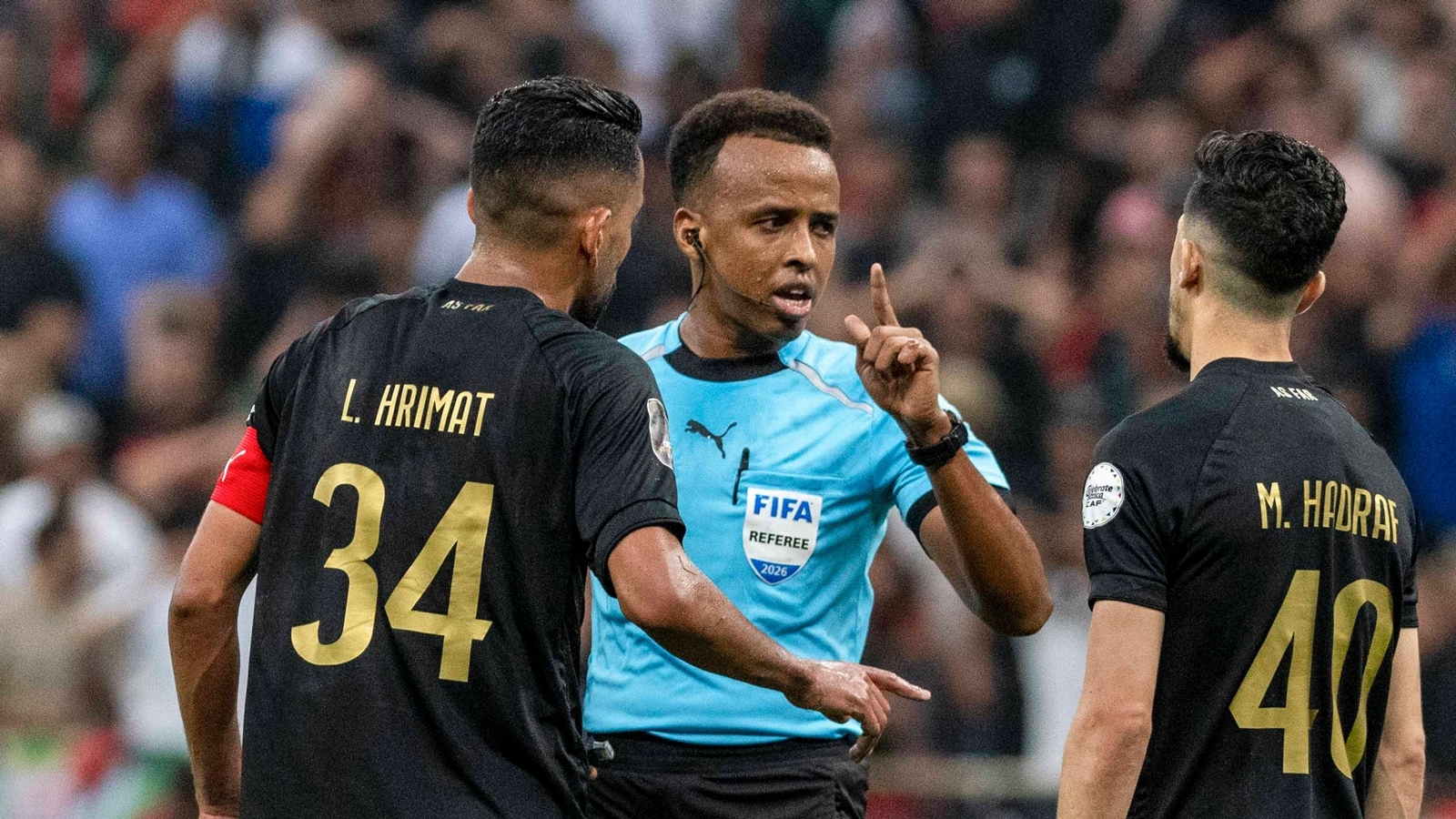
Somali referee Omar Abdulkadir Artan, whose hopes of making history at the 2026 FIFA World Cup were dashed after being refused entry into the United States, will still receive the full financial package earmarked for tournament officials despite taking no part in the competition.
A BBC report said that FIFA has decided to honour the payment due to Artan even though the 34-year-old will not officiate any matches after US immigration authorities prevented him from entering the country. Match officials are informed of their final remuneration only after the competition has concluded.
Artan had travelled to Miami to report for FIFA’s pre-World Cup referees’ camp before the tournament. Instead, he spent about 11 hours undergoing questioning by border officials before being informed that he would not be admitted. He was carrying a diplomatic passport as well as a valid single-entry US visa issued for the World Cup.
A US government official later said the decision was based on alleged links to individuals suspected of belonging to terrorist organisations. Artan firmly denied any such association, saying officials had questioned him about the Somali militant group Al Shabab but that he knew nothing about the organisation.
The referee insisted he had completed every requirement before travelling and believed all his documentation was in order.
“I had the right papers and everything. I had the right visa,” Artan said after the ordeal.
“I’m simply a referee trying to achieve the biggest dream of my career by working at the World Cup.”
After being placed on a return flight to Turkey, Artan received assistance from FIFA representatives in Istanbul before continuing his journey to the Somalian capital of Mogadishu.
The setback has not diminished Artan’s standing within the game. UEFA has appointed him to referee the UEFA Super Cup between Paris Saint-Germain and Aston Villa in Salzburg on August 12, with the appointment widely viewed as recognition of his performances and support following his World Cup disappointment.
Artan returned home to a warm welcome and thanked the Somali public for standing by him during a difficult period. He also pledged to continue pursuing his ambition of officiating at the 2030 FIFA World Cup.
His rise has been one of African football’s notable success stories in recent years. In 2025, he became the first Somali referee to take charge of a continental club final when he officiated the second leg of the CAF Champions League final between Pyramids FC and Mamelodi Sundowns.
FIFA also selected him to officiate at the Under-20 World Cup in Chile, where he handled three matches, including the third-place playoff. He later took charge of group-stage fixtures at the Africa Cup of Nations after previously officiating at the continental tournament in 2024.
Those performances earned Artan the Confederation of African Football’s Men’s Referee of the Year award in 2025, underlining his emergence as one of the continent’s leading match officials.
Former FIFA president Sepp Blatter has since criticised the handling of Artan’s case, arguing that World Cup host nations must guarantee both safety and unrestricted entry for all qualified teams, officials and referees. In a post on X on Saturday, Blatter said preventing a FIFA-appointed referee from participating went against those principles and warned that football’s universality should never be compromised.
Somali referee Omar Abdulkadir Artan, whose hopes of making history at the 2026 FIFA World Cup were dashed after being refused entry into the United States, will still receive the full financial package earmarked for tournament officials despite taking no part in the competition.
A BBC report said that FIFA has decided to honour the payment due to Artan even though the 34-year-old will not officiate any matches after US immigration authorities prevented him from entering the country. Match officials are informed of their final remuneration only after the competition has concluded.
Artan had travelled to Miami to report for FIFA’s pre-World Cup referees’ camp before the tournament. Instead, he spent about 11 hours undergoing questioning by border officials before being informed that he would not be admitted. He was carrying a diplomatic passport as well as a valid single-entry US visa issued for the World Cup.
A US government official later said the decision was based on alleged links to individuals suspected of belonging to terrorist organisations. Artan firmly denied any such association, saying officials had questioned him about the Somali militant group Al Shabab but that he knew nothing about the organisation.
The referee insisted he had completed every requirement before travelling and believed all his documentation was in order.
“I had the right papers and everything. I had the right visa,” Artan said after the ordeal.
“I’m simply a referee trying to achieve the biggest dream of my career by working at the World Cup.”
After being placed on a return flight to Turkey, Artan received assistance from FIFA representatives in Istanbul before continuing his journey to the Somalian capital of Mogadishu.
The setback has not diminished Artan’s standing within the game. UEFA has appointed him to referee the UEFA Super Cup between Paris Saint-Germain and Aston Villa in Salzburg on August 12, with the appointment widely viewed as recognition of his performances and support following his World Cup disappointment.
Artan returned home to a warm welcome and thanked the Somali public for standing by him during a difficult period. He also pledged to continue pursuing his ambition of officiating at the 2030 FIFA World Cup.
His rise has been one of African football’s notable success stories in recent years. In 2025, he became the first Somali referee to take charge of a continental club final when he officiated the second leg of the CAF Champions League final between Pyramids FC and Mamelodi Sundowns.
FIFA also selected him to officiate at the Under-20 World Cup in Chile, where he handled three matches, including the third-place playoff. He later took charge of group-stage fixtures at the Africa Cup of Nations after previously officiating at the continental tournament in 2024.
Those performances earned Artan the Confederation of African Football’s Men’s Referee of the Year award in 2025, underlining his emergence as one of the continent’s leading match officials.
Former FIFA president Sepp Blatter has since criticised the handling of Artan’s case, arguing that World Cup host nations must guarantee both safety and unrestricted entry for all qualified teams, officials and referees. In a post on X on Saturday, Blatter said preventing a FIFA-appointed referee from participating went against those principles and warned that football’s universality should never be compromised.