

Why 2026 could be a breakthrough moment for Black goalkeepers
On all metrics of save percentages, raw saves and goals prevented, this World Cup edition has shown a stark performance uptick by Black goalkeepers
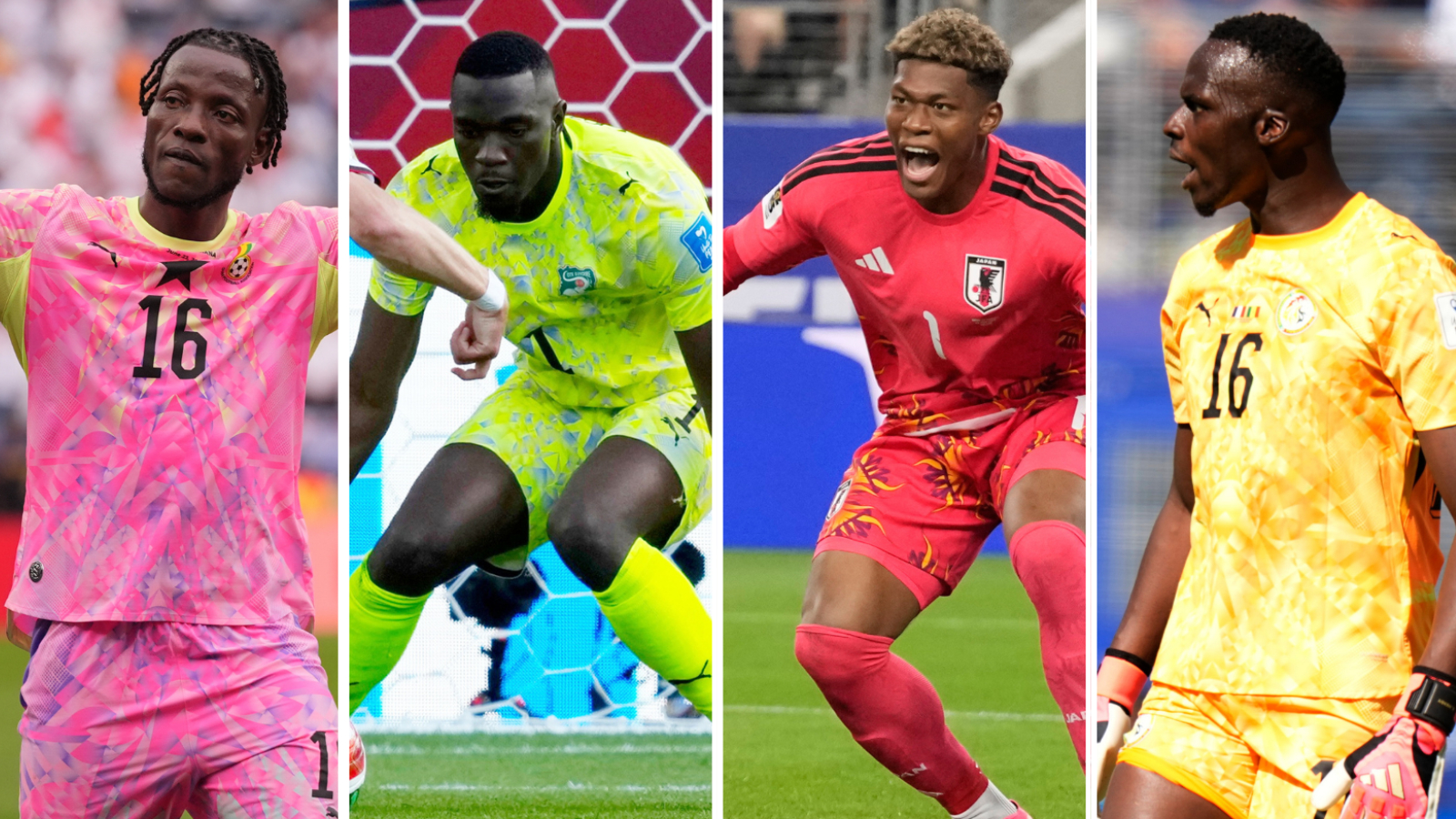
What unites Ghana’s Benjamin Asare, Ivorian Yahia Fofana, Japanese Zion Suzuki and Senegalese Edouard Mendy?
Besides none wanting to guard the goal at the outset of their careers, they are also all Black goalkeepers. For much of football history, those two words have not coexisted. The game has produced elite Black strikers, wingers and defenders, but Black goalkeepers have been a rare commodity.
This World Cup, in particular, has challenged perceptions. Statistics corroborate. Six of the 20 goalkeepers with the highest save percentages so far in this competition are Black — a dramatic increase from the corresponding figure of just one from 20 at the 2022 World Cup. On raw saves, six of the top 20 are Black goalkeepers, compared with only two four years ago. Goals prevented tell a similar story: six in the top 20 this summer, only one in Qatar.
The rarity stems from prejudice going back decades. Starting with the ‘curse of Moacir Barbosa’. Among the finest goalkeepers of his generation, Barbosa won Brazil the 1949 Copa America. Then at the 1950 World Cup. Selecao needed only a draw against Uruguay to be crowned world champions for the first time in history. But Barbosa misjudged a shot by Alcides Ghiggia, and conceded a goal that could arguably have been saved. At Maracana, one could hear a whisper.
Barbosa died 50 years later, virtually penniless and draped in indignity. Months before his death, he would lament: “Under Brazilian law, the maximum sentence is 30 years. But I have been paying for 50 years for a crime I did not commit.” In a cosmopolitan nation that gave football Pelé, Jairzinho, Romário, Ronaldinho and countless other Black icons, only two Black goalkeepers — Manga and Dida — would start a World Cup over the next 76 years.
Researchers have examined football’s positional imbalance through a concept known as ‘stacking’ — the phenomenon of racial stereotypes influencing a player’s position.
ALSO READ | How four little-known goalkeepers became unlikely stars of the 2026 World Cup
A 2022 study by sports researchers Pascal Delheye, Jeroen Scheerder and Jens De Coninck, published in the International Review for the Sociology of Sport, reflected a belief that has long lingered within the game — Black footballers are encouraged to play in positions demanding speed and athleticism, like on the wing, but not on those that supposedly require leadership and decision-making, like goalkeeping.
Prior to 2026, France had never arrived at a World Cup with a Black first-choice goalkeeper, until Mike Maignan. Steve Mandanda has played in this competition, but he has always been an understudy to Hugo Lloris. Maignan, though, is reshaping boundaries. Born to a Haitian mother and a Guadeloupean father, he honed his skills at the Paris Saint-Germain academy. As first-choice at AC Milan, and now for France, Maignan’s is the biggest breakthrough.
The AC Milan custodian had once walked off a Serie A game after being racially abused by Udinese fan. Addressing the incident, he wrote on X: “It’s not the player who was attacked. It’s the man, it’s the father. It’s not the first time it’s happened to me and I’m not the first person it’s happened to. We’ve had statements, publicity campaigns, protocols and nothing has changed. Today it’s a whole system that must take responsibility.”
Senegalese Mendy is one of the few Black goalkeepers to win the UEFA Champions League. “It (racial abuse) has happened to me many times. There are few of us (African goalkeepers). That’s why as an African goalkeeper in the Premier League, I have to give my best to sweep the stereotypes away and open the way for others,” he had said.
Zion Suzuki, of Japan, switched off his Instagram comments after a 2-1 defeat to Iraq at the AFC Asian Cup. His DMs were flooded with racial abuse. “I know I am being criticised, but I would like people to stop writing racist things. I will not let this break me,” he stated. Lionel Mpasi, of DR Congo, faced the same during a match against Toulouse in 2021.
Benjamin Asare still plays his club football in Ghana, and throughout his career, has had to juggle numerous odd jobs. Bus conductor. Mason. Polythene bags seller. Steel Bender.
Mendy was unemployed at 22, queuing up outside a job centre in Le Havre. Mpasi, once French number 1 Mike Maignan’s teammate at Paris Saint-Germain, found no takers and had to work as a school supervisor to make ends meet. Cape Verde’s Vozinha and Haiti’s Johny Placide are free agents, and can only hope their World Cup saves save them from unemployment. Curaçao’s Eloy Room faces similar uncertainty, with his contract due to expire in November.
Ordinary men, by every measure. Except, they are doing the extraordinary task of punching one of football’s oldest typecasts.
What unites Ghana’s Benjamin Asare, Ivorian Yahia Fofana, Japanese Zion Suzuki and Senegalese Edouard Mendy?
Besides none wanting to guard the goal at the outset of their careers, they are also all Black goalkeepers. For much of football history, those two words have not coexisted. The game has produced elite Black strikers, wingers and defenders, but Black goalkeepers have been a rare commodity.
This World Cup, in particular, has challenged perceptions. Statistics corroborate. Six of the 20 goalkeepers with the highest save percentages so far in this competition are Black — a dramatic increase from the corresponding figure of just one from 20 at the 2022 World Cup. On raw saves, six of the top 20 are Black goalkeepers, compared with only two four years ago. Goals prevented tell a similar story: six in the top 20 this summer, only one in Qatar.
The rarity stems from prejudice going back decades. Starting with the ‘curse of Moacir Barbosa’. Among the finest goalkeepers of his generation, Barbosa won Brazil the 1949 Copa America. Then at the 1950 World Cup. Selecao needed only a draw against Uruguay to be crowned world champions for the first time in history. But Barbosa misjudged a shot by Alcides Ghiggia, and conceded a goal that could arguably have been saved. At Maracana, one could hear a whisper.
Barbosa died 50 years later, virtually penniless and draped in indignity. Months before his death, he would lament: “Under Brazilian law, the maximum sentence is 30 years. But I have been paying for 50 years for a crime I did not commit.” In a cosmopolitan nation that gave football Pelé, Jairzinho, Romário, Ronaldinho and countless other Black icons, only two Black goalkeepers — Manga and Dida — would start a World Cup over the next 76 years.
Researchers have examined football’s positional imbalance through a concept known as ‘stacking’ — the phenomenon of racial stereotypes influencing a player’s position.
ALSO READ | How four little-known goalkeepers became unlikely stars of the 2026 World Cup
A 2022 study by sports researchers Pascal Delheye, Jeroen Scheerder and Jens De Coninck, published in the International Review for the Sociology of Sport, reflected a belief that has long lingered within the game — Black footballers are encouraged to play in positions demanding speed and athleticism, like on the wing, but not on those that supposedly require leadership and decision-making, like goalkeeping.
Prior to 2026, France had never arrived at a World Cup with a Black first-choice goalkeeper, until Mike Maignan. Steve Mandanda has played in this competition, but he has always been an understudy to Hugo Lloris. Maignan, though, is reshaping boundaries. Born to a Haitian mother and a Guadeloupean father, he honed his skills at the Paris Saint-Germain academy. As first-choice at AC Milan, and now for France, Maignan’s is the biggest breakthrough.
The AC Milan custodian had once walked off a Serie A game after being racially abused by Udinese fan. Addressing the incident, he wrote on X: “It’s not the player who was attacked. It’s the man, it’s the father. It’s not the first time it’s happened to me and I’m not the first person it’s happened to. We’ve had statements, publicity campaigns, protocols and nothing has changed. Today it’s a whole system that must take responsibility.”
Senegalese Mendy is one of the few Black goalkeepers to win the UEFA Champions League. “It (racial abuse) has happened to me many times. There are few of us (African goalkeepers). That’s why as an African goalkeeper in the Premier League, I have to give my best to sweep the stereotypes away and open the way for others,” he had said.
Zion Suzuki, of Japan, switched off his Instagram comments after a 2-1 defeat to Iraq at the AFC Asian Cup. His DMs were flooded with racial abuse. “I know I am being criticised, but I would like people to stop writing racist things. I will not let this break me,” he stated. Lionel Mpasi, of DR Congo, faced the same during a match against Toulouse in 2021.
Benjamin Asare still plays his club football in Ghana, and throughout his career, has had to juggle numerous odd jobs. Bus conductor. Mason. Polythene bags seller. Steel Bender.
Mendy was unemployed at 22, queuing up outside a job centre in Le Havre. Mpasi, once French number 1 Mike Maignan’s teammate at Paris Saint-Germain, found no takers and had to work as a school supervisor to make ends meet. Cape Verde’s Vozinha and Haiti’s Johny Placide are free agents, and can only hope their World Cup saves save them from unemployment. Curaçao’s Eloy Room faces similar uncertainty, with his contract due to expire in November.
Ordinary men, by every measure. Except, they are doing the extraordinary task of punching one of football’s oldest typecasts.