

The world champion with 9 lives: Gukesh saves dead lost position at Norway Chess
After 18 months of watching drawn games turn into losses and winnable positions curdle into draws, Gukesh gave a glimpse of his old, pre-world champion self when he managed to defend a dead-lost position against Keymer on Monday at Oslo.
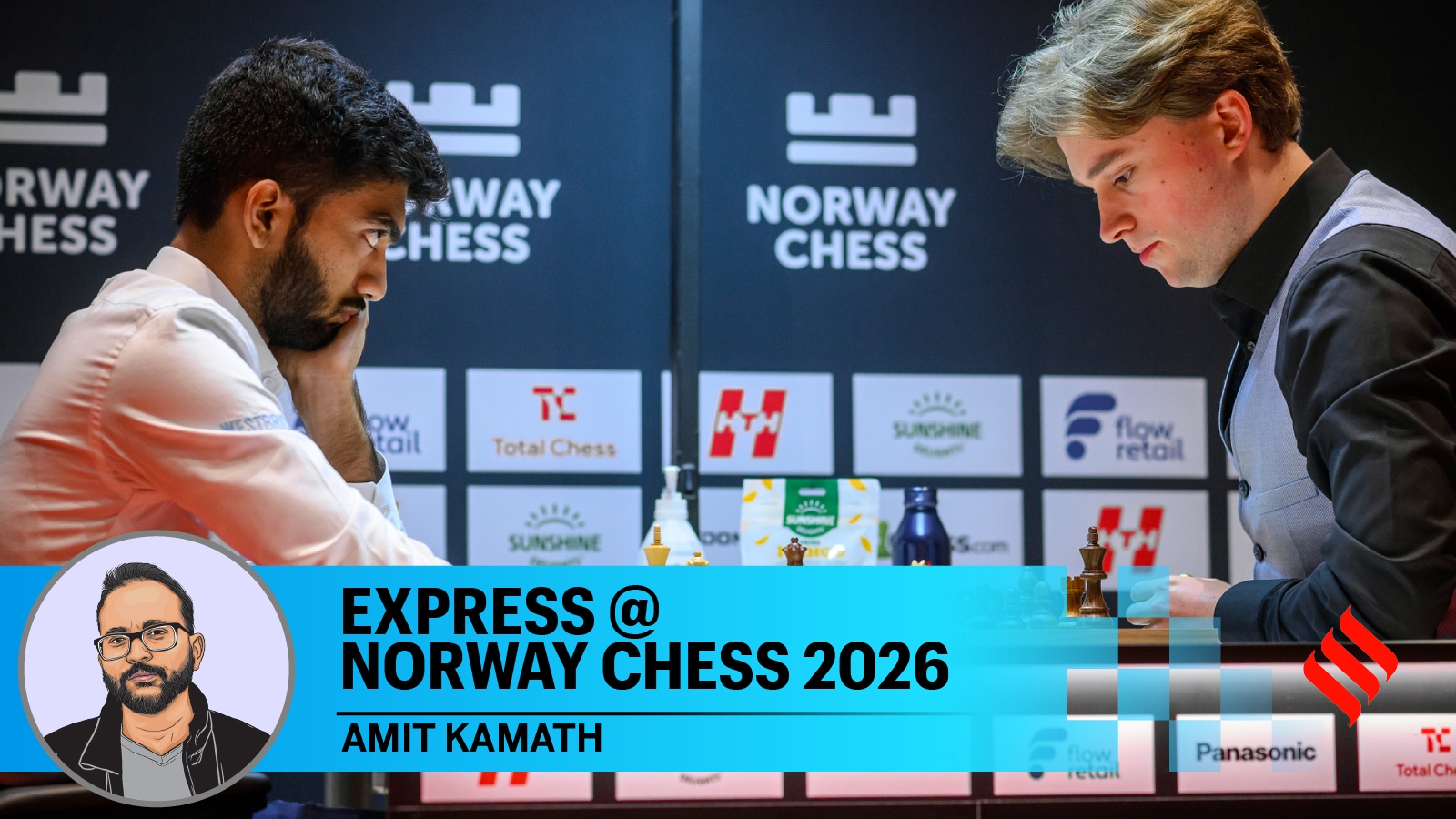
Vincent Keymer’s pawn sat haplessly on the g3 square, stranded there like a beached whale. All around it on the board, Keymer’s king and queen shuffled from one square to another desperately trying to provide the pawn with the breathing space for it to move just two squares ahead. Two forward pushes of the pawn, and Keymer would win his first round encounter at Norway Chess.
Standing in the way of the pawn’s promotion and Keymer’s victory was world champion D Gukesh’s queen. With the game poised on a knife’s edge and with time trouble making the contest treacherous, Gukesh’s queen ran a marathon around the chess board for over 50 moves, delivering check after check. Like hitting a snooze button on what felt inevitable.
Eventually, after four hours and 38 minutes, the 144-move game between Gukesh and Keymer ended in a draw. It was a result that felt psychologically as important as a win for the teenager who will be called upon to defend his world champion’s crown in six months’ time. After 18 months of watching drawn games turn into losses and winnable positions curdle into draws, Gukesh gave a glimpse of his old, pre-world champion self when he managed to defend a dead-lost position against Keymer on Monday at Oslo.
In the early days of Gukesh’s reign, Garry Kasparov had paid him one of the most flattering compliments to have come the Indian teenager’s way.
“Gukesh has many lives (in each game). You have to beat him many times,” Kasparov had said in July last year. “There is some resemblance (to computers) because of his resilience.”
On Monday, the world caught a glimpse of the computer-esque Gukesh — resilient defender of lost positions — that Kasparov was talking about.
Gukesh needed that computer-like resilience to fight his way out of a nerve-wracking endgame. Before the game began, Keymer had predicted on the official broadcast that the game would be a “big fight as usual.” It turned out to be a bigger fight than he was probably expecting.
Besides the opponent across the board, Gukesh was also dueling the clock. The time scramble proved to be its own theatre. The 19-year-old made at least two moves with just three seconds left on his clock to avert disaster. The pressure of the situation was so high that even Gukesh was forced into second-guessing his instinct and calculations. Once, he moved his queen, changed his mind and brought it back to its original square and then played the original move.
“I knew at some point in that endgame I was probably losing,” Gukesh later admitted in an interview with the official broadcaster. “It was not pleasant. I pushed the whole game and got winning chances. Then, finally lost control.”
At one point, with just 27 seconds left on the clock, Gukesh got up from his chair to try and figure out how many moves had been played, so that he could claim a draw through the 50-move rule, which states that a draw can be claimed if there have not been any captures or pawn improvements for 50 moves. He was also seen trying to ask the arbiter how many moves had been played, which he cannot do unless he actually claims a draw by stopping the clock.
Gukesh then tried his luck to claim a draw by the 50-move rule. But he had erred in his calculation before stopping the clock and calling the arbiter over. In a situation where every second mattered, as a consequence of Gukesh’s wrong draw claim, Keymer was given two more minutes on the clock.
Explaining why he had tried to claim a draw without checking the number of moves, Gukesh said: “At that point, I suddenly thought I was losing. I thought, let me try my luck by claiming a draw. Luckily, during that time (when the arbiter was checking the moves), I found a defence.”
But despite that setback, Gukesh played out the remaining few moves and called the arbiter again. This time, the draw claim was accepted.
Then, for added measure, in the Armageddon encounter afterwards, Gukesh beat Keymer in just 22 moves.
(The writer is in Oslo at the invitation of Norway Chess)
Vincent Keymer’s pawn sat haplessly on the g3 square, stranded there like a beached whale. All around it on the board, Keymer’s king and queen shuffled from one square to another desperately trying to provide the pawn with the breathing space for it to move just two squares ahead. Two forward pushes of the pawn, and Keymer would win his first round encounter at Norway Chess.
Standing in the way of the pawn’s promotion and Keymer’s victory was world champion D Gukesh’s queen. With the game poised on a knife’s edge and with time trouble making the contest treacherous, Gukesh’s queen ran a marathon around the chess board for over 50 moves, delivering check after check. Like hitting a snooze button on what felt inevitable.
Eventually, after four hours and 38 minutes, the 144-move game between Gukesh and Keymer ended in a draw. It was a result that felt psychologically as important as a win for the teenager who will be called upon to defend his world champion’s crown in six months’ time. After 18 months of watching drawn games turn into losses and winnable positions curdle into draws, Gukesh gave a glimpse of his old, pre-world champion self when he managed to defend a dead-lost position against Keymer on Monday at Oslo.
In the early days of Gukesh’s reign, Garry Kasparov had paid him one of the most flattering compliments to have come the Indian teenager’s way.
“Gukesh has many lives (in each game). You have to beat him many times,” Kasparov had said in July last year. “There is some resemblance (to computers) because of his resilience.”
On Monday, the world caught a glimpse of the computer-esque Gukesh — resilient defender of lost positions — that Kasparov was talking about.
Gukesh needed that computer-like resilience to fight his way out of a nerve-wracking endgame. Before the game began, Keymer had predicted on the official broadcast that the game would be a “big fight as usual.” It turned out to be a bigger fight than he was probably expecting.
Besides the opponent across the board, Gukesh was also dueling the clock. The time scramble proved to be its own theatre. The 19-year-old made at least two moves with just three seconds left on his clock to avert disaster. The pressure of the situation was so high that even Gukesh was forced into second-guessing his instinct and calculations. Once, he moved his queen, changed his mind and brought it back to its original square and then played the original move.
“I knew at some point in that endgame I was probably losing,” Gukesh later admitted in an interview with the official broadcaster. “It was not pleasant. I pushed the whole game and got winning chances. Then, finally lost control.”
At one point, with just 27 seconds left on the clock, Gukesh got up from his chair to try and figure out how many moves had been played, so that he could claim a draw through the 50-move rule, which states that a draw can be claimed if there have not been any captures or pawn improvements for 50 moves. He was also seen trying to ask the arbiter how many moves had been played, which he cannot do unless he actually claims a draw by stopping the clock.
Gukesh then tried his luck to claim a draw by the 50-move rule. But he had erred in his calculation before stopping the clock and calling the arbiter over. In a situation where every second mattered, as a consequence of Gukesh’s wrong draw claim, Keymer was given two more minutes on the clock.
Explaining why he had tried to claim a draw without checking the number of moves, Gukesh said: “At that point, I suddenly thought I was losing. I thought, let me try my luck by claiming a draw. Luckily, during that time (when the arbiter was checking the moves), I found a defence.”
But despite that setback, Gukesh played out the remaining few moves and called the arbiter again. This time, the draw claim was accepted.
Then, for added measure, in the Armageddon encounter afterwards, Gukesh beat Keymer in just 22 moves.
(The writer is in Oslo at the invitation of Norway Chess)