

From the Opinions Editor | India’s clean power push needs a missing piece: Energy efficiency
In a world where energy supply chains are increasingly contested, reimagining the consumption of electricity and fuel is not a trivial issue. That’s critical for both India’s energy security and climate goals
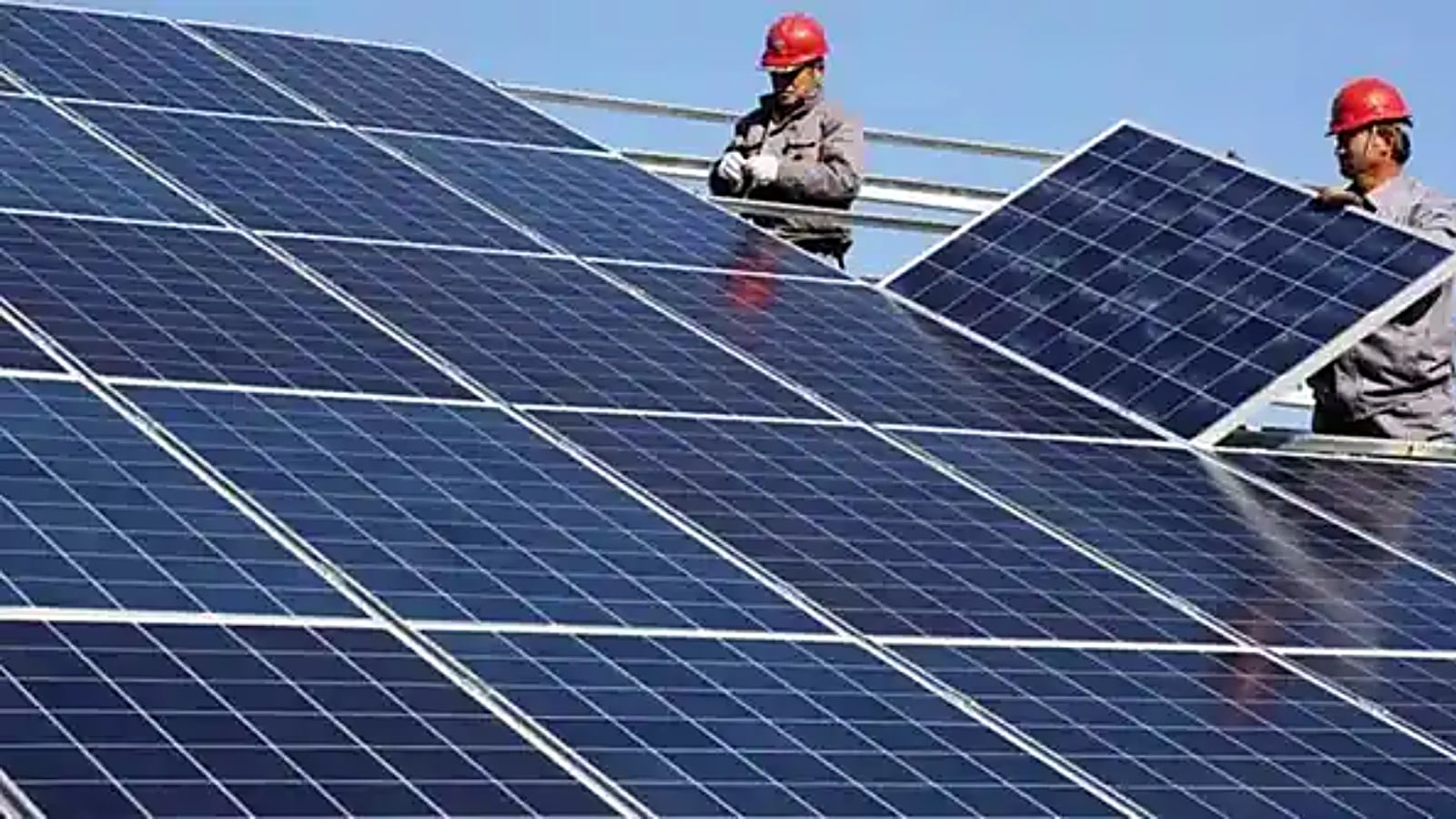
By 2035, clean energy will power 60 per cent of India’s installed electricity capacity. Last week, the government announced this target as part of the country’s updated commitment (Nationally Determined Contribution, or NDC) towards the Paris Climate Agreement. Announced amid a global energy crisis, the NDC signals that India views the clean-energy transition not as a fair-weather choice, but as a critical component of its developmental strategy.
Decarbonisation in most parts of the world, however, remains fraught with technical and institutional challenges. Renewable energy generation depends on weather conditions and the time of day. Compounding this predicament is the difficulty of storing renewable energy at scale. Systems that capture and hold energy for later use, especially batteries, remain expensive and resource-intensive in most parts of the world. India’s limited domestic manufacturing capacity, its dependence on imported critical minerals, and high upfront costs make the deployment of grid-scale batteries particularly difficult. There is, therefore, a significant gap between the country’s installed clean energy capacity and the actual power it generates — non-fossil sources (largely solar and wind) account for more than 50 per cent of electricity capacity, but their contribution to generation is only around 22–26 per cent.
That is why, despite impressive strides in green energy, the country — and indeed large parts of the world — is likely to rely on hydrocarbons for some time to come. In theory, high fossil fuel prices, precipitated by geopolitical conflicts, including the ongoing war in West Asia, should accelerate the transition to cleaner energy by making renewables more competitive. In practice, however, governments cannot ignore the immediate burden imposed on households and businesses by such crises. It is, therefore, telling that almost immediately after announcing its green-energy targets, the government was compelled to cut duties on fossil fuels. The tension between climate ambition and immediate energy affordability reveals a deeper structural problem in the global energy system. Navigating this tension requires more than expanding supply — either green sources or hydrocarbons.
It demands a rethinking of demand itself — not just how energy is produced, but how it is used. This is where energy efficiency assumes critical importance. The International Energy Agency (IEA) estimates that efficiency improvements over the past two decades have avoided vast amounts of energy demand — equivalent to roughly one-fifth of total consumption in advanced economies.
Energy efficiency was one of the foundational tenets of climate-change negotiations. However, today it has receded to the margins. Measured in absence, it is harder to showcase in climate negotiations that have increasingly turned into a game of one-upmanship between countries or blocs. The IEA has repeatedly warned that the current global rate of energy intensity improvement, around 1–2 per cent annually, is far short of the roughly 4 per cent required to stay on track for net-zero emissions by mid-century.
Part of the problem lies in how energy efficiency is commonly understood. It is often reduced to a technical fix: More efficient appliances, LED bulbs, fuel-efficient cars, better industrial equipment. These are important interventions. In India as well, the Bureau of Energy Efficiency has made notable progress in improving the energy performance of appliances.
At its core, however, energy efficiency demands a cultural shift. It is not just about doing the same things with less energy, but often about doing things differently.
Better air conditioners, lighting and heating systems help. But a more fundamental question is how buildings themselves are designed to cope with heat, cold and rain. Glass-heavy structures in tropical climates, for instance, trap heat and require constant cooling. Retrofitting them with efficient air conditioners does help, but it does not address the underlying inefficiency of design. In a rapidly urbanising country, where thousands of new buildings will be constructed in the coming decades, poor choices could lock in higher energy demand for generations. The Energy Conservation Building Code (ECBC) is mandatory for commercial buildings. However, its adoption remains low – most municipalities lack the technical knowledge, personnel, and motivation to enforce compliance.
A government that lays store on self-reliance and indigenous knowledge traditions should not be averse to tapping, encouraging, and incentivising architectural practices that historically shielded homes from the elements.
Reforming transport systems, similarly, requires both technological and behavioural interventions. The argument for electric vehicles is compelling. But the broader question is how people move within cities. Urban centres designed around private vehicles, whether fossil fuel-powered or electric-driven, will lock in higher energy consumption than those built around public transport, cycling and even walking.
In a world where energy supply chains are increasingly contested, reimagining the consumption of electricity and fuel is not a trivial issue. India today consumes about a fifth of the electricity that China does and about an eighth of what the US consumes. As the country develops economically, there is no question, therefore, that it will need more energy.
India has signalled its intent to grow in a clean way. It must also confront an equally important question: Not just how to source energy, but how wisely it uses it. It needs a broader conversation on efficiency across the economy. That will be necessary both for energy security and climate change mitigation.
Till next time,
Kaushik Das Gupta