

Pakistan’s role in the West Asia war appears to be that of a messenger, not a mediator
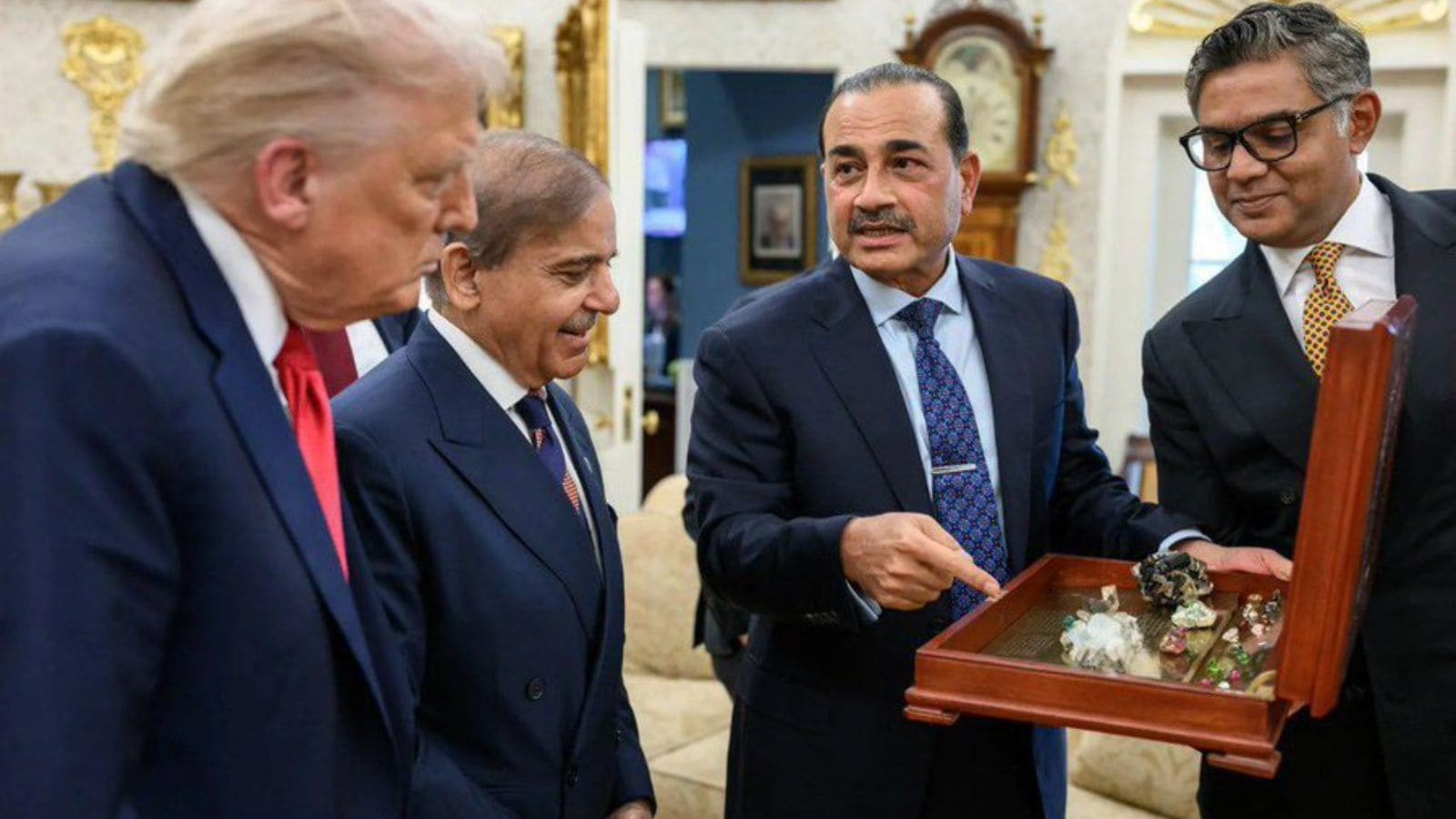
While Pakistan hosts no American bases, Donald Trump has demonstrated a visible affinity towards Asim Munir, as seen in the White House lunch hosted for the latter weeks after the standoff with India in May 2025
By Aishwaria Sonavane
Pakistan has reportedly presented itself as a viable intermediary between Iran and the US as West Asia continues to hover precariously on the escalation ladder. On March 23, Pakistan’s Army Chief, Field Marshal Asim Munir, spoke to US President Donald Trump. On the same day, Pakistan’s Prime Minister Shehbaz Sharif spoke to Iranian President Masoud Pezeshkian, reportedly urging de-escalation while expressing solidarity.
Two senior Pakistani officials were reported to be in concurrent back-channel communication with unnamed Iranian officials and Trump envoys, Steve Witkoff and Jared Kushner. Islamabad has been proposed as a venue for negotiations; Turkey, Qatar, and Egypt are also known to be participants in this process.
That said, the term “mediation” in this context likely overstates Pakistan’s current diplomatic endeavours. While the Iranian foreign minister acknowledged that “messages have been received from some friendly countries regarding the US’s request for negotiations to end the war,” he denied any direct talks with the US. Tehran has also refrained from naming Pakistan.
As such, Pakistan’s role appears closer to that of a messenger than a mediator, with an offer to both sides to signal intentions without compromising on the domestic political costs of direct engagement. The sensitivities associated with the conflict’s domestic rhetoric can be demonstrated in the denial issued by the Iranian parliament speaker, who dismissed reports of talks with the US as misinformation intended to manipulate financial and oil markets.
Even as the limits and advantages of this process can be argued, the sequence deserves attention — Munir held a telephonic conversation with Trump on March 22, Sharif spoke with Pezeshkian on March 23, and Trump announced a five-day pause on targeting Iran’s power plants the same day.
Pakistan’s Islamic credentials and geographic positioning make it a relevant player. While Pakistan hosts no American bases, Trump has demonstrated a visible affinity towards Munir, as seen in the White House lunch hosted for the latter weeks after the standoff with India in May 2025.
Simultaneously, Article 40 of the Pakistani Constitution mandates it to maintain fraternal ties with the Arab-Muslim world; a constitutional framework that has historically justified and moulded Pakistan’s economic and military relationship with the Gulf countries.
Meanwhile, Pakistan’s relationship with Iran operates on the logic of its geography — shared borders, ethnic linkages, and a potential spillover effect of the war. The two countries share a 900-km border in the restive Balochistan Province, an area already marred by separatist activity. In January 2024, both sides were quick to de-escalate hostilities after briefly exchanging cross-border strikes, thus mutually recognising the significance of the relationship.
We must also acknowledge the role of Pakistan’s military establishment and not the foreign ministry in the claimed mediation role, ultimately reinforcing Munir’s dominant position and Pakistan’s securitised approach to foreign policy.
On March 7, Munir met with Saudi Arabia’s Defence Minister Khalid bin Salman in Riyadh, where discussions were held around the security situation and the framework of the Strategic Mutual Defence Agreement (SMDA) signed between both countries in September 2025. Similarly, Munir’s recent call to Trump reinforces the Pakistani military as the primary foreign policy interlocutor, with civilian institutions handling the Iran-facing diplomacy track. It seems like Munir is managing Washington and Riyadh, while the Sharif-led civilian government is managing Tehran.
This is where Pakistan’s position differs from India: New Delhi has signalled a strategic inclination towards the US-Israel axis. This positioning is justified by the significant Indian diaspora in the Gulf, India’s trade ties with the US, and its defence relationship with Israel.
The influence Pakistan will hold in the eventual settlement, if any, is yet to be determined. But that will not stop Islamabad from crediting itself for attempting to facilitate one, as the only country outside the West Asian region. Pakistan’s rentier state character situated itself in similar roles in previous modern conflicts. In 1971, Pakistan facilitated former US Secretary of State Henry Kissinger’s secret flight to Beijing, eventually producing the agreement for US President Richard Nixon’s visit to China.
This came at a time when Beijing and Washington did not have any official channels. Pakistan also played a role in the Doha Agreement of 2020 between the US and the Taliban, which ultimately resulted in NATO forces leaving Afghanistan. Similarly, Pakistan has projected its non-partisan position by rejecting Riyadh’s request for the Pakistani military in 2015 to participate in operations against Houthis in Yemen, which remains a proxy of Tehran.
Pakistan is not new to great-power navigation. Mohammed Ali Jinnah, the founder of Pakistan, articulated a version of this logic during a well-known interview with Margaret Bourke-White in the Cold War era, stating that the US would need Pakistan more than the other way round, given its geostrategic location near the erstwhile Soviet Union. The logic holds today – the US and Iran both need a reliable interlocutor without being perceived as a proxy of either side.
The writer is a research analyst for Pakistan Studies at the Takshashila Institution