

At 250, the US can still reinvent itself — and the world
American history cautions us against writing off a republic that has repeatedly reinvented both its capitalism and the politics needed to govern it at home and lead it abroad
As America turns 250, much in Washington’s current politics distracts Indian attention — Donald Trump’s antics in capturing the historic moment for personal glory, his diplomatic style that breaks from protocol, disputes on tariffs and technology, America’s new dalliance with the Pakistan army, and the anxiety in Delhi at the prospect of a US-China condominium in Asia. But major anniversaries demand a longer view. For Indians trying to understand the future of the US, the more important story lies beneath the unending political noise from Washington: The repeated reinvention of American capitalism. That process has shaped not only America’s domestic evolution but also the international order it has led for much of the past century.
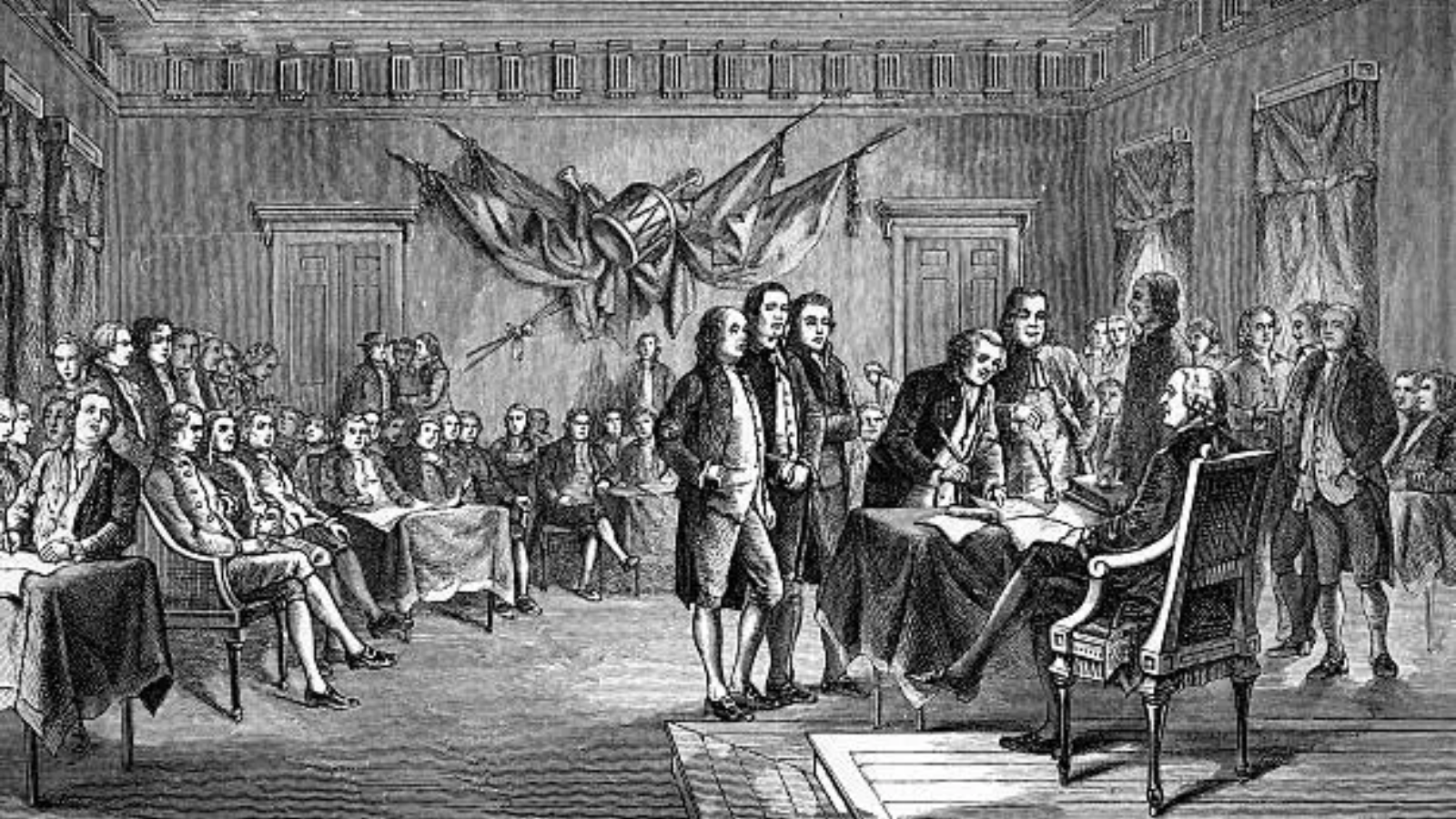
In reflecting on the American revolution, we must also consider the other, intellectual revolution that occurred in 1776. While Britain’s 13 North American colonies proclaimed their independence, Adam Smith published The Wealth of Nations, which laid the intellectual foundations of modern capitalism. Over the next 250 years, the two evolved together. America’s greatest contribution to the modern world has not only been its leadership of capitalist development, but also its extraordinary capacity to reinvent it. Every reinvention transformed the nature of production at home, reconfigured US politics, and restructured the international system.
In the 19th century, factories, railroads and mechanised production transformed an agrarian republic into the world’s leading industrial economy. Capital, machines and labour were brought together on an unprecedented scale. Productivity soared, cities expanded, and American industry became the foundation of national power.
The second reinvention arrived in the early 20th century with Frederick Winslow Taylor’s scientific management and Henry Ford’s moving assembly line reorganising work itself. Charlie Chaplin captured both the brilliance and the absurdity of this new industrial order in Modern Times. His unforgettable image of a worker swallowed by the assembly line remains one of the sharpest commentaries on modern capitalism. Fordism produced mass prosperity, but it also demanded that human beings adapt themselves to the rhythm of machines.
The third reinvention took American capitalism beyond US shores. Advances in container shipping, telecommunications and information technology allowed production to be fragmented across national borders and distant continents. American firms increasingly specialised in technological innovation, finance, branding and design while manufacturing shifted to lower-cost locations across Asia. The resulting global value chains defined a new era of capitalism. They also transformed China into the world’s manufacturing powerhouse, even as American companies retained control over many of the technologies, finance and intellectual property that governed the system.
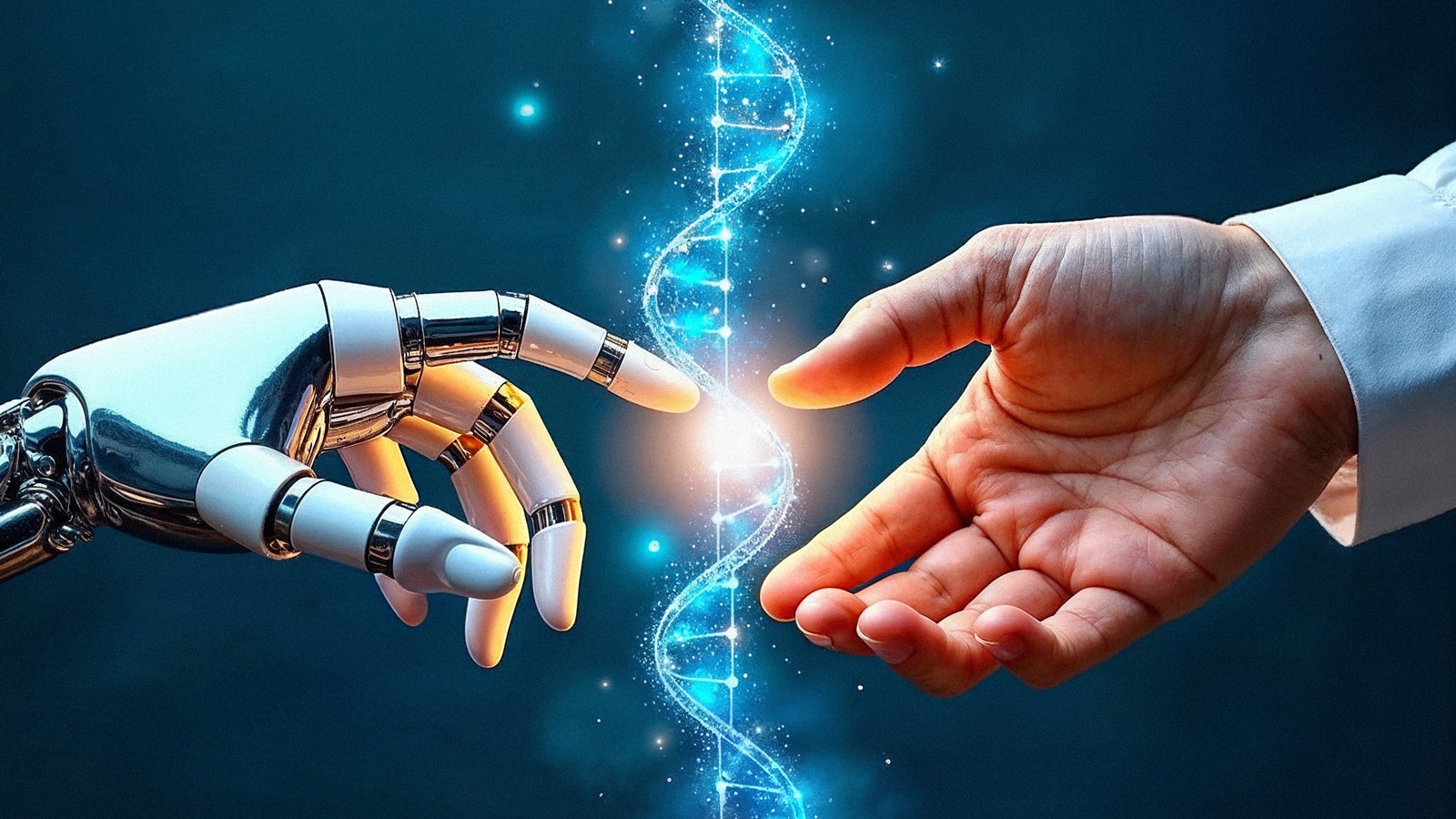
Today, America is embarking on a fourth reinvention — techno-capitalism. AI, advanced semiconductors, cloud computing, biotechnology and humanoid robotics are converging to create a new production system. The ambition is no longer to make workers more productive. It is increasingly to reduce dependence on human labour itself. Anthropic’s Claude AI and Tesla’s Optimus humanoid robot have become the most visible symbol of this transformation, but they represent a much broader technological ecosystem. Combined with recursive self-improvement, the emerging AI systems promise to reshape manufacturing, logistics, healthcare, and many other sectors. With proclamations that Artificial General Intelligence (AGI) and Artificial Super Intelligence (ASI) are not far away, the future could be here much faster than many imagine.
The new technologies change the very character of capitalism. Industrial capitalism depended on labour. Globalised capitalism depended on moving production to where labour was cheapest. Techno-capitalism depends increasingly on algorithms, computing power, data and intelligent machines. It also involves building massive new infrastructure within the US. Wealth now flows less from employing large and cheap workforces than from owning the technologies that can substitute for them.
Left-wing historians in the US have argued that technological revolutions do not merely transform capitalism; they are shaped by capitalism itself. That insight is especially relevant today. The age of AI will not simply produce new technologies. It is intensifying already heavy concentrations of economic power. Political institutions are nowhere near limiting their reach and power.
But efforts are on, if at a nascent stage. Every reinvention of capitalism has eventually produced a recasting of politics. The rise of giant industrial trusts produced the “progressive era” and antitrust legislation at the turn of the 20th century. The Great Depression produced the New Deal and a new social compact between capital and labour. The digital revolution has revived concerns over monopoly and market concentration. If Lina Maliha Khan led the legal battle against tech platforms as the chair of the Federal Trade Commission under the Biden Administration, sections of the MAGA movement are now revolting against the excessive adoption of AI.
AI and robotics are reopening familiar questions in unfamiliar forms: Who owns the machines, who captures the enormous productivity they generate, how should that new wealth be distributed, and what obligations does capital owe to society? The answers will shape the future of the American republic and rebalance the relationship between innovation, capital and society. The consequences of techno-capitalism will not stop at America’s shores. Every previous iteration of American capitalism has reshaped the international system. Industrial capitalism in a massive continental state made the US a superpower. Fordism underpinned its global leadership after World War II. Globalisation spread American capital, technology and finance across the world. Techno-capitalism promises another global reordering — by redistributing economic and military power and transforming global institutions.
The US at 250 is deeply divided at home and at odds with itself. The rise of Trump is indeed the visible manifestation of it. But American history cautions us against writing off a republic that has repeatedly reinvented both its capitalism and the politics needed to govern it at home and lead it abroad. The age of AI is unlikely to be different.
The writer is contributing editor on international affairs for The Indian Express. He is distinguished professor at the Motwani-Jadeja Institute of American Studies, Jindal Global University and Korea Foundation Chair on Asian Geopolitics at the Council on Strategic and Defence Research