

Trump’s Beijing visit exposed a truth neither side wants to admit
It revealed a world where rivalry, dependence, and competing civilisational visions now coexist uneasily within the same interconnected order
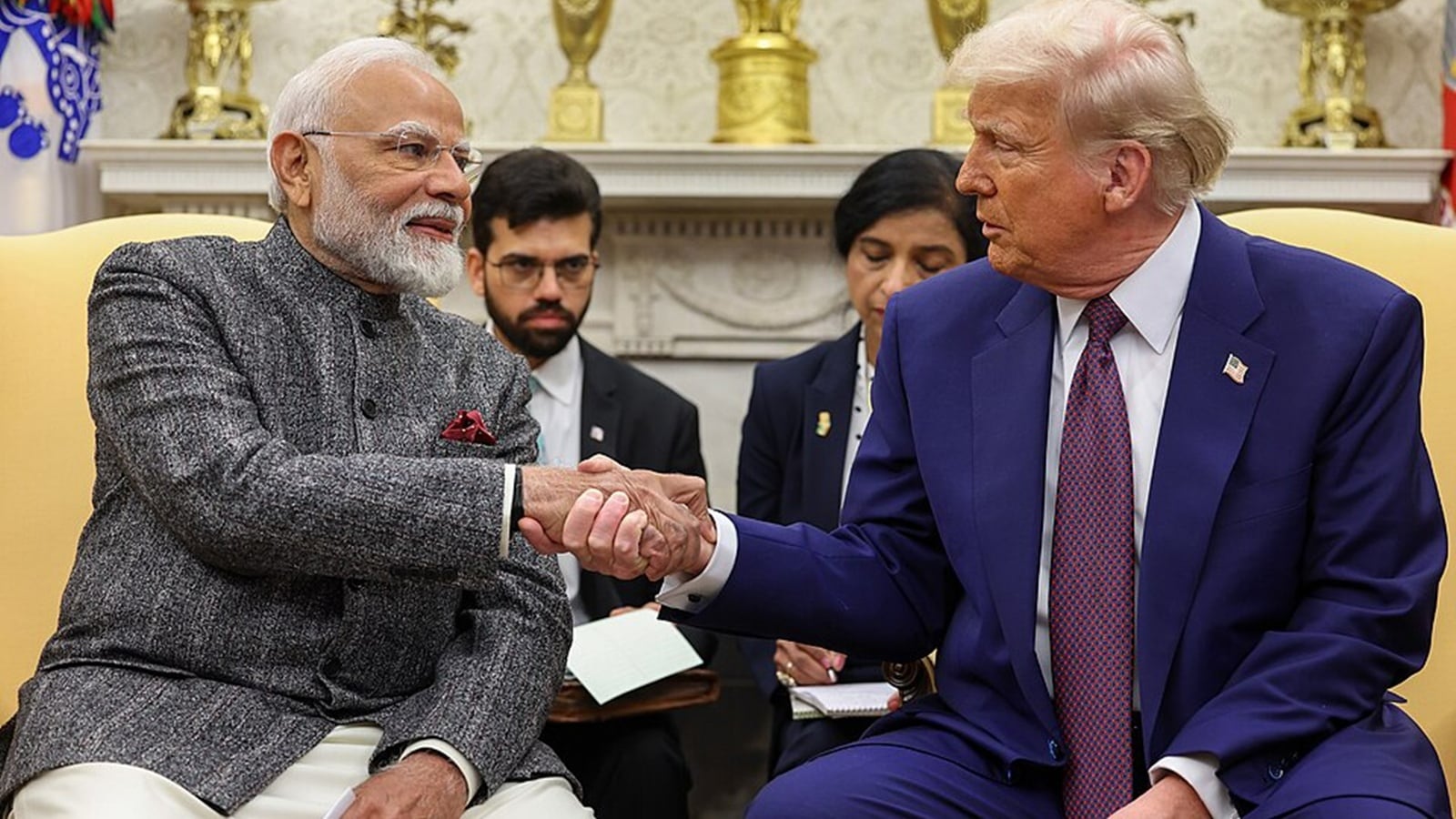
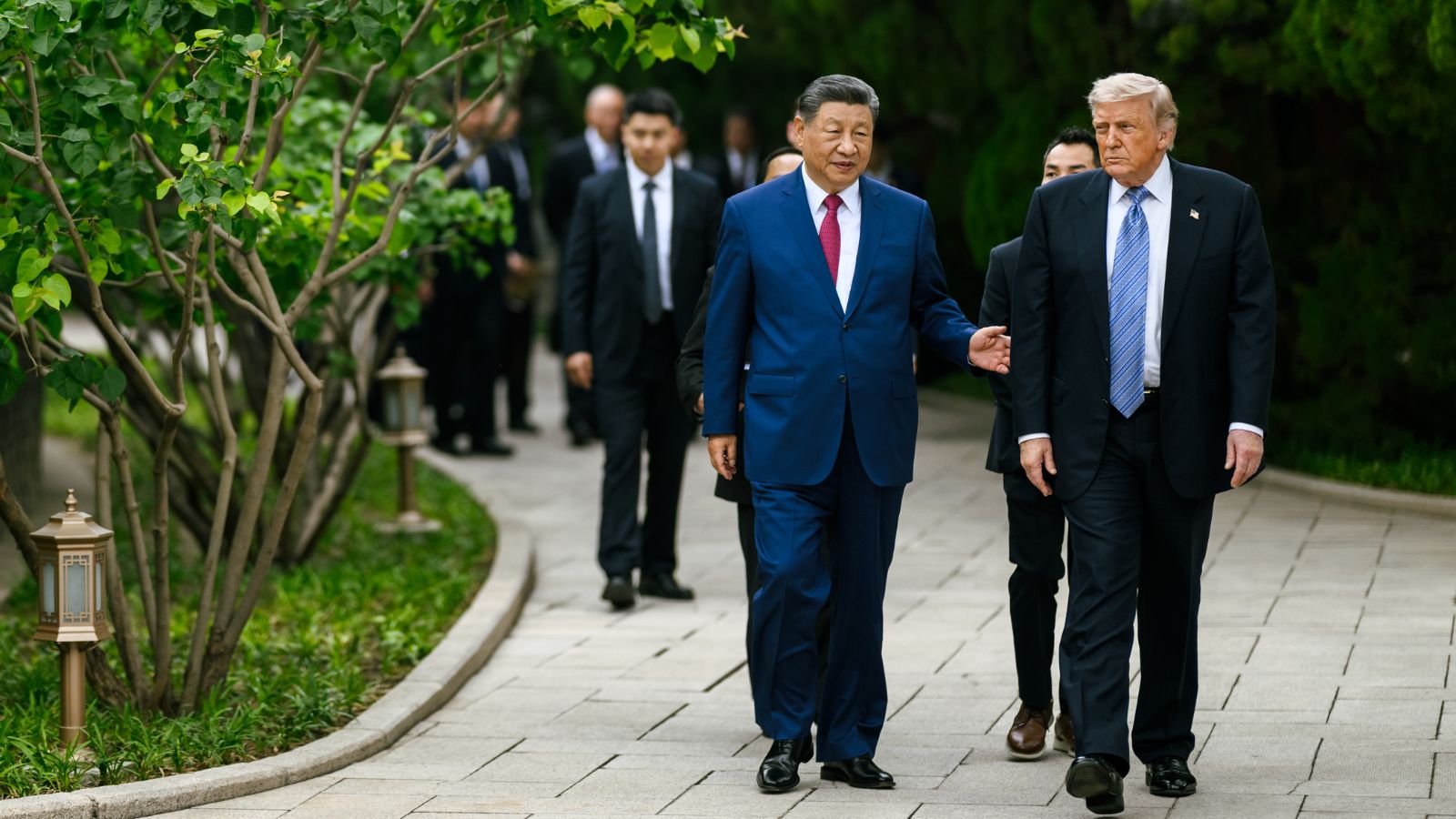
When US President Donald Trump arrived in Beijing in May, the visit carried significance far beyond another summit between rival powers. It symbolised the culmination of nearly five decades of uneasy engagement between China and the West — a relationship built on deep economic integration but profoundly divergent political aspirations. Trump’s presence in Beijing at a moment of intensifying geopolitical rivalry, technological competition, and supply-chain anxiety revealed the defining paradox of the contemporary international order: The United States and China increasingly distrust one another, yet neither can fully disengage from the relationship without imposing severe costs upon itself.
Two Chinese idiomatic expressions help explain this trajectory. The first is “same bed, different dreams” — a phrase used to describe relationships sustained by pragmatism despite fundamentally divergent objectives. The second is “riding the tiger” — a warning that once mounted, dismounting becomes dangerous. Together, these expressions capture both the origins and consequences of China’s integration into the global economy.
Same Bed, Different Dreams
The reform era initiated under Deng Xiaoping in the late 1970s rested on what was effectively a marriage of convenience between China and the Western-led global economy. The shared bed was capitalism itself: Export-oriented growth, manufacturing outsourcing, foreign direct investment, and access to Western markets. China offered scale, labour, and political stability. Western corporations gained access to one of the largest manufacturing platforms in history.
Yet even at the height of engagement, the dreams remained profoundly different. Much of the West believed economic integration would gradually socialise China into the liberal international order. Prosperity, it was assumed, would eventually produce political convergence. Beijing, however, approached globalisation instrumentally. Economic opening was not designed to Westernise China but to restore national strength after the “Century of Humiliation” and accelerate China’s return as a major civilisational power.
Ironically, as China’s state-directed model delivered manufacturing scale, technological advancement and industrial resilience, sections of the American political establishment increasingly began reconsidering aspects of their own economic orthodoxy. The resurgence of tariffs, industrial policy, technology controls and state-led strategic prioritisation under the Trump administration reflects a growing recognition that the “free market” was never entirely separable from state power, even at the heart of liberal capitalism.
Trump’s Beijing visit demonstrated how this contradiction has now entered a more unstable phase. The issue is no longer whether China and the West share the same dream. It is that both are now deeply trapped within systems of interdependence they can neither fully abandon nor fully control.
Riding the Tiger
This is the logic of “riding the tiger”.
China itself cannot easily dismount. Its economic model remains deeply tied to export markets, global trade networks and external demand, while the legitimacy of the Communist Party continues to rest substantially on delivering economic growth and rising living standards. Yet the West faces a similar dilemma. Even amidst rising geopolitical tensions and repeated calls for “decoupling”, major multinational corporations remain deeply dependent on Chinese industrial and technological ecosystems.
Ford continues to pursue collaboration with Chinese battery giant CATL despite Washington’s protectionist turn on Chinese electric vehicles. Apple’s dependence on China is no longer merely about low-cost labour but about the scale and sophistication of manufacturing ecosystems that remain extraordinarily difficult to replicate elsewhere. Nvidia, despite mounting semiconductor restrictions, continues to view China as an indispensable market for advanced technologies and AI systems.
The rhetoric of decoupling often obscures a deeper reality. Globalisation has produced integrated industrial ecosystems rather than simple transactional trade relationships. As recent American observers returning from China have acknowledged, the country’s advantage no longer lies merely in cheap manufacturing, but in integrated networks combining infrastructure, logistics, AI-driven production, engineering talent, and state-backed industrial coordination. China’s growing dominance in batteries, robotics, electric vehicles, and industrial AI reflects not simply scale, but ecosystemic depth.
The Phoenix Rising
At the same time, China under Xi Jinping increasingly interprets its rise through a very different national self-image than during the earlier reform era. If Deng’s China sought integration through pragmatism, Xi’s China increasingly projects what may be described as a “Phoenix Rising” identity striving for achievement — one shaped by civilisational revival, historical grievance, and anti-hegemonic ambition.
This identity combines a belief in China’s return as a central and morally legitimate power, a deep victimhood mentality rooted in memories of national humiliation, and a revolutionary internationalism that seeks to position Beijing as the leading voice of the Global South against perceived Western dominance.
This also explains why Beijing increasingly treats technology not merely as an economic domain but as an arena of sovereignty and civilisational security. The recent blocking of Meta’s attempted acquisition of Manus reflected more than regulatory caution. It revealed a China that no longer views technological openness as politically neutral but increasingly filters strategic technologies and AI ecosystems through concerns about vulnerability and external leverage.
India as Bridge Power
For India, this emerging order presents both opportunities and constraints. Unlike the United States and China, India is not trapped within the same depth of industrial interdependence, nor does it seek geopolitical primacy through hierarchical dependency structures. New Delhi increasingly positions itself as a bridge power — adopting a posture that is non-Western without being anti-Western. In a world marked by sharpening rivalries, India’s approach rests less on extracting leverage through asymmetrical dependence and more on constructing flexible coalitions across competing blocs. This enables India to shape institutional debates, expand negotiating space, and project itself as a voice of inclusivity and representational balance within an evolving multipolar order.
Trump’s Beijing visit ultimately symbolised this new geopolitical condition. The summit was not simply about tariffs or trade balances. It reflected the uneasy coexistence of rivalry and dependence that now defines relations between the world’s major powers. The challenge for all of them is that none can easily walk away from the networks that sustain their prosperity and influence. They are now condemned to keep riding the tiger — even while dreaming very different dreams.
The writer, a Fulbright and Institute of Chinese Studies (ICS) fellow, is professor at IIM Indore. Views are personal