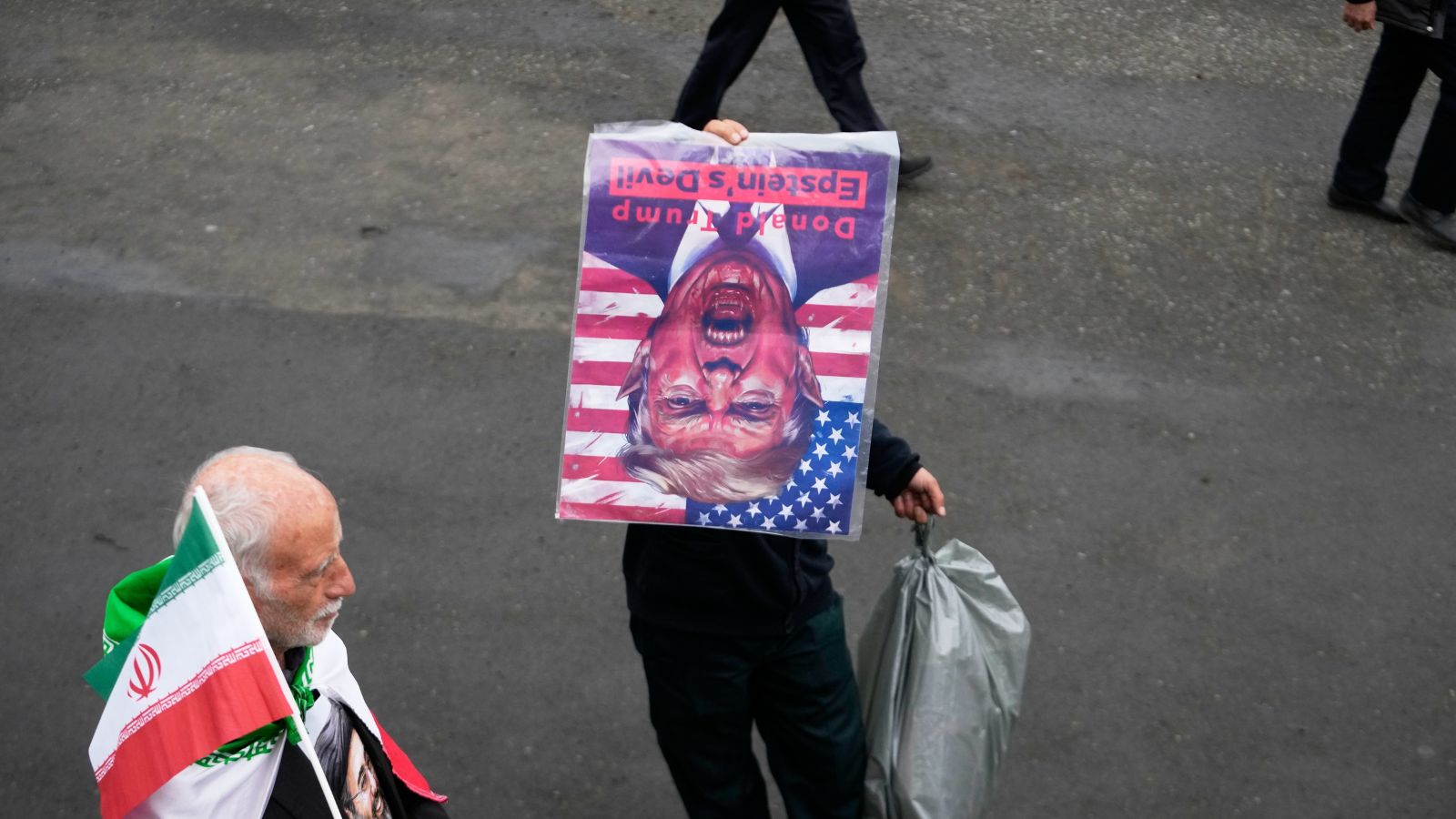


Trump’s ‘Stone Age’ strategy for Iran is no strategy at all
The US president has started a conflict he cannot finish and a war he cannot win. To save the global economy, he must finally play the diplomacy card
There was a time when diplomacy was the art of managing complexity. At a time when Iran and the region are in a potentially disastrous situation, the world needs strong diplomacy to be able to solve the escalating crisis of the Strait of Hormuz. Unfortunately, that is not the conclusion that US President Donald Trump has arrived at. Trump referred to his European allies as “cowards” for their reluctance to assist in opening the Strait of Hormuz. It looks like many European countries, such as France, have chosen the art of good old diplomacy against America’s aggressive approach. In fact, though American military solidarity holds in the war on Iran, Trump’s explanation of the rationale behind this war and how it will end is becoming increasingly illogical and nonsensical.
It is also a fact that the Iran war is spreading much further than the American President expected. Trump seems to have begun a conflict without having a plan to get out of it. His inability to navigate complexity has him frustrated and vowing to bomb Iranian targets hard enough to send the country “back to the Stone Age”. This is not a war strategy; it looks more like mass murder. The truth is that the use of the atomic bomb in Hiroshima or the carpet bombings in the German city of Dresden by the US and British bombers on February 13, 1945, are outside of the political and military norms of today’s world. If this happens, America will turn into a “beast state” and the normalisation of war crimes will become the inevitable offshoot of the militarisation of American foreign policy.
It is hard to accept that moral consciousness in our world has sunk so low that even Trump’s call to bomb a country of 90 million people back to the Stone Age is accepted without any opposition or demonstrations around the globe. Surely, everybody knows that this is not a popular war and the military-theocratic rule in Iran is not an admired regime either in Europe or in West Asia. But the truth is that if the war stopped tomorrow, the Iranian regime would declare itself the winner. This is unacceptable to Trump and the Israeli government. Also, so far, the tide of conflict has not been flowing in favour of those Iranians who were hoping for a regime change. The Jewish community outside Israel has been clearly critical of Benjamin Netanyahu’s war efforts against Iran. As a matter of fact, Netanyahu has lost the support of many American Jews in the war against Iran. Further, from the very first days of the war, Netanyahu’s enthusiasm for regime change in Iran was viewed with a great deal of scepticism by European and American Jews.
It is now a fact that the US-Israel war against Iran is no more a rapid one, ending with regime change in Iran. It has, in fact, turned into a war of necessity for many countries around the globe, because the principal aim is now to open the Strait of Hormuz. Therefore, six weeks after the start of the war, it would be very difficult for the US and Israel to cry out victory. Even though Iran’s nuclear capabilities have been weakened and many of Iran’s key leaders have been assassinated, Iran continues to have a stranglehold on the global oil economy and the future of the market. Also, though Trump continues with his threats, which are taking on an increasingly apocalyptic tone, he knows very well that it is not by targeting a university, a hospital, or a historical palace that he can have the nationalist Iranians on his side. It is now clear to all international players and observers that reopening the Strait of Hormuz is unlikely to happen without a ceasefire in the conflict. This is the solution suggested by Europeans, especially France.
The French focus on reopening the Strait of Hormuz not by force but via coalitions and diplomacy is the most intelligent diplomatic act of the past six weeks. The Japanese Prime Minister, Sanae Takaichi, has also been an actor of peace and, unlike the Chinese President, Xi Jinping, and the Russian President, Vladimir Putin, is eager to seal a ceasefire and ensure immediate de-escalation in the war. Though both Russia and China have emphasised that a full-scale war in the Gulf is not in their interests, they have shown reluctance to take decisive actions that would bring an end to this conflict.
Ultimately, on the one hand, the American President has no real options on Iran, except to play the diplomacy card. On the other hand, there is no such thing as “Trump diplomacy” which can create a consensual environment where the crisis could be managed rationally and wisely. Maybe, instead of showing an interest in committing war crimes, President Trump should pay heed to the French way. Certainly, diplomacy would be the best option for the US, Iran, and Europe to avoid further escalation, economic turmoil, and potential catastrophe in the Gulf.
The writer is director, Mahatma Gandhi Centre for Nonviolence and Peace Studies, OP Jindal Global University