

Third assassination attempt against Trump and a politics that could tear the US apart
Although Trump returned to office on the back of anti-incumbency sentiment against the Democrats and widespread frustration over issues such as inflation and immigration, sustaining his unprecedented gains has proven daunting. It will be challenging to head into the midterms without calming political nerves
There is nothing new about political violence in the United States. But in its current form, it is more concerning than ever before. A deeply polarised society now has both the access and the capability to use technology in novel ways — often to map, train, and weaponise hostile intent.
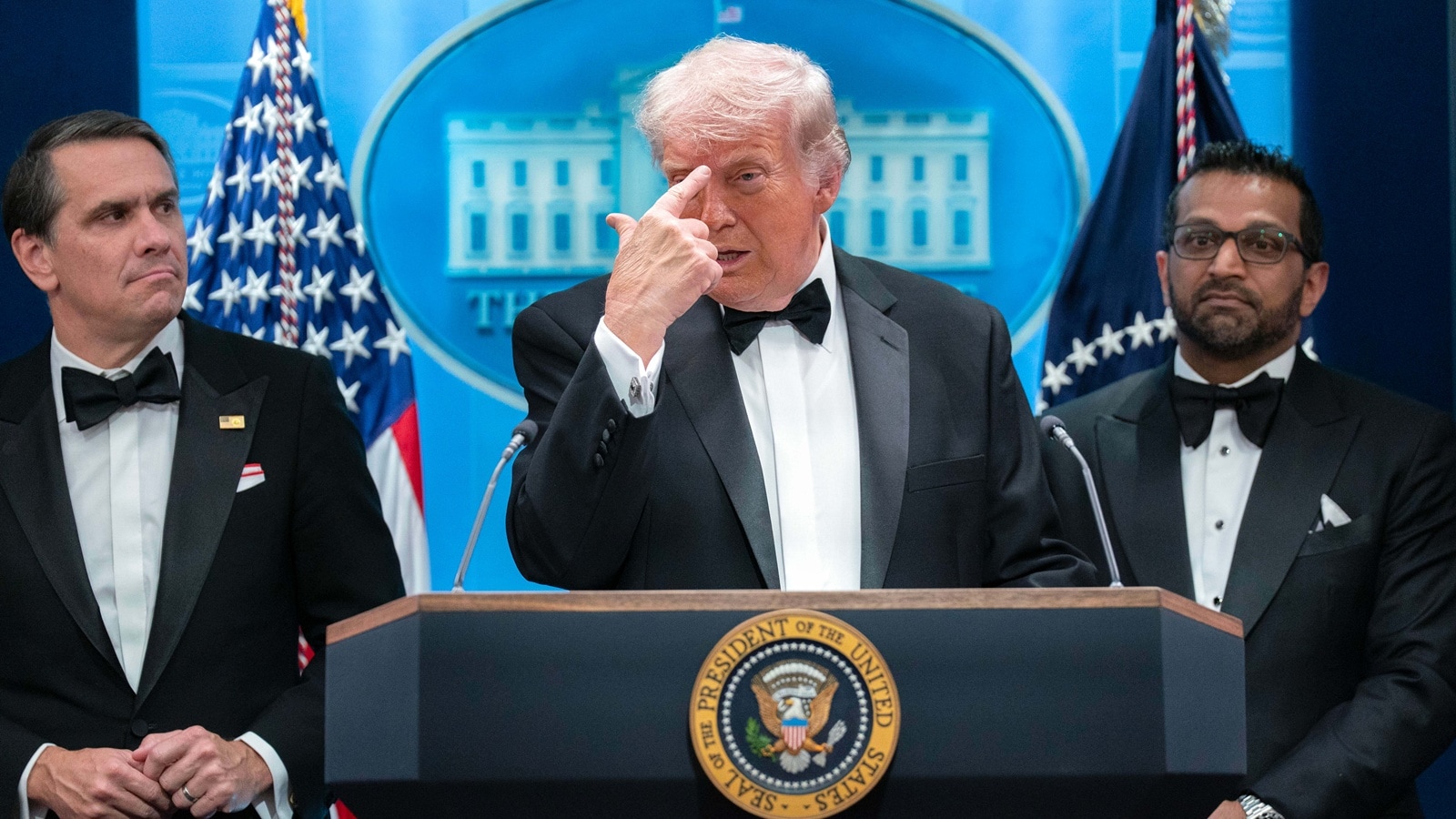
Extreme partisan politics continues to fuel this growing sense of angst. On Saturday, when President Donald Trump faced what appeared to be a third attempt on his life while attending an event at the Washington Hilton in DC — following earlier incidents, including one in 2024 when he was grazed by a bullet in Pennsylvania — the script felt disturbingly familiar.
In an eerie parallel, President Ronald Reagan was shot just outside the same hotel in March 1981. Despite this historical familiarity, many observers would agree that the scale and intensity of political partisanship today are tearing the nation at its seams.
Trump was attending the annual White House Correspondents’ Association Dinner for the first time in more than 10 years, alongside most of his key officials. Should there have been any security lapse, the incident could have potentially changed the course of the nation’s politics once again, especially as America nears the midterm elections. Yet, there are ample lessons from this incident that, along with the past ones, should offer a blueprint for course correction of a fractured polity.
Rising gun violence in the US is a major political issue, contentious because of the Second Amendment of the US Constitution, which protects the right of the people to bear arms. Around 40,000 people were shot in the US in 2025 alone. Further, the most high-profile shooting incidents have shown that youngsters are prone to committing gun violence. United Healthcare CEO Brian Thompson was shot dead outside a Manhattan hotel on December 4, 2024, by Luigi Mangione, aged 26.
The suspect in the killing of right-wing influencer Charlie Kirk last year was 22. Thomas Matthew Crooks, the person who shot at Trump in Pennsylvania, is a 20-year-old, and the suspect in the current case is 31 years old. These numbers spell out a pattern. All these cases in the past have been followed by a political feud between liberals and conservatives in the US.
Increasingly, lone-wolf attacks in the US are blurring the line between aggression and a perceived responsibility to act on behalf of others. Mangione emerged as a “folk hero” in online spaces, driven by widespread anger toward the US healthcare system; Trump’s latest attacker, Cole Thomas Allen, has framed his actions as a response to the suffering of others. Extreme behaviour, combined with a growing sense of impunity within the political class, has quietly but dangerously seeped into American politics. Decoupling these trends will pose a significant challenge for Washington’s political establishment, with the risk that the situation could deteriorate over the next three years.
Subject to further investigation, Allen’s case may appear to reflect an extreme instance of political vendetta, but it would be a grave mistake to interpret it solely in those terms. Authorities have yet to establish a clear motive behind the attack, but Allen’s pre-incident messages reportedly point to a tangled mix of political and ideological influences, ranging from the Jeffrey Epstein controversy to strands of evangelical thought and the ongoing war with Iran — suggesting a broader and more volatile convergence of narratives. Evidently, the political climate within the US is becoming increasingly charged, shaped simultaneously by domestic tensions and external developments.
A recurring pattern of political vendetta against the country’s president is unlikely to be coincidental; rather, it signals that political sensibilities in the US may be fraying. Although Trump returned to office on the back of anti-incumbency sentiment against the Democrats and widespread frustration over issues such as inflation and immigration, sustaining his unprecedented gains has proven daunting. Domestically, his tenure has been unsettled by the Epstein saga, which has revived questions of impeachment. His approval ratings have fallen to a historic low of 38 per cent. Meanwhile, the war, his self-portrayal as a messianic figure, and the ensuing war of words with Pope Leo XIV have rattled his evangelical base. On foreign policy, the situation has arguably been even more damaging, especially given his campaign promise to avoid new wars. Many Americans now blame him for rising gas prices. Among allies, trust appears to be at an all-time low. Britain, for instance, has found itself in the crosshairs after Trump expressed support for Argentina’s claims over the Falkland Islands (Malvinas).
It will be challenging for the US, especially for Trump, to head into the midterm elections in November without first calming the country’s political nerves. The world, clearly, does not need any further instability — least of all emanating from the world’s oldest democracy and largest economy. History shows that upheavals within democracies can be doubly destabilising, both internally and externally.
The writer is visiting fellow, ORF America and deputy director, Strategic Studies Programme, ORF