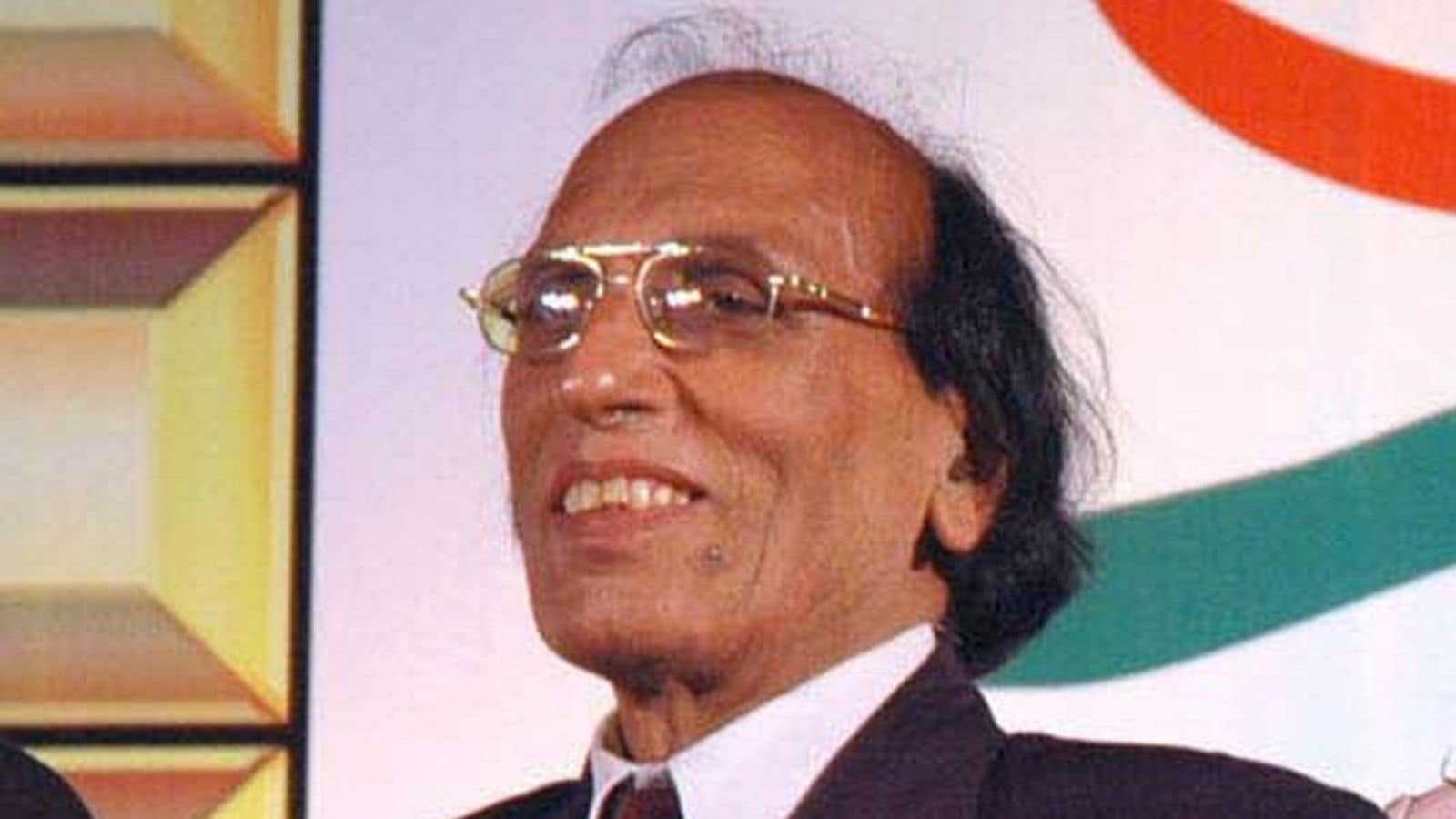


Shereen Ratnagar, the professor who taught us that stones could speak
Teacher, archaeologist, public intellectual. May the earth she spent her life reading rest lightly over her
By Parvinder Singh
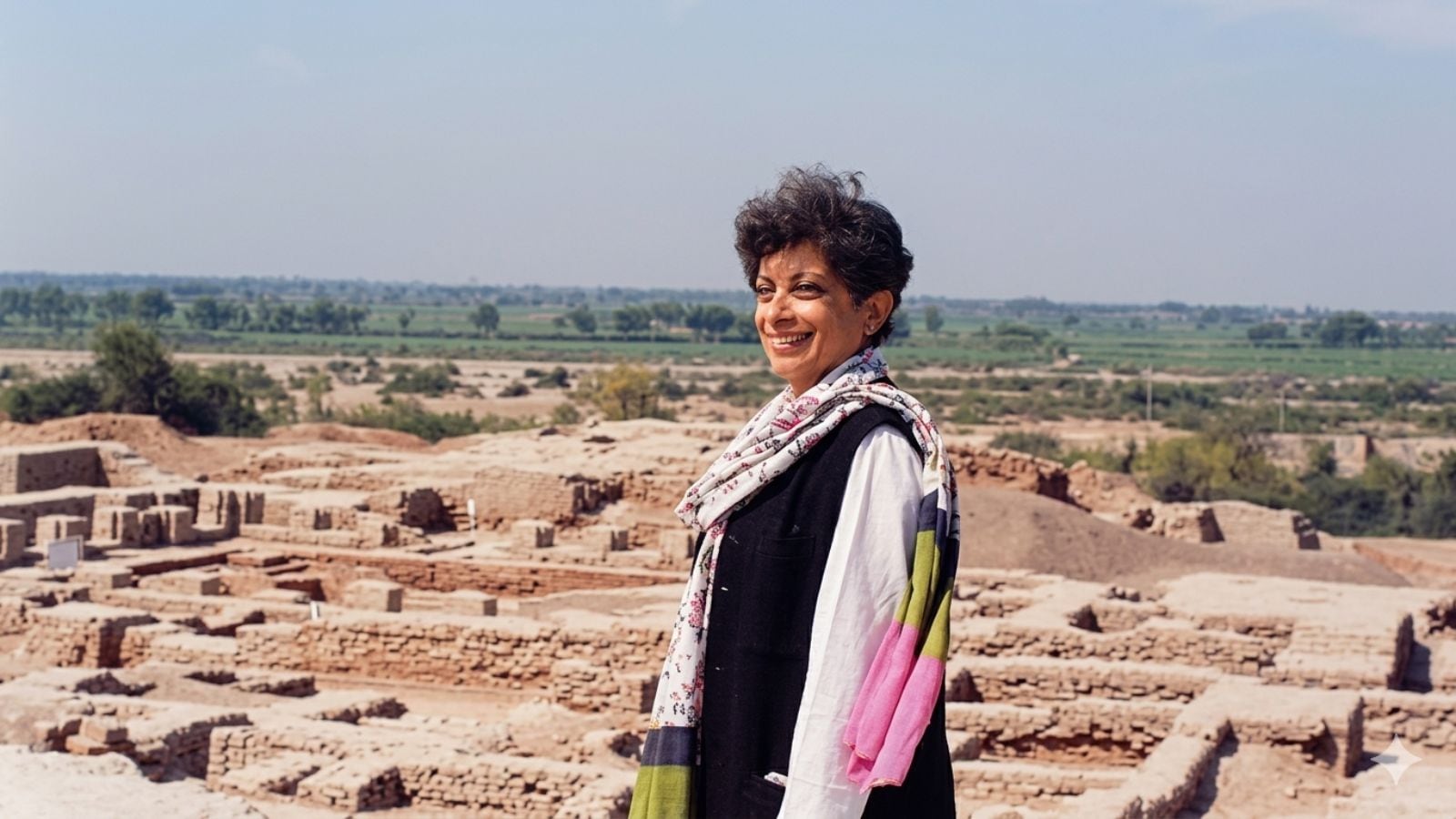
There is a particular kind of silence that falls over a lecture hall when a great teacher enters — not the compelled hush of authority, but the instinctive quiet of a room that knows it is about to learn something important. Professor Shereen F Ratnagar commanded that silence every time she walked in. When she passed away in Mumbai on May 25, at the age of 82, India did not merely lose a distinguished archaeologist. It lost its conscience.
I had the privilege of being her student during my master’s programme at the Centre for Historical Studies, Jawaharlal Nehru University. Shereen did not simply teach archaeology. She taught us how to look at the world: With patience, rigour, and an irreverence for received wisdom that she wore as lightly as one of her simple cotton saris. She lived in a faculty accommodation close to the Narmada Boys Hostel, and it was not uncommon to see her walking that short stretch between home and the Centre for Historical Studies, books tucked under one arm, lost in thought. On days when the seminar ran long, a few of us would trail her to the popular cafeteria housed in the Students’ Union office nearby. Those informal exchanges were as instructive as anything said in the lecture hall.
Shereen did not set out to spend her life in the ancient dust. Born in 1944 in Mumbai into a distinguished Parsi family — one steeped in literature, public life, and intellectual inquiry — she studied at St Xavier’s College before entering the Deccan College Post-Graduate and Research Institute in Pune. She later deepened her training at University College London, specialising in Mesopotamian archaeology, a field that gave her the comparative lens that became the signature of her entire scholarly life.
In interviews, she was characteristically unromantic about this journey. She was drawn not to the grand narrative of civilisational glory but to the small, verifiable, stubbornly physical reality of what people actually made, traded, and discarded. It was a calling rooted not in mysticism but in curiosity: The desire to know who lived here, how, and at what cost.
One of the defining intellectual tensions of Shereen’s career was her complex relationship with theory — and, by extension, with the generation of historians most notably represented by Romila Thapar, who worked alongside her in transforming Indian historiography. Both were formidable scholars; both rejected colonial distortions and nationalist simplifications of India’s past. But their approaches diverged in ways that proved enormously productive for the discipline.
Thapar, the great historian of early India, worked expansively across textual, social, and political history, bringing theoretical frameworks — Marxist, structural, comparative — to bear on vast sweeps of time. Ratnagar was more suspicious of large theory when it outpaced the evidence. She believed that in archaeology, the material record must drive interpretation. You could not begin with a conclusion and then go looking for seals and sherds to confirm it.
Yet at JNU, she understood that students needed a framework through which to interrogate evidence — that facts without theory were inert. So she did something characteristically demanding: She taught both. She pushed students to read Gordon Childe, to grapple with debates about state formation and urban origins, to understand what the “Bronze Age” meant as a theoretical category and not merely a temporal one. Then she turned them back to the pottery and the seals, and asked: Does the evidence actually say this? As she put it herself in an interview, the goal was never to make it “too gas and theory, so that as human beings, they can relate to it.”
A student’s imagination had to be lit by the specific and the tangible — a city planning for drought, a craftsman who could cast bronze but not afford to waste it, a diplomatic gift of carnelian beads left under the floor of a house in a faraway village. This was the intellectual courage that Thapar and Ratnagar’s generation shared: The willingness to hold multiple frames of analysis simultaneously, without letting any one of them foreclose the surprise of the evidence.
Shereen believed civilisations could be read through their fragments — seals, ceramics, exchange systems — the way a physician reads a pulse. Her landmark 1981 work, Encounters: The Westerly Trade of the Harappa Civilization, demonstrated that the Harappans were embedded in vast networks stretching into Mesopotamia and the Persian Gulf. Her subsequent books — Understanding Harappa, Trading Encounters, Harappan Archaeology: Early State Perspectives — approached the Indus civilisation as a complex urban society shaped by material conditions, labour, and class, not by spiritual exceptionalism.
What made her teaching genuinely extraordinary was the way she translated evidence into a living narrative. She did not lecture so much as paint. When she described Mohenjo-daro, you did not see a grid of excavated trenches. You saw a busy street, the smell of fired brick, merchants weighing carnelian beads, a child running past a drainage channel built to last millennia. When she traced the collapse of the Indus civilisation — the salination of soils, the closing of Mesopotamian trade routes, the slow retreat of the monsoons — her voice carried the weight of something she felt personally. She made civilisational rise and fall feel like the accumulated consequence of 10,000 ordinary human decisions. Sitting in her class, it was impossible not to feel that history was not something that happened to other people in other times — it was, and is, happening to us, right now.
Her pedagogy matched her scholarship: A student once called a fragment of worked flint “a stone”. She fixed the class with a steady gaze. “No. It is a stone tool.” In four words lay her entire method — name things precisely; honour the human intention embedded in every object the earth gives back to us.
One afternoon during our Master’s seminar, a langur monkey, emboldened by open windows and the general entropy of a JNU campus afternoon, swung its way into the lecture hall and settled, with apparent contentment, into a front-row seat. The class froze. Pens hovered mid-air. Shereen herself paused for a fraction of a second — eyes briefly widening behind her spectacles, a beat of pure, human astonishment. Then she straightened, surveyed the room — monkey and students alike — and continued her lecture. The langur departed after a few minutes, apparently satisfied with what it had heard. We laughed about it later in the cafeteria. She smiled, measured, and brief.
What set Shereen apart was her refusal to separate scholarship from public life. Her expert testimony in the Ayodhya title suit questioned the ASI’s 2003 excavation findings on methodological grounds. She also challenged the uncritical labelling of Harappan female figurines as “Mother Goddesses” — a reminder that colonial-era assumptions had seeped, unexamined, into the foundations of Indian archaeology.
I am now far from the archaeology classroom. But the lessons Shereen gave me travel alongside everything I do. She taught me that every object — a potsherd, a photograph, a data table — carries the imprint of human hands and human decisions. And she taught me, on one unforgettable afternoon, that true intellectual conviction does not waver — not for politics, not for provocation, and certainly not for a monkey who wandered in from the Delhi afternoon and decided to audit her class.
Professor Shereen F Ratnagar: Teacher, archaeologist, public intellectual. May the earth she spent her life reading rest lightly over her.
Singh is a policy and development communications expert