

Can Bhagwant Mann’s anti-sacrilege law be used against him?
Given that justice has eluded past cases, sacrilege remains a sensitive issue for Sikhs. But it is for this very reason that the Sikh leadership must oppose the legislation
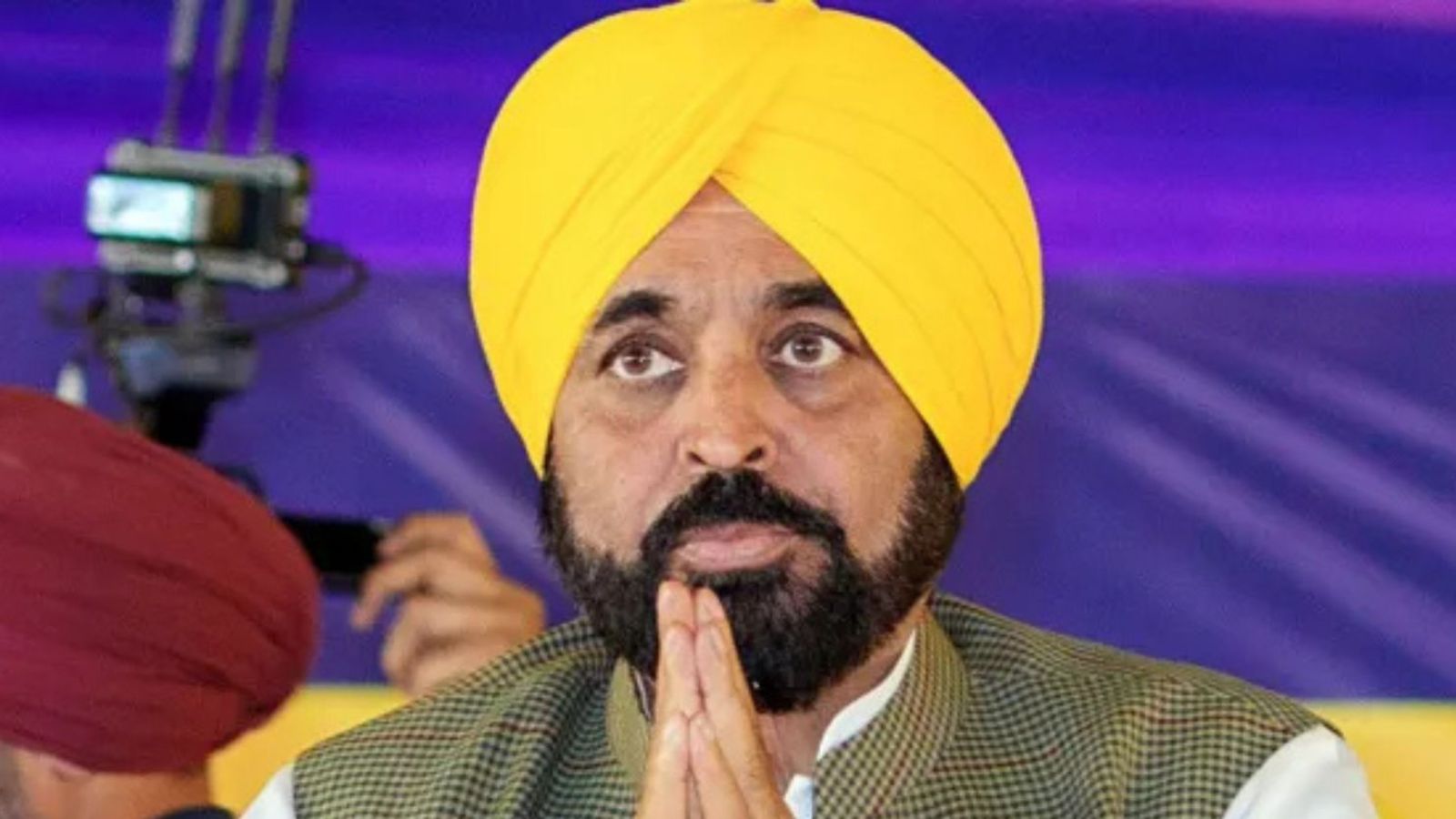
In an unprecedented blow to the ruling Aam Aadmi Party in the state, the Akal Takht Sahib has declared the Punjab Chief Minister a “Guru Dokhi” (betrayer of the Guru) and “Panth Virodhi” (anti-Sikh). This comes after the highest temporal body of the Sikhs claimed to have forensically verified a purported video showing a man, alleged to be Bhagwant Mann, sprinkling what appears to be alcohol on an apparent portrait of the Sikh Gurus. The Akal Takht Jathedar said the video was neither AI-generated nor doctored.
While the AAP has contested that the veracity still does not prove that the man in the said video is the CM, a looming question lingers: What happens if the Sikh body seeks legal action against the CM for the alleged sacrilege? Could Mann be tried under his own controversial law, which allows a sentence of up to 20 years?
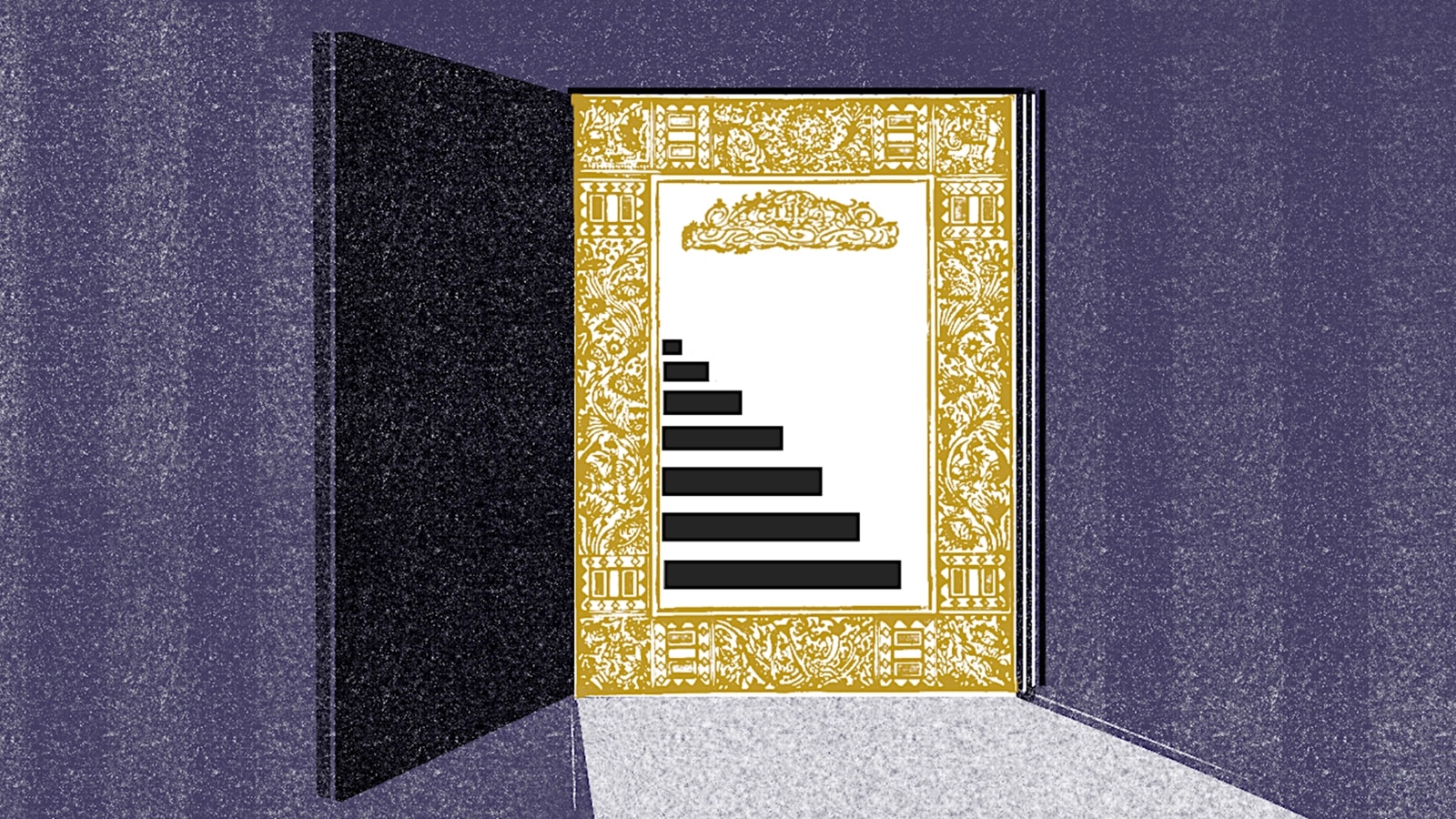
The law does not clearly define what legally qualifies as “sacrilege” of the Sri Guru Granth Sahib, the central Sikh scripture and charter. Clause 4(ii)(b)(bb) of the Jaagat Jot Sri Guru Granth Sahib Satkar (Amendment) Act, 2026, states that “sacrilege means…by words, either spoken or written, or by signs or by visible representations or through electronic means or otherwise, which is of such a nature as to hurt the religious feelings of persons professing the Sikh faith”.
Such a wide ambit allows for any and every action to be quantified as sacrilege — it could easily be misused.
In this case, hypothetically, if Akal Takht manages to prove that it is indeed Mann in the video, one might argue from a Sikh theological point of view that since idolatry is banned in Sikhism, anyone being sacrilegious towards a portrait of Gurus can’t be tried.
But in law, intent matters too. Here, the law extends “sacrilege of the Guru Granth Sahib” to any action that “hurts the religious feelings of Sikhs”. And many Sikhs have a photo of the Gurus at their homes. So, if charged, the court may allow the CM’s trial.
There are six reasons, including the ambiguous definition of sacrilege, why this Bill shouldn’t have been passed in the Assembly, and why the Punjab government must roll it back.
“Beadbi” or sacrilege has been a recurring issue in the Sikh-majority state for several years — first during the years of militancy, and now in the last decade since the 2015 sacrilege incidents. The Guru Granth Sahib is considered the 11th, eternal and living Guru of the Sikhs, since the throne or the “Guruship” was passed jointly to the Adi Granth Sahib and the Khalsa Panth (order) by the 10th master, Guru Gobind Singh, in the year 1708. Hence, this is also an emotive issue for the Sikhs.
The apex Sikh body, Shiromani Gurdwara Parbandhak Committee (SGPC) has long sought stringent punishment for sacrilege under the erstwhile IPC (now the BNS). But its initial silence on the law was troubling for many reasons, the same reasons why all Sikh bodies must oppose this Punjab legislation.
First, the new law hinders the independence of the apex Sikh body, with the state government underlining certain directions for the SGPC in the new legislation. One might argue that this is mere regulatory oversight regarding the handling of the Sikh scriptures. But this sets a wrong precedent, paving the way for further government overreach into the body, which has long fought to remain independent of any political influence. Akal Takht Jathedar, too, has questioned this “state overreach”.
Second, the amendment’s ambit calls its legality into question. The SGPC is an independent body formed under a Union law, the Sikh Gurdwaras Act, back in 1925. How can a state government issue directions to a statutory body formed by the Centre? While the British-era Act does not prohibit the state government from instructing the body, headquartered in Punjab’s Amritsar, provisions under the new law raise questions on whether it is in line with the federal distribution of powers as enshrined under the Constitution of India. Mann had earlier clarified that this would be a state law, and despite prescribing stringent punishment equivalent to that in criminal laws, would not require the assent of the President of India.
Third, the real issue with the sacrilege cases in Punjab has always been the implementation of existing laws, such as Section 295 of the IPC, and not a dearth of new laws. Sikh groups have been seeking justice in these cases under the existing judicial setup. How can a new piece of legislation ensure faster investigation and/or judicial verdict in the old sacrilege cases? This seems an apt case of misplaced priorities.
The AAP claimed the objective was the prevention of sacrilege, but bringing a new law can’t absolve the state of its duty to duly investigate the old cases to ascertain whether such repeated incidents are linked to a nexus, as many Sikh groups have time and again alleged.
In the last 11 years, Punjab has seen at least 597 cases of sacrilege. Of them, 480 involve sacrilege against Sikh religious scriptures and shrines. Convictions have taken place in only 44 cases. Holding to account those responsible for these past incidents is what will truly stop such cases.
Fourth, the law directs the SGPC to publish the details of what is called “custodianship” of tomes of the Guru Granth Sahib on its website (meaning, names and addresses of those housing a tome of the scripture at their house/institution). The body already maintains such records; but should these details be made public? This has two problems: One, religion is a private matter of the citizens. Two, making public details such as names and addresses of people housing the Sikh scripture could further aid such targeted attacks, risking an increase in cases of sacrilege.
Fifth, the political fallout of such stringent measures — combined with ambiguity as discussed above — could be grave. In the absence of clearly defined offences, the law risks misuse for political gains. This risks creating fear in the mind of devotees, as well.
Sixth, socially, it could harm the secular and inclusive fabric of Punjab, and the global image of the Sikhs — whose traditions have long been associated with tenets such as love, harmony, and “seva” (selfless service) — and could even invite comparisons with regressive societies.
Besides, there are several technical ambiguities with the law: What if a devotee outside Punjab obtains a tome of the Guru Granth Sahib from the SGPC? How can the law “prevent” any possible sacrilege there?
“From a Sikh ethos, the large issue is how the state or union governments can legislate anything related to the Guru Granth Sahib. That’s been the conflict since 1921, which legally started controlling the sovereignty of Guru Granth–Panth by British India, and subsequently, independent India,” points out Harinder Singh, co-founder and CEO of the US-based Sikh Research Institute.
Despite multiple requests, the Punjab government did not consult with the SGPC before railroading legislation pertaining largely to it.
The “Panthic” Sikh leadership seems to be caught in a Catch-22 situation: Given that justice eluded past cases, sacrilege remains a sensitive issue for the Sikhs worldwide, so opposing it, that too in an election year, might have its own consequences.
But it is for this very reason that the Sikh leadership must oppose the legislation, advocating instead for justice in the existing cases of sacrilege.
The timing of the Governor’s assent must also be noted: This is not the first time such legislation has been proposed by the Punjab Assembly. Two previous such Bills were also passed, both seeking amendments in the IPC, both prescribing far less stringent punishment than the current law, and both turned down by the incumbent NDA government at the Centre. For now, as Punjab elections draw near, it seems sacrilege will remain a defining issue.
The writer is deputy copy editor, The Indian Express. [email protected]