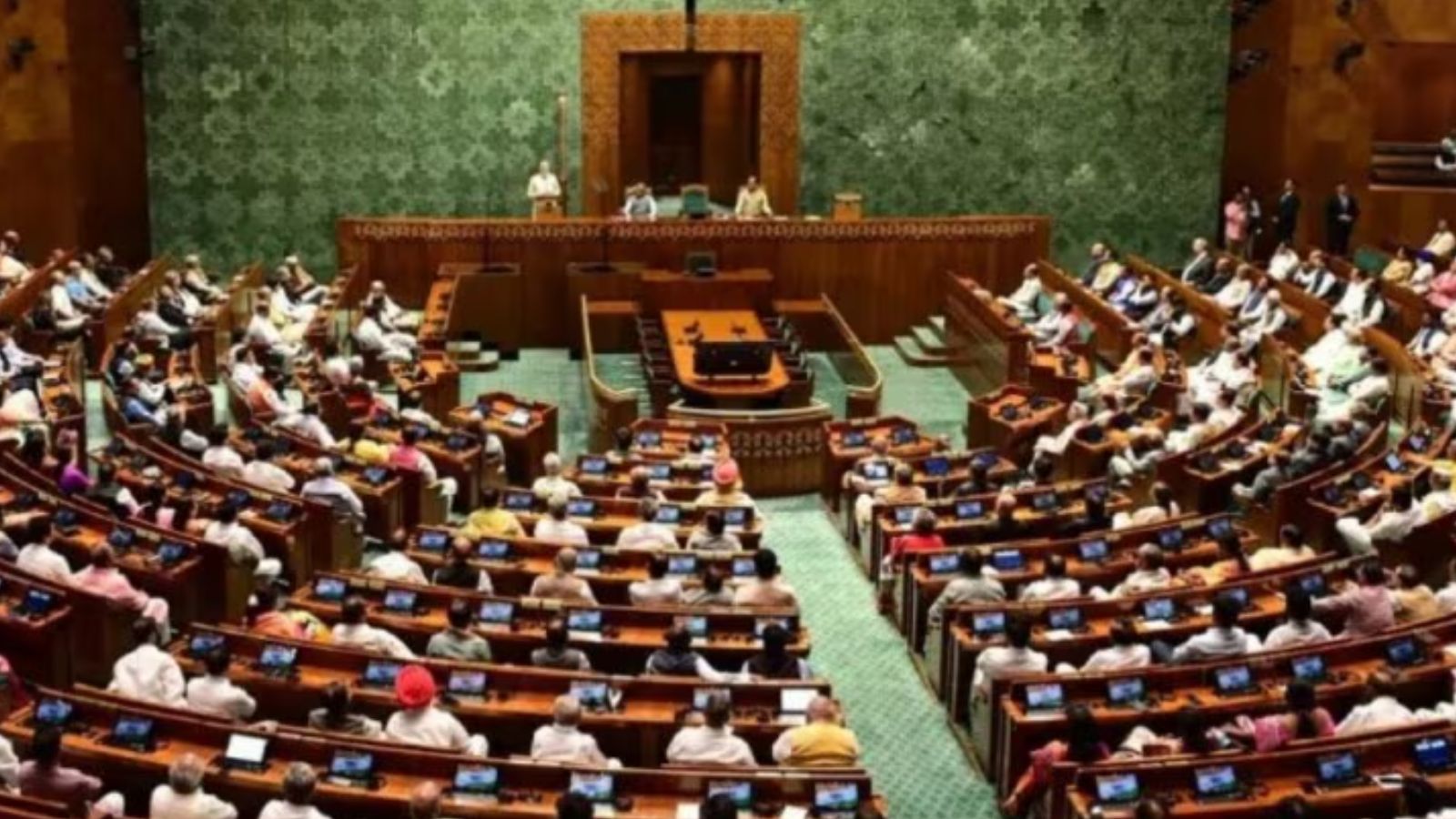


The delimitation debate is a fight over the wrong number
The real question is: Should population be the sole determinant of Parliamentary representation?
Parliament’s first power is the power of the purse: Its central task is to scrutinise how money is collected and where it goes. Money is raised from taxes and logically, richer states contribute more. It is then spent on people’s welfare and justifiably, poorer states receive more.
Tamil Nadu, Karnataka and Telangana contribute roughly 20 per cent of all taxes (direct plus indirect) while Uttar Pradesh, Bihar and Madhya Pradesh contribute 6 per cent. Clearly, the three richer southern states account for significantly higher contributions to the Union government’s tax kitty. Five years ago, the three southern states contributed 18 per cent to the nation’s taxes while the latter group of states accounted for 7 per cent. So, the share of the southern states to India’s tax revenues is only rising while the latter is declining.
At the same time, these three southern states account for 13 per cent of the population while the three northern states account for 33 per cent. Ten years ago, the three southern states had 14 per cent of India’s population and the northern states, 32 per cent. Ten years from now, only 12 per cent of the population will be from these southern states and 34 per cent from the latter group of northern states. Evidently, the share of population of southern states is only decreasing while the latter is increasing. So, in India, states’ share of revenues and population seem to go in opposite directions.
Poorer states need greater funds and also are more populous with higher birth rates. Richer states contribute more money and tend to be less populous with falling birth rates. If the financial oversight function of Parliament includes both collecting and spending money, then isn’t it logical to expect representation for states proportionate to their contribution to tax collections as well as to their spending needs? Put simply, why is a state’s share of contribution to the Union tax kitty not a factor in determining its share of representation in Parliament and only its share of population is counted as a factor? Especially when the share of contribution and population are inversely related.
The idea of a population-based representative democracy with a decadal census to measure the size of population and redraw constituencies was right at a time of rampant slavery and agrarian economies in 1787, when James Madison drafted it in the US Constitution. Back then, an elected representative physically carried the concerns of a fixed body of people, and there were natural limits to how many one person could reach, canvass and answer to. Roughly equal numbers of people per seat were a fair proxy for roughly equal access and equal voice.
But what is so sacrosanct about it being the sole determinant of share of representation today? In 2026, a Member of Parliament who wants to reach her voters does not walk the district. She sends a message, and it lands with a hundred thousand people or a million for the same effort and the same cost. The point is deliberately provocative: Population is no longer a good measure of the burden of representation, because technology has dissolved that burden.
“Equal population per seat” bundles two different claims. One is practical: A representative can only serve so many, so seats should be sized to a manageable number. The other is moral: Every citizen is equal, so every vote should carry equal weight. Technology has hollowed out the first claim. It has not touched the second. No one can argue that an Indian in Kanpur deserves less voice than an Indian in Coimbatore.
This is not a plea to let rich states buy votes, nor to price a citizen’s franchise by her tax receipt. Every individual’s vote stays exactly equal. But delimitation is not about the individual vote. It is about the collective weight of a state in the national legislature — and in a federation, that cannot be settled by headcount alone. So, the real question is not whether every citizen should count equally — of course they should — but whether a state’s collective leverage in Parliament should track only its population or be more holistic.
Parliament’s job is to decide how the Union’s money is raised and spent. States that supply a larger share of that money must be given their due share of voice in Parliament. But this does not mean money should be the only measure. This is of course not a call to hark back to the days of voting rights only for taxpayers. It is a call for the Delimitation Commission to come to terms with the realities of 21st-century Indian federalism and arrive at a more comprehensive formula for share in Parliament just as the Finance Commission does for share in taxes.
The current formula of a population-only based delimitation exercise only elicits warped and regressive ideas such as Chandrababu Naidu and M K Stalin urging families in their states to have more children and coming up with “PLI” schemes for “baby production”. Not out of any theory of human flourishing, but just to defend seats in a future delimitation and prevent migrant labour from other states.
Change the denominator and the whole conversation changes with it. No Chief Minister has to treat childbirth as a seat-protection strategy. If share of taxes is also factored in for share in Parliament, then the other vexatious issue of inter-state migration will become less political. After all, migrant labour contributes to the economy and taxes of the state. There is already an irony in the arithmetic: Much of the taxes Karnataka and Tamil Nadu remit is generated by workers who migrated from the very states now poised to gain seats, and who are still counted in the populations they left.
And so, the argument between states shifts from babies and migrants to development and finance, which is the argument a serious federation ought to be having in the first place.
The delimitation fight is a fight over the wrong number — which census year to use? The real question is — should population be the sole determinant of Parliamentary representation? The denominator should be some combination of population and economic contribution that reflect not just how many people a state has, but how much their state contributes to the national whole?
The writer is a Member of Parliament, Chairman of All India Professionals’ Congress, and Visiting Professor, Ashoka University