

I suffered from the CUET and NTA’s ‘glitches’. The exam system is losing our trust
In the Re-NEET examination, many students were denied entry for being late by even just two minutes. Yet when examination authorities are faced with technical difficulties, last-minute schedule changes and paper leaks, we are expected to absorb the disruptions without questions
Written by Akshita Chauhan
Every student who walks into an entrance exam centre carries more than just an admit card. We carry the weight of months or even years of preparation, sacrifices, family expectations, and hope that our efforts will be rewarded. We are told that exams like CUET, JEE and NEET, conducted by NTA, are the best means to test our aptitude, knowledge and preparation. However, recently, they have also started to test our patience.
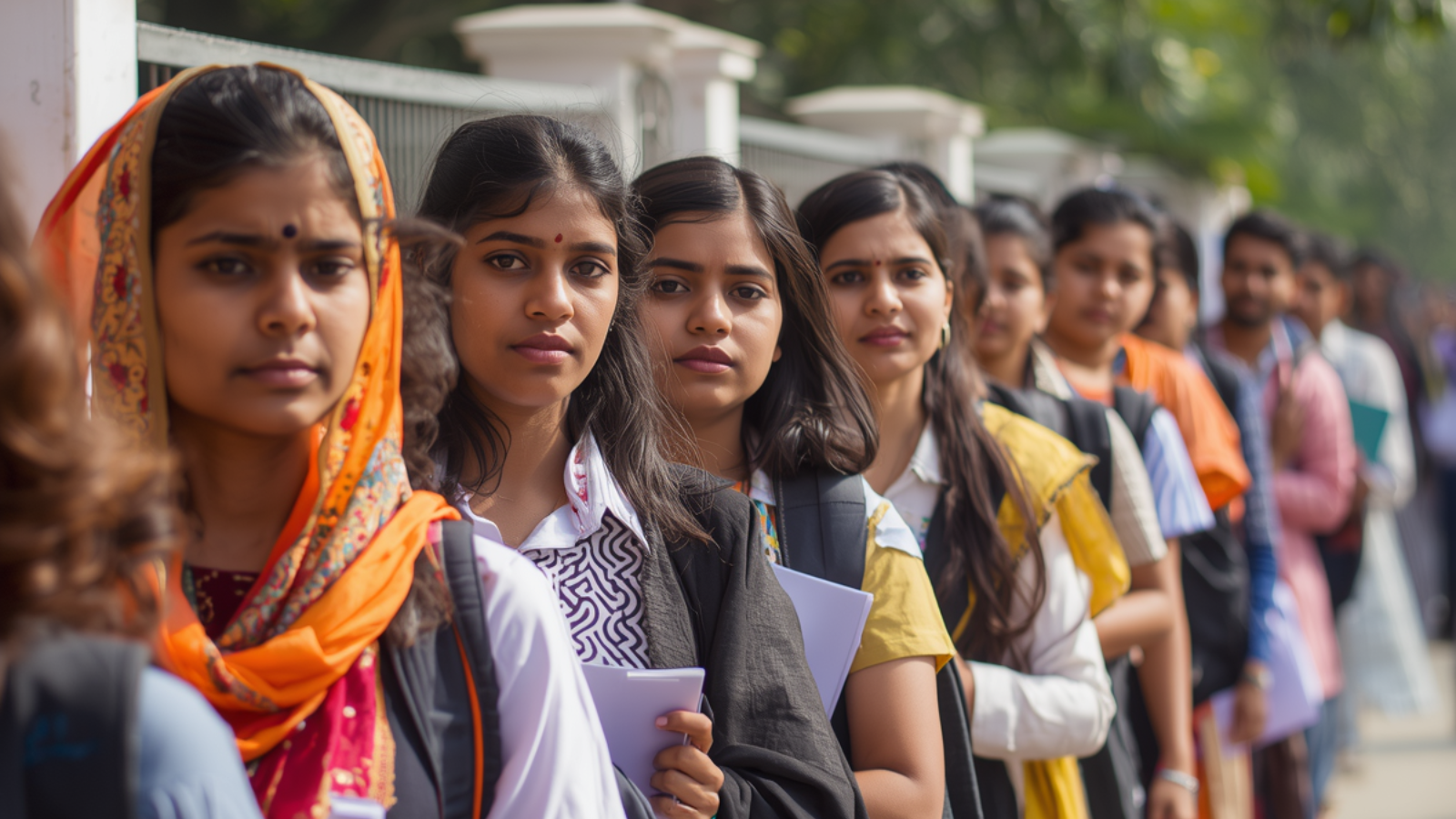
I learnt this first-hand from my experience at CUET 2023. After standing in a kilometre-long line of students and completing the frisking process, I thought the only thing I had to worry about was the anticipated nervousness that comes with any national test. Instead, I found myself among 20 more students being juggled through different offices by officials of the NTA as they struggled to complete our biometric verification. For nearly 30 minutes, I looked at the clock as we inched closer to the start of the exam, while I was uncertain whether I would be able to give mine, it was made clear to me that once someone turns 18, they need to “update” their biometrics for their Aadhaar Card. A crucial detail that the NTA never told us about.
Thankfully, I was able to bypass this step and appear for my exam. It’s important to note, though, that the ordeal wasn’t in a remote centre that lacked proper systems. It was at the NTA centre in Noida. If such delays could happen at one of the main centres of the organisation, it makes one wonder about the conditions and problems that might be occurring elsewhere.
At the time, I ignored this situation as an unfortunate experience for me. I gave NTA the benefit of the doubt, as conducting exams for lakhs of students across the country is a complex operation. Technical glitches occur, institutions learn, and they improve.
Or at least, they are expected to.
Two years later, my cousin took her CUET exam and faced similar difficulties. Listening to her experience about logistics, technical glitches, and lack of coordination between officials made me realise that our experiences were part of a larger pattern. This belief only became stronger year after year, with students’ and news reports over the struggles of the National Entrance Tests.
And this is exactly what makes the controversies surrounding NTA particularly concerning. The issue is not that mistakes occur. Every national organisation faces its own set of setbacks. The real issue is that students appear to be facing slightly different versions of the same problem repeatedly. Over the years, public debate over the NTA examination has focused on exam irregularities, delays in papers, technical glitches, biometric issues, and paper leak allegations. While these issues might differ in scale and severity, together they have created a perception that uncertainty has become an expected feature in the Indian examination system.
While my experience was frustrating but manageable, for other students, these failures in management have had far more serious consequences. The NEET paper leak and challenges of CUET 2026 cemented the idea that NTA needs a change.
What makes this system worse is perhaps the aspect of standards that are applied to students and institutions. In the Re-NEET examination, many students were denied entry for being late by as little as two minutes. Yet when examination authorities are faced with technical difficulties, last-minute schedule changes, paper leaks hampering years of hard work and the mental health of students, we are expected to absorb the disruptions without question.
The legitimacy of competitive exams also rests on the credibility of the process of conducting them, rather than just on the difficulty of the questions. Students are willing to accept tough papers; we are willing to accept intense competition and even failure. But what makes this difficult is the uncertainty about whether the system itself can function fairly and efficiently.
Rebuilding the broken trust between students and the system requires a lot more than apologies after every NTA controversy. It requires smoother communication with candidates, accountability measures for alleged paper leaks, and proactive measures to address administrative challenges that occur every year.
In a country where stories of students struggling through academic pressure have unfortunately become common, it is important that organisations do not ignore the psychological consequences of repeated disruptions and uncertainty.
The writer, a fourth-year student at Symbiosis School for Liberal Arts, Pune, is an intern with The Indian Express