

Revisiting the First Amendment, which created the architecture of state control in India
The consequences of the First Amendment have been far from benign. It dealt a crushing blow to the nascent forces of Indian liberalism, creating the constitutional plumbing for a vast armoury of repressive and coercive laws, including sedition
By Tripurdaman Singh
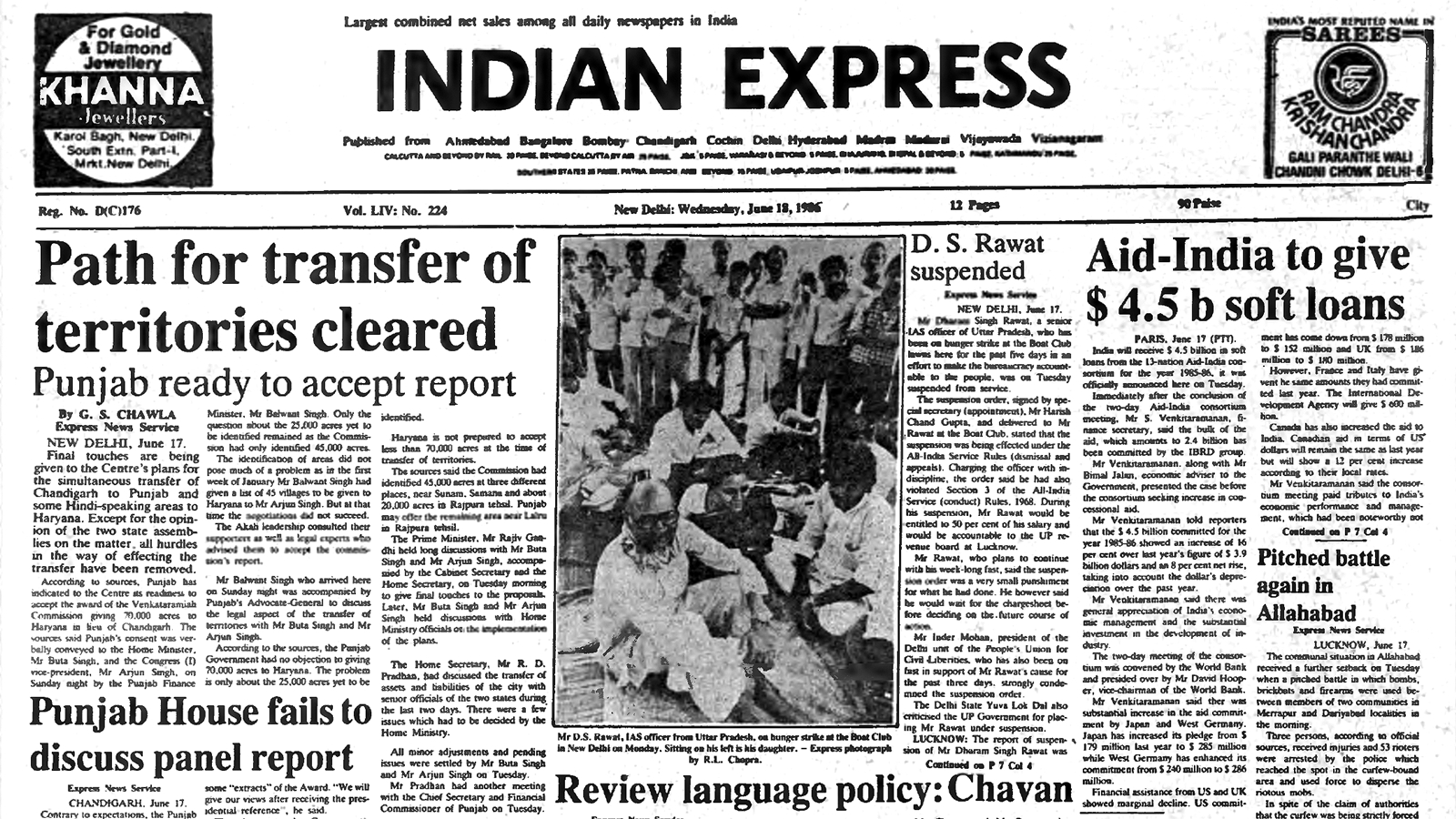
June 18, 2026, will mark 75 years since Rajendra Prasad gave his reluctant assent to the First Amendment — a “seismic shift” in India’s constitutional architecture, the aftermath of which the country’s pre-eminent legal scholar Upendra Baxi labelled the “Second Constitution”. Few seemed to have recalled the grim events of 1951, but it was a moment that continues to course through the nation’s body politic, and one that has had profound and deleterious effects on its democracy and constitutional order.
On January 26, 1950, the Republic of India, described by the Oxford don Kenneth Wheare as the world’s greatest experiment in democratic government, was inaugurated to great acclaim. Many had considered it an impossibility: Clement Attlee had even cautioned Jawaharlal Nehru against it, calling republicanism of the kind India was contemplating an alien import from Europe. At the heart of this transition lay the country’s new constitution, containing what The New York Times approvingly termed “the most detailed document of fundamental rights found anywhere,” widely seen to reflect India turning the page on its colonial past and taking a giant step towards a liberal new future.
It was a future that failed to materialise as imagined. By early 1951, the Nehru government had pronounced the Constitution to be the chief impediment in the way of its social policy and a stumbling block on the way to progress. The “magnificent Constitution” had, as he declared, been “kidnapped and purloined by lawyers”. How had such a situation arisen? Three key legal battles fought around three key fundamental rights — the right to freedom of speech, the right to freedom from discrimination, and the right to property — shaped Nehru’s assessment.
Government attempts to censor the Organiser (a scathing critic of its purported indifference towards the plight of refugees from East Bengal) and Cross Roads (a left-leaning weekly harshly criticising the brutal treatment of communist detainees) had been countermanded by the Supreme Court, which had also found the underlying legislation to be unconstitutional, knocking, to quote Sardar Patel, the bottom out of the laws used to control the press. In Madras, where a woman named Champakam Dorairajan had challenged the existing policy of strict caste and community-based quotas, the High Court had found that religion, race, and caste could not be a basis for admissions to educational institutions and that reservation beyond those provided to the Scheduled Castes and Tribes were thus violative of the right to freedom from discrimination. The Patna High Court had struck the final blow in March 1951 when it held the Bihar Land Reform Act to be unconstitutional. Interestingly, rather than the right to property (as many had feared), it was the right to equality that proved to be the Act’s undoing: The sliding scale of compensation it prescribed, where the rate went down as the size of the land parcel went up, was the culprit.
Collectively, the three judicial pronouncements had taken a sledgehammer to the government’s ability to censor and regulate the dissemination of opinion, eroded its credibility, and thrown its social agenda into disarray. For Nehru, the very fact that the courts were willing to adjudicate on such matters was a step too far. It was his government, he argued, that represented the will of the people — and the Constitution was in the way. The result was the First Amendment.
It kneecapped the right to property and allowed the government to circumvent the right to freedom from discrimination in pursuit of social upliftment for “backward classes”. Under the guise of protecting land reform legislation, it created the Ninth Schedule, a repository where laws could be placed to make them immune to judicial review even if they violated fundamental rights — described by the jurist A G Noorani as an “obscenity created by willful resolve”. More importantly, it introduced new grounds for restricting freedom of speech, including public order, incitement to offences, relations with foreign states, and the security interests of the state.
The consequences of the First Amendment have been far from benign. It dealt a crushing blow to the nascent forces of Indian liberalism, creating the constitutional plumbing for a vast armoury of repressive and coercive laws, including sedition. Moreover, it established the terrible precedent of retrospectively amending the Constitution to overcome adverse judicial pronouncements. The cavalier disregard for democratic propriety established a pattern for future egregiousness. Political power triumphed over constitutional order, eroding democratic norms even before the ink had dried on the original Constitution.
Disdain for civil liberties; prioritising the needs of the state; an aversion to public criticism cloaked in the language of “fake news” and “subversive activities”; a brute parliamentary majority riding roughshod over the protestations of the Opposition and civil society; a government agenda and party ideology elevated above fundamental rights; the claim that the wishes of the legislature should enjoy primacy over constitutional principles: The resonances with the contemporary world are more than semantic. Yet, there seems to be little inclination to register its 75th anniversary or revisit the long shadow it has cast on Indian democracy. Neither by its original supporters, now on the receiving end of the legal architecture it helped create, nor its original opponents, its prime targets now ensconced in the ruling establishment.
What we would do well to remember, however, is the prescient warning Syama Prasad Mookerjee, the man who led the opposition to the amendment and who could see that an uncontrollable weapon was being bequeathed to the future, issued to the government: “Maybe you will continue for eternity, in the next generation, for generations unborn; that is quite possible. But supposing some other party comes into authority. What is the precedent you are laying down?”
The writer is Ambizione Fellow, Graduate Institute, Geneva