

Can the Mamdani effect break through the cultural barriers of American conservatism?
Across most of the American heartland, the ideal of the self-reliant individual and a reverence for free-market capitalism severely limit any platform calling for significant expansion of the federal government or socialist redistribution
The recent June 2026 New York congressional primaries have sent shockwaves through the national Democratic establishment, signalling a seismic realignment rather than a mere localised shift. A progressive slate of Democratic Socialists endorsed by Mayor Zohran Mamdani has pulled off an unprecedented sweep by unseating entrenched heavyweight incumbents like Dan Goldman and Adriano Espaillat (the latter, the powerful Chair of the Congressional Hispanic Caucus). While Indians took a keen interest in one of their own, Mira Nair’s son, no less, contesting the most powerful job in New York, they should also be paying attention to the wider impact he is having on New York State politics (and, by implication, US politics).
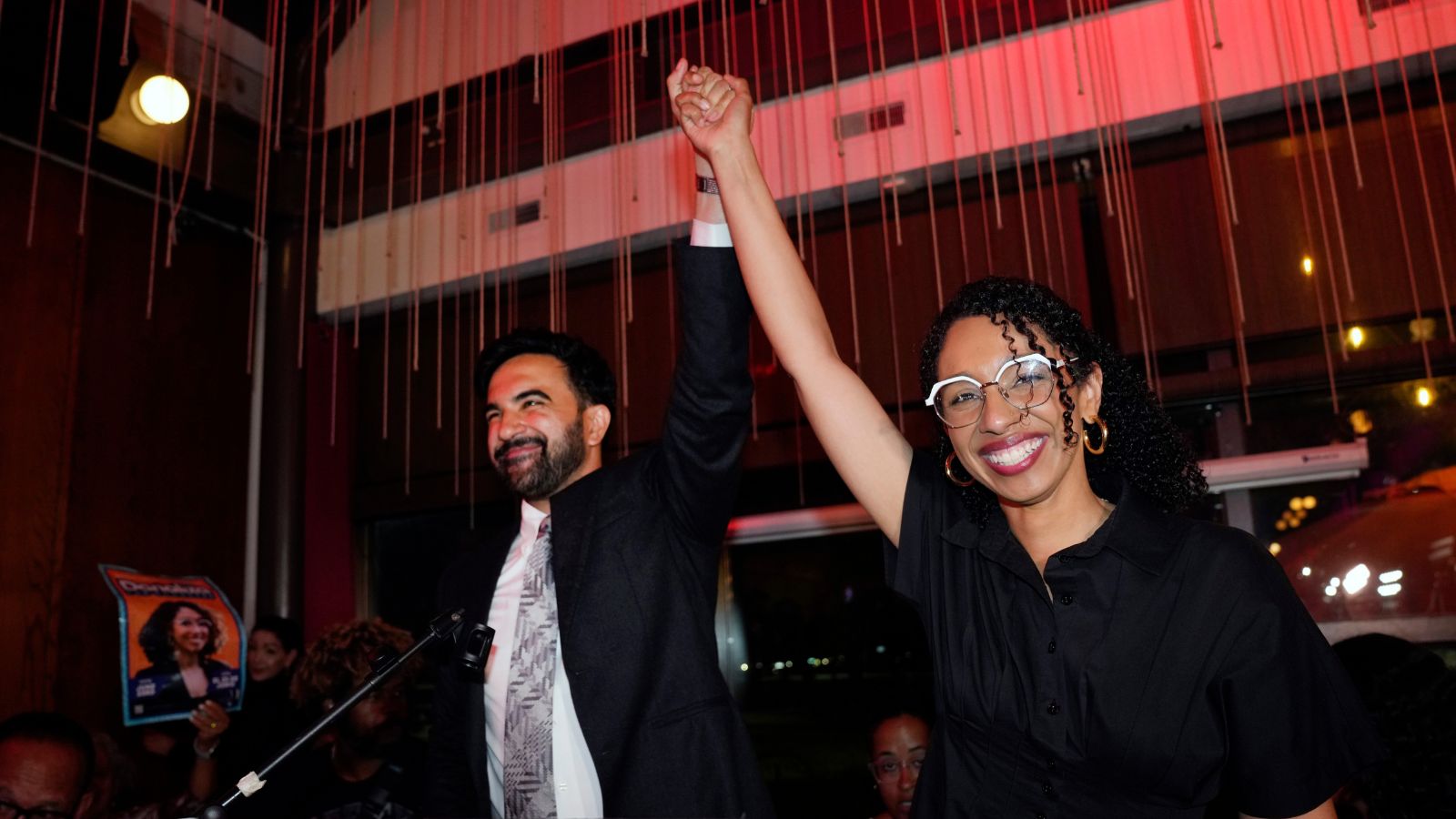
This decisive victory has catapulted democratic socialists Darializa Avila Chevalier and Claire Valdez, alongside leftist ally Brad Lander, onto a clear path to Congress. The Democratic primary almost guarantees the election outcome, since New Yorkers overwhelmingly vote Democratic. This clean sweep proves that the democratic socialist movement in New York is no longer just an insurgent faction within the majority party, but has effectively captured the institutional steering wheel of the city’s Democratic electorate.
These three primary outcomes dealt a stinging blow to establishment figures like House Democratic Leader Hakeem Jeffries, who campaigned heavily for the moderate incumbents, and exposed a deep ideological rift in the party heading into the national midterm elections in November. Furthermore, because a central pillar of these primary challenges was sharp dissent against current US foreign policy regarding Israel’s war in Gaza, these victories demonstrate that foreign policy can, perhaps counterintuitively, dictate local turnout in deep-blue urban areas. The Gaza and Iran wars were both unpopular, but American voters are rarely swayed by foreign policy considerations when they enter the voting booth. This was a vehement rejection of US support for both; the message was, “not in my name”.
Of course, domestic issues mattered too. Voters were fundamentally reacting to a compounding crisis of affordability and public safety by embracing a platform that focuses on aggressive economic intervention. The victorious slate galvanised support by advocating for housing security through rent freezes on rent-stabilised units, “Good Cause” eviction protections, and massive investments in public housing. They paired these housing initiatives with promises of economic relief, including aggressive minimum-wage hikes to $30 by 2030, fare-free public transit on city buses, and universal child care. To finance these public goods, they proposed steep tax increases on corporations and individuals earning over $1 million annually, while also vowing structural reforms to public safety and the abolition of Immigration and Customs Enforcement. These are not policies that the Democratic establishment was prepared to endorse. By ousting institutional figures like Espaillat and Goldman, the progressive base is demanding a complete structural overhaul of who holds power in their name and to do what.
This political shift follows a clear lineage that connects past political insurgencies to the current governing reality. Alexandria Ocasio-Cortez’s stunning 2018 victory was originally the harbinger of this trend, as she provided the blueprint and the vocabulary for a revival of socialism in the national discourse by proving that a well-organised grassroots campaign running on explicitly democratic socialist ideas could dismantle a powerful incumbent. However, Mayor Zohran Mamdani’s stunning 2025 mayoral triumph was the institutional catalyst that transformed a loose coalition of activists into a disciplined governing machine with immense institutional gravity. Mamdani’s ability to wade into these 2026 congressional primaries and successfully drag his entire slate across the finish line shows that his own victory was not an isolated fluke, but rather the establishment of a new political era in the city.
While New York City possesses unique structural advantages that make it fertile ground for democratic socialism, it is not entirely alone as an outlier. It features a rare concentration of rent-burdened working-class voters paired with a massive, hyper-organised local Democratic Socialists of America chapter. A moderate-to-high likelihood of similar socialist waves exists in California, particularly in districts across Los Angeles and the Bay Area that already possess heavy progressive infrastructure, meaning that we can expect similar primary challenges to moderate Democrats in deeply progressive-inclined urban areas. In the liberal western states of Oregon and Washington, the likelihood of a socialist assertion remains moderate; while cities like Portland and Seattle have long traditions of leftist activism, their broader statewide electorates tend to lean toward pragmatic progressivism or traditional Democratic liberalism. Vermont maintains a high likelihood for democratic socialist success, though its landscape is distinct; as the birthplace of modern American democratic socialism via Senator Bernie Sanders, its politics are rural and driven by a unique brand of independent progressivism rather than New York’s brand of urban machine politics.
Ultimately, while similar primary challenges will likely emerge in deep-blue urban districts across the country, replicating New York’s sweeping success elsewhere requires a dense population of working-class tenants paired with a hyper-disciplined grassroots organising apparatus built up over many years. That simply does not exist in the majority of American states. Democratic socialism also faces a profound cultural barrier in traditional American conservatism. Rooted deeply in the nation’s ethos, this worldview prioritises rugged individualism, strict constitutionalism, and a fundamental scepticism toward state intervention. Across most of the American heartland, the ideal of the self-reliant individual and a reverence for free-market capitalism severely limit any platform calling for significant expansion of the federal government or socialist redistribution.
Even at the high-water mark of American socialism, when Eugene Debs captured nearly one million votes in 1920, the movement failed to establish a permanent electoral foothold. Tellingly, this peak was never matched by any Socialist candidate afterwards — not even during the economic nadir of the Great Depression. When millions of unhappy working-class voters were desperately seeking relief from systemic economic collapse, they did not pivot toward radical socialism; instead, they sought refuge in the mainstream liberalism of Franklin D Roosevelt’s New Deal, demonstrating that even in times of severe crisis, the American electorate overwhelmingly prefers reforming capitalism over replacing it.
The writer is a fourth-term Member of Parliament (Lok Sabha) for Thiruvananthapuram and chairman of the Parliamentary Standing Committee on External Affairs