

In ‘Main Vaapas Aaunga’, the songs that Partition couldn’t silence
We are living in times when cinema is reducing complex histories into binaries. ‘Main Vaapas Aaunga’, instead, talks of cultural commonalities, ones that have endured
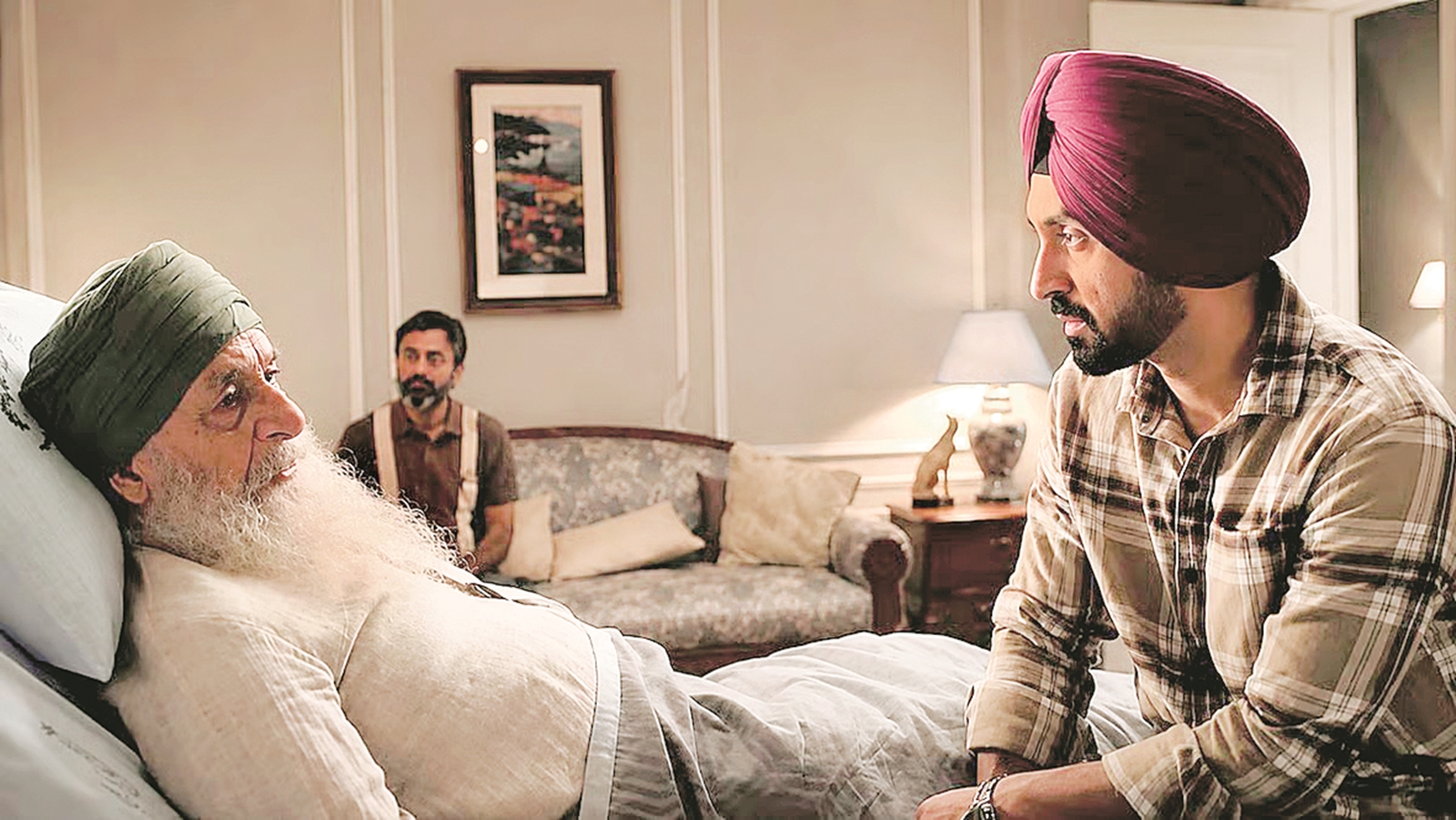
Partition, one of the most consequential political events in the Subcontinent, is usually remembered through its defining motifs: The hastily drawn Radcliffe Line, communal hatred and violence that accompanied the birth of two nations, and trains laden with refugees fleeing into the unknown. But filmmaker Imtiaz Ali’s recent film, Main Vaapas Aaunga, with the splintering event at its heart, manages to find another route into that history: Through a cultural world that Partition could never divide.
As the central love story between a Sikh boy and a Muslim girl finds its feet in the first half, a Punjabi folk tune accompanies an engagement ceremony in Muzaffer Ahmedzai’s home in Sargodha of 1947. It is a fleeting moment as some women are heard singing “Kothe te aa mahiya, milna taan mil aake nahi taan khasma nu kha mahiya”, a segment from the age-old tappa (a style of folk) often heard at Punjabi weddings. Sung in call-and-response style, this traditional folk of anonymous authorship was perhaps born when nomadic mirasis, traditional bards, travelled along the historical caravan routes of Punjab and Sindh. Here, a woman is heard asking her beloved to come to the terrace and meet her. “Come meet me if you want, or else be damned,” she sings.
This folk piece, heard in Sargodha (now in Pakistan) was sung at both my grandmothers’ weddings, my mother’s wedding as well as mine and continues to be sung even today. It was recorded by Punjab’s nightingale Surinder Kaur and Lahore’s famed folk singer Mussarat Nazir, and later even by eminent Bangladeshi singer Runa Laila, followed by the absolutely charming rendition by ghazal duo Jagjit and Chitra Singh. Nearly 80 years after Partition, in the age of Spotify and iTunes, the song still lives on both sides of the divide, still sung during celebrations and family gatherings.
In Ali’s film, it serves as a reminder that the Radcliffe Line may have divided lives, but it could never divide the shared cultural inheritance: Music, poetry, literature, and even cuisine. Mainly because the intangible is all that people could really carry with them. The music of the film, in fact, is a reminder of what political borders failed to erase. In Main Vaapas Aaunga, composer A R Rahman and lyricist Irshad Kamil have clearly understood that. Kamil, who hails from Malerkotla, is well aware that folk songs, boliyan, qisse, Sufi poetry, and wedding melodies are repositories of stories and memories, and his lyrics have absorbed that entire tradition. The soundtrack also feels like the return of classic Rahman, with music that is rooted but also open to the world.
But music in Punjab was never just confined to folk traditions. Anglicised members of the Punjabi elite used to sponsor European musicians to visit and perform among them. This helped merge some traditions. So much so that military bands even became part of Punjabi weddings, a practice that still continues. Then there were house orchestras at places like Faletti’s Hotel in Lahore that played western tunes for ballroom dancing. Rahman and Kamil have studied this history well. The result is one of the film’s most inspired musical choices: “Ishq mastana”, a composition that begins in the cadence of typical Punjabi folk and turns to jazz and jive influences. Kamil takes inspiration from Kabir’s “Haman hain ishq mastaana, haman ko hoshiyaari kya?” (We are intoxicated with divine love, what need do we have for cleverness?) to present this striking piece. His decision to invoke Kabir, who straddled Hindu and Muslim religious worlds without belonging exclusively to either, also tells you how potent political hatred is and how successful it can be in deepening divides. Recently, Rahman and the film’s musicians performed songs from the film at the Wagah-Attari border. As the music drifted across, people assembled on either side to listen.
The album also has a song called “Dariya” that draws from Bengal’s baul tradition and explores separation through the imagery of the river. It is intriguing how the Bengali passage in a Punjabi song carries the weight of another border, another migration, and the history of so many families broken in another direction. Rahman and Kamil beautifully connect these parallel histories of loss. “Tere paas main” has two intertwined yet disparate perspectives that never really meet. The woman sings of the unattainable beloved, whom she continues to hold close in the hope that she will see him one day. “Jaise paani paas pyaase, tere paas mein” (Like water is near the thirsty, I am near you), she sings. The man understands the distance but denies it: “Tere saath hi rahoonga main, baad mein, khayaal mein” (I will remain right by your side, later on, in your thoughts). These two are saying the same thing from either side of the river. Together, they capture what Partition has meant for those who suffered it and the trauma that later generations continue to feel.
The song also reminded me of my paternal grandmother, who spent a lifetime cooking Pindi chana and bhusri (a sweet jaggery flatbread), yearning for the home she never saw again. She was 14 when she left Jhang, now in Pakistan’s Punjab and home of Heer, the famed heroine in the folklore of Heer Ranjha. She travelled to India with my grandfather, the man she was engaged to, and his family. Just before she passed, about eight years ago, she kept telling her children to make sure that her ashes are not immersed in the Ganga. If she couldn’t go when she was alive, she wanted to be there at least in death. Like my grandfather before her, her remains were also immersed in the Sutlej, the river that passes through India and flows into Pakistan. It was the closest either of them came to crossing the border again. And perhaps, in the language of rivers rather than nations, they finally did go home.
I finally understood why the immensely rich world of Punjabi literature gravitates towards dariya (river) and darakht (trees) — often the only witnesses to the pain many went through; the only living beings that could not be uprooted, ones that you could hope to still return to.
When noted Punjabi writer Amrita Pritam beseeched 18th-century Sufi poet Waris Shah and asked him to look at his Punjab in 1947, its bloody rivers full of corpses during Partition, people on both sides would keep the poem in their pockets and well up every time they read the lament. One story goes that, years later, a banana seller in Pakistan learned that a Pakistani writer was travelling to India to meet Pritam, who had settled in Delhi. He asked the visitor if he could carry a few bananas from his cart to the poet. Her “Aaj akhan Waris Shah nu” had moved him deeply. The fruit was all he had to offer. “Please give these to her,” he said. “If you do, I will feel as though half my Hajj is complete.” Pritam often recounted the story. The politics of Partition never quite managed to extinguish this affection, this sense of shared belonging that continued to flow across the border long after it was drawn.
In many ways, that is also the emotional terrain of Main Vaapas Aaunga, especially in today’s polarised times, where communal violence has found firm feet. We are also living in times when cinema is reducing complex histories into binaries. Main Vaapas Aaunga, instead, talks of cultural commonalities, ones that have endured. This space is necessary to see each other in gentler shades, as people connected by songs and stories that still belong to everyone.
The writer is senior assistant editor, The Indian Express. [email protected]