

As John Berger turns 100, noticing the trees that escaped his Ways of Seeing
If Ways of Seeing was revolutionary in the way it saw humans in art, what could it imply for us to reverse our focus of interest — where, after long and weary centuries of human domination, of watching only humans, of turning all other living forms into background, we notice moss and mycelium, fir and fern, not as compass needle but as the mercury in a thermometer?
It has been half a century since an English writer made a series of four films, and then made a book from them. We know that it revolutionised ways of looking at art, and also at humans. Ways of Seeing was published two years before I was born — I would first read it only 25 years later. It did not seem to matter to anyone, in those remaining years of the last millennium, that this was a book by a European man, using examples only from European art, focussed only on humans. It didn’t — couldn’t have, such were our frames in the last millennium — occur to anyone to ask the wayward question: How many trees are there in Ways of Seeing? The answer is none, of course — what does that say about our ways of seeing? John Berger would have been 100 years old this year; his ways of seeing — that Matthew Hall has, in a different context, diagnosed as “plant blindness”, the socio-optical conditioning of the human species to not notice plant life around them — are not his alone; most of us suffer from this condition, some live with it as one does with a chronic illness.
As someone who suffers from an obverse condition — of noticing plants, in a way that others have called obsessive; and here I must insist that the impulse is neither botanical nor taxonomical — what does it mean to find oneself as a person on the other side of the Berger world? I mean, of course, the obvious opposites — a woman, a non-European, from the Indian Subcontinent, raised by a different light, climate, and art — but also the less obvious things. Berger was looking at a world of humans and their ways of being — he was raised by a world where words like “climate”, “environment” and “ecology” belonged to government brochures or the index pages of books. Berger, born in 1926, uses the word “ecology” in his book once, a little more than a century after it was used for the first time in 1866, by Ernst Haeckel (‘Ökologie’): “Prior to the recent interest in ecology, nature was not thought of as the object of the activities of capitalism… Aspects of nature were objects of scientific study, but nature as a whole defied possession”.
“All images are man-made,” Berger asserts in the book. He never uses the word “tree” — his quotes include “apple”, “garden”, “wheat”, “cornstalk”; in two images, we see trees in the background, providing shade to the women on whom he — and the artist — focuses his attention. I have no intention of being a correctionist, of playing a game where we scold Aristotle for not being a feminist or Hegel for not thinking of non-European societies. Yet, I feel an unease with the complete lack of attention to plant life in Berger’s view and vision and how it is evidence of the unequal distribution of attention to all living forms, as a result of which we find ourselves here today. Our ways of being have been compelled to accommodate other ways of seeing because of the world we find ourselves in — sweaty, unpredictable, one we can no longer trust as host, slightly hostile, unresponsive to our telepathy, biologically atavistic, with the chance of the return of organisms from an unrecognisable and unknown time.
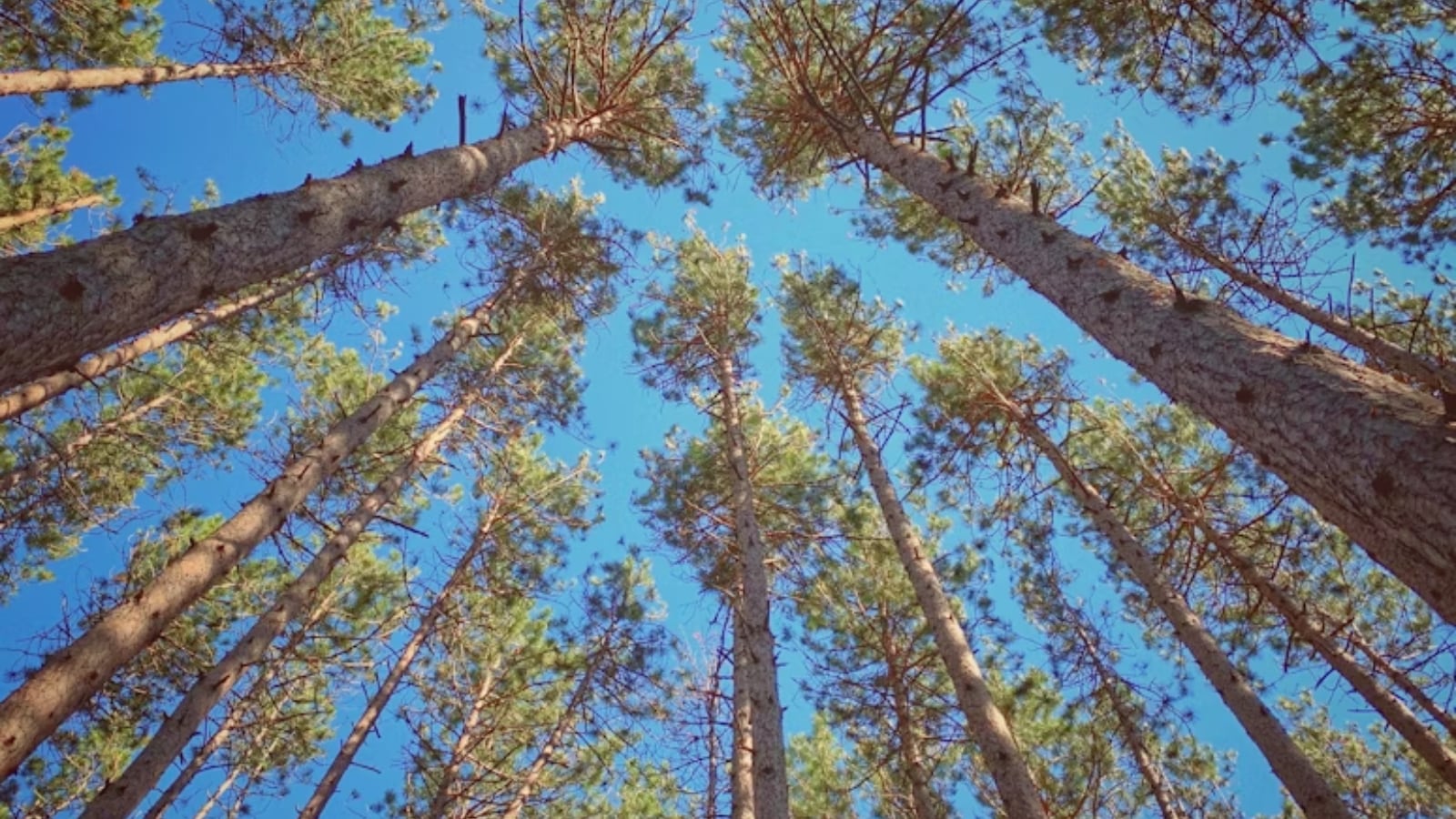
Why must Berger’s ways of seeing give way to what I have, in my head, been calling ways of treeing? If Ways of Seeing was revolutionary in the way it saw humans in art, what could it imply for us to reverse our focus of interest — where, after long and weary centuries of human domination, of watching only humans, of turning all other living forms into background, we notice moss and mycelium, fir and fern, not as compass needle but as the mercury in a thermometer? For not everyone might have been raised by art, but there is possibly no human who hasn’t seen a tree.
Tell me then — is there a tree in the Mona Lisa?
Roy, a poet and writer, is associate professor, Ashoka University. Views are personal