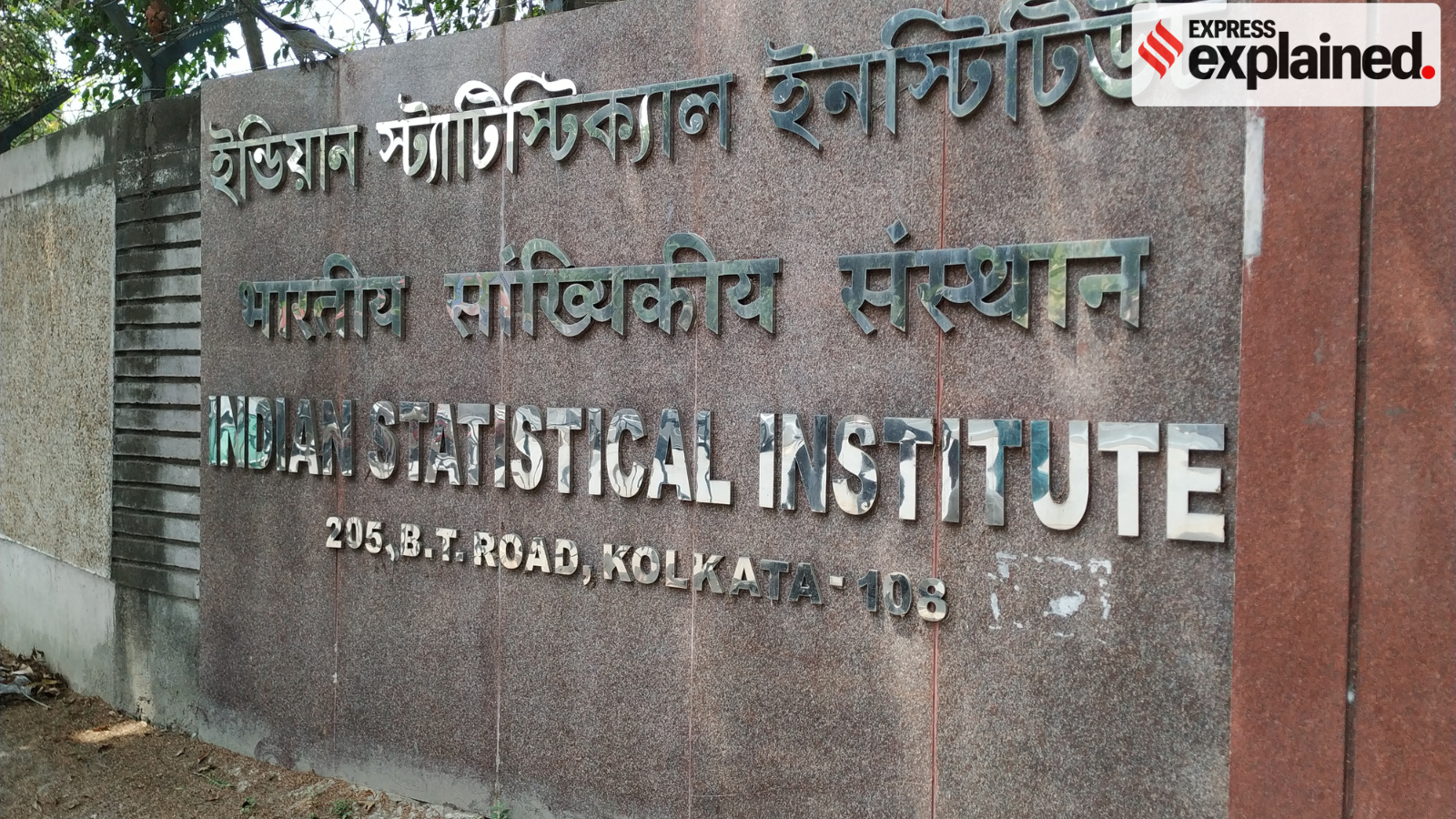


To revive ISI, reform its governance
ISI admits around 550 to 600 students a year. IITs admit close to 2,500. For an institution that wants to be genuinely competitive by its centenary in 2031, that gap has to close
P C Mahalanobis started ISI in Kolkata in 1931 with a simple conviction: That rigorous statistical thinking could make India a better-governed country. Within a generation, ISI was informing the Five Year Plans, building the National Sample Survey from scratch, and sending graduates to institutions around the world. It was, for a time, genuinely world-class. That is no longer obviously true. And the reasons are worth stating plainly.
We live in a moment when AI and machine learning are remaking every industry, every government function, every research discipline. The foundations of all of it, probability, inference, uncertainty, modelling, are what ISI was built to teach. The institution should be at the centre of this moment. Instead, it is watching from the sidelines. Not because of any shortage of talent inside its walls. But because its governance has made it almost impossible to change.
We say this as those who were part of the 4th Review Committee, which submitted its findings in 2021. What we found was not a failing institution. We found dedicated researchers, proud alumni, and genuinely excellent students. What we also found was a structure that had quietly calcified over decades. The Governing Council, which should be a lean body setting strategic direction, had grown to 33 members, 17 of whom are effectively insiders. Division heads are chosen by internal elections, which tend to reward popularity over academic leadership. The General Body, with over 1,000 members, many of them former staff, holds a veto on any serious reform. Four successive Review Committees going back to 1966 recommended a smaller, more agile council. The council got bigger each time.
The IITs are the obvious comparison, and it is not a flattering one for ISI. IIT Kharagpur was converted into a proper statutory body in 1956, three years before the ISI Act was even passed. The Institutes of Technology Act of 1961 gave every IIT a compact board, merit-based appointments, and genuine room to grow. The IIMs got similar architecture in 2017. Both systems expanded dramatically in size, quality and global standing. ISI, still running on a society structure from the 1930s, did not.
The Draft ISI Bill 2026 addresses the core problem. An 11-member Board of Governance with balanced internal and external representation replaces the current unwieldy council. ISI becomes a body corporate, which removes the procedural veto that has blocked change for 50 years. The regional centres in Delhi, Bengaluru, Chennai and Tezpur get real administrative and financial autonomy, long overdue. And the institute’s mandate formally expands to include AI and allied disciplines. That last point matters: ISI should not need legislative permission to teach AI, but given where it has been stuck, the explicit mandate helps.
One thing the Bill alone cannot fix is scale. ISI admits around 550 to 600 students a year. IITs admit close to 2,500. For an institution that wants to be genuinely competitive by its centenary in 2031, that gap has to close. India needs more people trained to think carefully about data, not fewer. The talent pool is there. The demand from industry and government is real. What has been missing is the institutional capacity to respond.
During the original Lok Sabha debate on the ISI Bill in December 1959, several members warned about exactly the governance problems we see today. They were right, and it took 66 years to respond legislatively.
The Bill is a good start. Now it needs to be implemented with the same seriousness with which it was drafted.
Mashelkar is former Director-General of CSIR. He chaired the 4th ISI Review Committee. Zainulbhai is former Chairman of the Capacity Building Commission and former Chairman of McKinsey India. He served on the 4th ISI Review Committee