

Is Xi Jinping more Trumpian than we think?
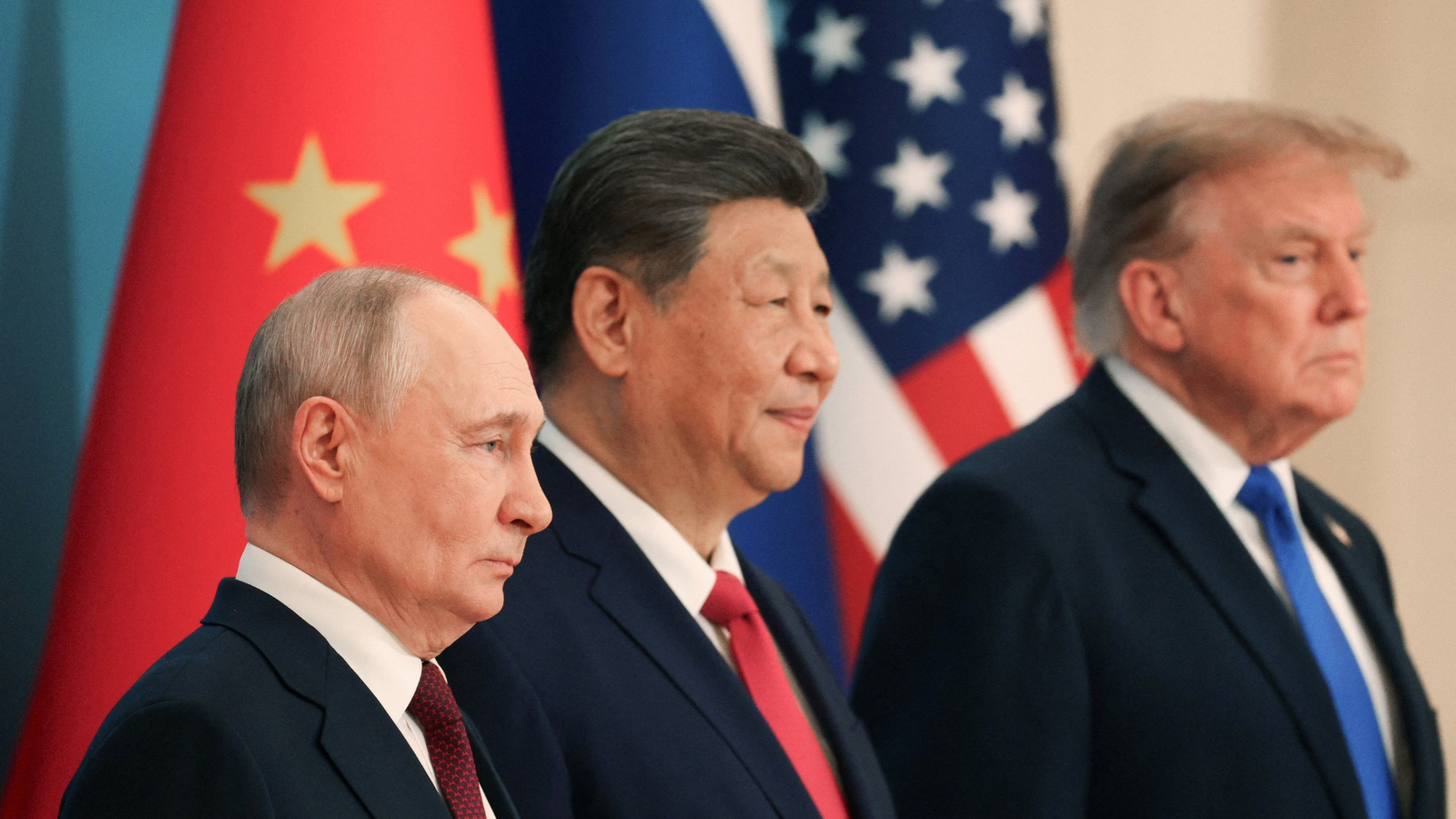
What was striking at Shenzhen was three leaders exporting their domestic troubles to the rest of the world, extremely status-conscious about vertical deference to power, needlessly creating insecurity in their neighbours, not capable of carrying friends with them, more or less incapable of collective global goods building, and increasingly skirting the line between personal power and national interest
It is widely agreed that the recently concluded Shenzhen Trilateral between the United States, China, and Russia was no Yalta 2.0. Nor did it really herald the arrival of a G2 or G2 and a half. It was a meeting of three of the world’s most powerful countries. But what the summit exposed was the increasing convergence in political style in the international arena of the superpowers, especially China and the United States, despite differences in their political and economic systems.
There are many elements to this convergence. The first was, of course, the spectacle of three old, status-conscious leaders obsessed with the desire for recognition. The psychological registers in which they present themselves may look different. Donald Trump views diplomacy through the lens of personal flattery and gain. Vladimir Putin was seeking rehabilitation as a world leader. On the face of it, China demands a more structured deference to its power and status. But given the increasingly personalised nature of power in the Chinese system, you have to wonder whether President Xi Jinping’s excessive fastidiousness about protocols and shows of deference are really as much about acknowledging his rank as anything else. Given the increasing concentration of power and paranoia President Xi is displaying at home, is the Chinese approach to the world now more dependent on personal whim than we care to acknowledge? Hegel once saw Napoleon as the world spirit on horseback. Now civilisations — Russia’s Third Rome, China’s Middle Kingdom, the United States’s civilisation — are reduced to deference to individual wills.
Putin and Trump are easy cases for this argument about personalised power. But is the Chinese system becoming more personalised than usual assumptions about China’s strategic rationality might allow? It is not a surprise that China is seeking open acknowledgment of its power. The days of hide your strength and bide your time are over. But it is a bit more of a puzzle why China does not even seem to be converting Trump’s spectacular own goals into lasting strategic gains. China has been active on many fronts; it plans for the material foundations of power quite acutely. The green energy transition, deftly managing its oil reserves, and internationalising the renminbi are examples.
China may have gained from America’s mistakes. But it has not managed the opportunity created by America on a number of fronts. America retreated from trade liberalism. But China has emerged as an economic threat rather than an attractive alternative. It could be argued that this reflects the fact that China has domestic troubles. It has to double down on exports and use its overcapacity. But it has also consistently used chokeholds of various kinds, denying India tunnel boring machines, as the latest example. You could surmise that all of this is part of some grand strategy. But surely a strategic China would have understood that every time it uses supply chain advantages or export restrictions as a chokehold, it gives countries reason to diversify away. It also creates a situation where short-term economic dominance can produce long-term political and diplomatic damage.
But one can go further. It must be part of a great power syndrome to be paranoid about the autonomy of neighbours. The United States increasingly thinks that about Canada and Mexico. China has managed to alienate a remarkable range of neighbours — the Philippines, Vietnam, Japan, India — through its assertiveness. It has, in effect, driven even the most reluctant of these countries back into the arms of the US. Just try to imagine a world where China was more diplomatically conciliatory; it would complicate the US’s life even more. Japan is central to China’s narrative of being colonised and to the American alliance in Asia. But none of the other countries has the remotest bearing on whatever China’s ambitions might be about Taiwan; in fact, China would be better served keeping them more agnostic. Surely China’s long-term interest would be to convince these countries that they need not choose. It could be that China is simply mistaken about them: Most of these countries, like India, are happy to keep options open, as Vietnam has, except it is now China denying them the option.
Third, China has sought legitimacy by asking the question, “How many countries has China invaded, how many regimes has it toppled?” As a rhetorical ploy against unconscionable American hubris, this works powerfully. But it is also increasingly clear that the absence of overt war and intervention is not the same thing as a commitment to building a peaceful world order. China has often voiced support for both multilateralism and the principle of non-interference. But it is hard not to read China’s support for Russia against Ukraine as consequential for upending the norm of respecting sovereignty. In effect, it is also underwriting great power impunity, like America did. One could argue that this is a form of strategic foresight, where China thinks that supporting the erosion of the norm of sovereignty, like America did, will work to its advantage. Russia can work as a proxy counterweight to the US, and it ties down Europe. There is much to this argument. But it could also be argued that this demonstrates a narrow conception of what might be in China’s long-term interest.
For a moment, consider an alternative explanation. Is China, despite its enormous strengths, displaying the same characteristics as the US? Is Xi more Trumpian than we think? What was striking at Shenzhen was three leaders exporting their domestic troubles to the rest of the world, extremely status-conscious about vertical deference to power, needlessly creating insecurity in their neighbours, not capable of carrying friends with them, more or less incapable of collective global goods building, and increasingly skirting the line between personal power and national interest. The problem with personalised leadership and status obsession is that it is not in the service of building anything. It is obsessed with who gives deference to whom, who can be insulted and put in their place. Status is confused with strategic foresight.
The writer is contributing editor, The Indian Express