

Australian uranium fuels next phase in India’s n-programme
A new enthusiasm has gripped the nuclear power sector. While the government assures access to nuclear fuel, the nascent private industry must imbibe the highest standards of safety, security and safeguards
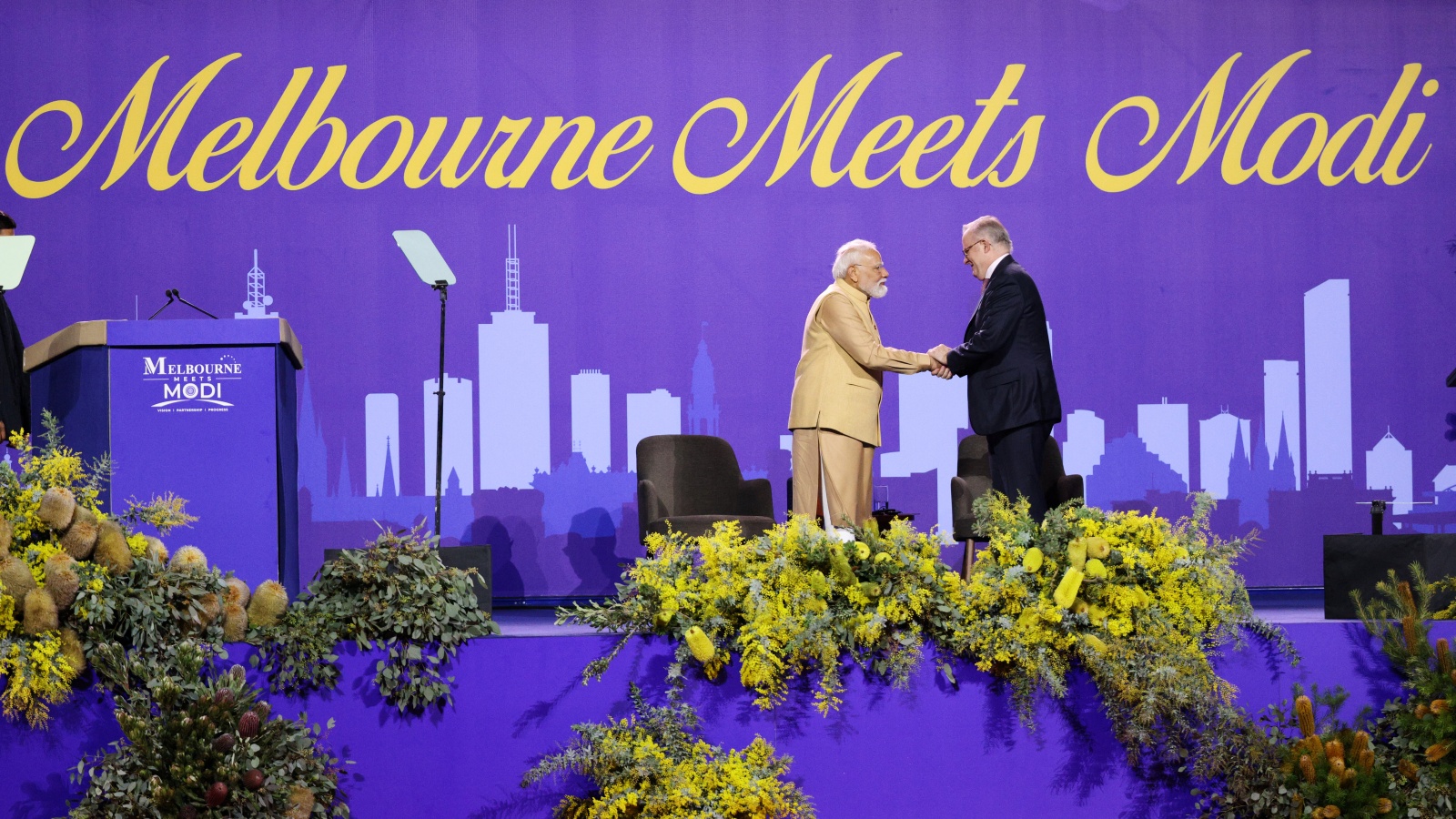
The third India-Australia Annual Summit at Melbourne on 9 July took place amidst a challenging global landscape. Wars in Europe and West Asia rage even as China indulges in assertive muscle flexing in the Asia-Pacific and the Trump administration blows hot and cold on all fronts. Australia and India seem to have rediscovered a new relevance for their relationship in these trying times, where they face some common security concerns. This was reflected in the forward-looking joint statement that lists many areas of cooperation. One issue that particularly stands out is the agreement on uranium supplies from mineral-rich Australia to the expanding nuclear power programme of India.
Historically, Australia has maintained a strict policy of exporting uranium only to signatories of the treaty on non-proliferation of nuclear weapons (NPT). Canberra had frowned when India, as a non-NPT member, had concluded the nuclear cooperation agreement with the USA in 2008 and subsequently was exceptionalised by the Nuclear Suppliers Group to source uranium, nuclear equipment, technology and reactors from the international market. Australia’s current change of heart marks its transition from being a sceptic of uranium exports to India to accepting becoming a “reliable, trusted supplier of uranium to India”. This, of course, is good news for India since Australia holds the world’s largest uranium reserves, approximately one-third of the global total. And, the quality of Australian uranium far outstrips India’s low-grade mineral, which imposes higher extraction costs and generates significant tailings that need to be safely managed to protect human health and the environment.
India’s consistent efforts to prove its non-proliferation credentials facilitated the shift in the Australian position. In fact, this began to gradually change once India signed an Additional Protocol (AP) with the International Atomic Energy Agency (IAEA) in 2009, thereby committing itself to a “separation plan” that bifurcated Indian nuclear facilities into civilian and military. In doing so, India safeguarded its strategic autonomy while meeting the non-proliferation requirements necessary for international civilian nuclear cooperation. Once the AP came into force in 2014, Australia agreed to allow uranium exports to India as part of an Australia-India Nuclear Cooperation Agreement which was concluded in 2015.
However, no commercial uranium exports could immediately start because the Administrative Arrangement (AA) required to implement the agreement had to be operationalised in Australia. It was necessary to establish the practical procedures for tracking, accounting and reporting the use of Australian Obligated Nuclear Material (AONM), ensuring that the imported uranium would be used exclusively for peaceful civilian purposes in accordance with the bilateral agreement and IAEA safeguards. Both countries were unable to reach consensus on the safeguards-related procedures governing the tracking of uranium. Following nearly two years of intensive negotiations, these outstanding issues were resolved through a government-to-government framework. The recent finalisation of the AA, therefore, signals renewed hope that Australian uranium will finally make its way to India. Commercial contracts can now be negotiated between Australian uranium suppliers and Indian consumers.
Between 2008-09, when the Indo-US nuclear deal opened international nuclear commerce for India, and up to 2025, India has imported 18,842.60 MTs of uranium in various forms under IAEA safeguards. This includes imports of natural uranium ore concentrate from Canada, France, Kazakhstan and Uzbekistan and natural uranium dioxide pellets and enriched uranium from Russia. With the availability of Australian uranium, the kitty would further expand.
All these developments constitute the building blocks for India’s nuclear energy expansion plan, which aims to increase the country’s installed nuclear power capacity from 8.78 GW to 100 GW by 2047. To achieve this rather ambitious target, the government is focusing on a two-pronged approach – one, to undertake a “fleet mode” expansion of large reactors for grid applications led by India’s nuclear operator, the Nuclear Power Corporation of India Ltd (NPCIL). On its own and in partnership with NTPC, NPCIL is already engaged in the simultaneous construction of several 700 MWe indigenous nuclear reactors and plans for several more; second, the government is supporting the research and development of small modular reactors for captive steel or cement plants or for AI data centres that are energy guzzlers. But if they need to be powered with a low-carbon source, then nuclear reactors constitute a solution. Consequently, the necessary legislative and regulatory changes have been effected through the enactment of the SHANTI Act, which allows private participation to assist the country’s nuclear build. Of course, the government will continue to control strategic and security-sensitive segments of the nuclear fuel cycle.
Keeping in view the planned large-scale expansion of all kinds of reactor sizes, India is pursuing a strategy to secure uranium to build a strategic reserve to guard against supply chain disruptions that may be caused by black swan events like pandemics or the eruption of geopolitical hotspots that expose the vulnerabilities of global energy markets.
Overall, there is a new enthusiasm that has gripped the nuclear power sector. While the government goes about its business of assuring the best possible access to nuclear fuel to sustain nuclear growth and strategic resilience, the nascent private nuclear industry must carefully go about its own tasks of imbibing the highest standards of safety, security and safeguards. NPCIL will have to do a lot of hand-holding to enable India to write a new chapter of its nuclear story.
Sethi is Distinguished Fellow, Centre for Aerospace Power and Strategic Studies (CAPSS) and Budhwar is Research Associate, CAPSS