

In Neela Bhagwat, khayal found anchor and freedom
Her engagement with Marxism and feminism drove her to move away from traditional texts she felt were patriarchal
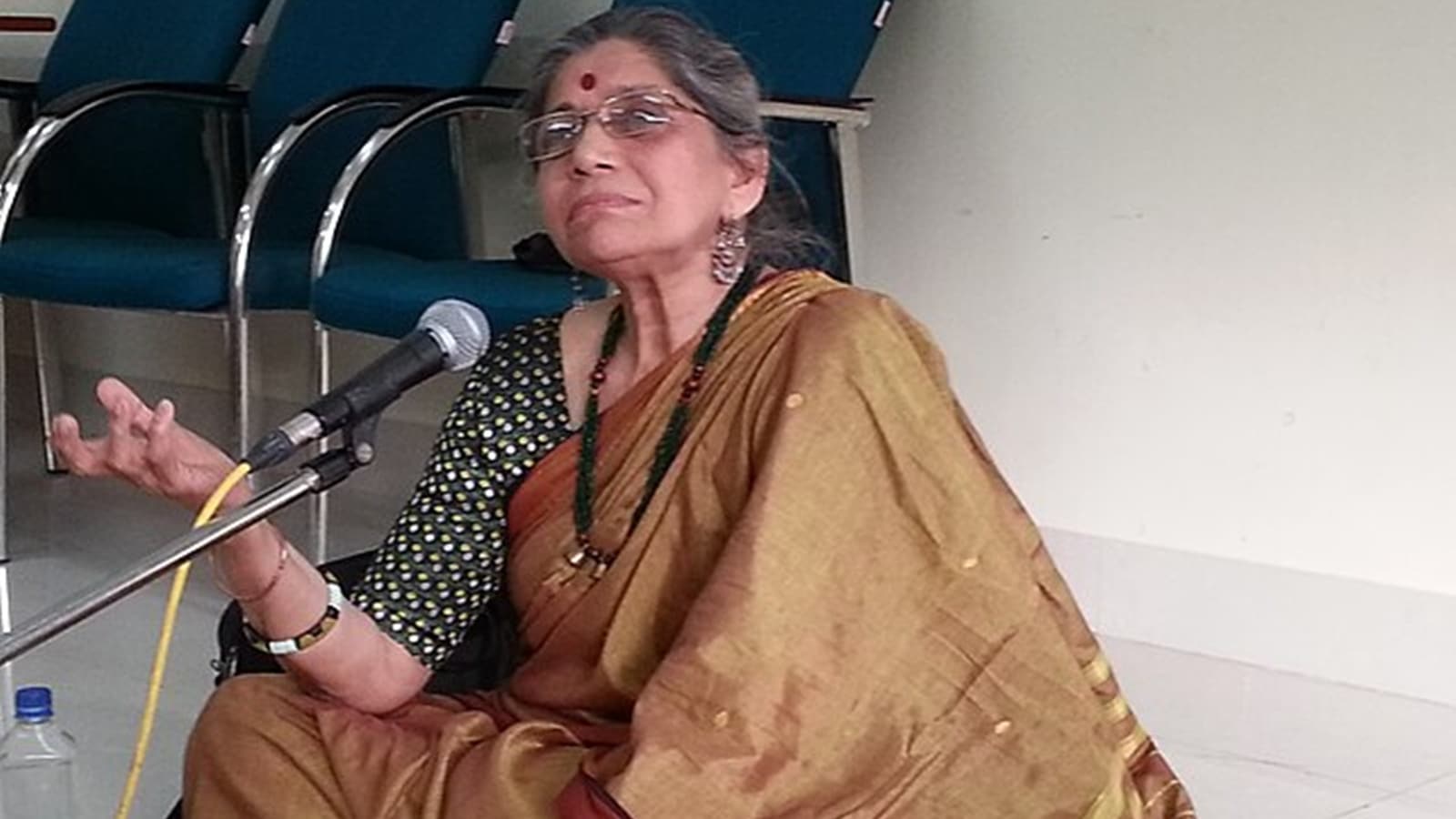
According to practitioners and theorists of Hindustani music, khayal was the result of a creative endeavour to bring together melody, rhythm, and text in a manner that was seamless and not partial to one or the other. Dating back to the 18th century, this genre has been presented by vocalists belonging to various lineages of hereditary musicians and their disciples. But the Gwalior tradition is considered the fountainhead of khayal gharanas, and its votaries believe in employing the ashtaang gayaki, a vocal style incorporating eight ornamentations. Neela Bhagwat, one of the foremost representatives of the Gwalior style as portrayed by her guru Sharadchandra Arolkar, felt strongly about this gayaki. It is this conviction that drove her musical journey over several decades until her death a few days ago at the age of 83.
What distinguished her approach was her conviction that khayal as a mode of self-expression had to go beyond the grammar of raag and taal. Her engagement with Marxism and feminism drove her to move away from traditional texts she felt were patriarchal, leading her to create new compositions that reflected her philosophy of life.
Significantly, despite the issues she found in the traditional repertoire, she remained conscious of the importance of learning and transmitting it to the next generation in order to understand the historical context in which it had been created. She did not stop at imparting her knowledge of forms like khayal, thumri, tappa, tarana and ashtapadi to her disciples, but also disseminated this through recordings and notated documentation made available online. She chose to distribute recordings of this material through Underscore Records, a label that my wife, vocalist Shubha Mudgal, and I set up, as she was convinced we would be able to give it the requisite platform.
I met Neela in 1986 through a family friend who felt that our ideas about society and music would resonate. That began a friendship and musical exchange lasting several decades. The absence of orthodoxy and hierarchy often witnessed in the Hindustani music ecosystem, and her urge to discuss and write not just about music but also literature, social and political activism, marked her persona. Our collaboration took us to concerts across the country and to studios where she recorded not only Hindustani music but also background scores for documentary films. Her partnership with Carnatic vocalist Aruna Sairam in Samantar brought together aspects of the Hindustani and Carnatic systems for wider audiences. Her support for humanism led her to explore the work of saint-poets like Kabir. She set up the Khayal Trust with her husband, disciple and critic Amarendra Dhaneshwar. It emerged from her belief that the arts needed a platform for free exchange of ideas between practitioners. Many of its programmes informed listeners about different arts at a time when such interactive platforms were difficult to come by in Mumbai.
Neela continued performing, teaching and writing until a few months ago. My last concert with her was part of a seminar organised by the Khayal Trust in Mumbai. Her exuberance and passion were evident despite her frailty. Though we did not meet as often in recent years, we continued our discussions over occasional phone calls. Sadly, these will now remain as memories.
Pradhan is a tabla exponent, teacher, composer and scholar of Hindustani classical music