

Popularity of ‘Heated Rivalry’ shows fantasy isn’t escape — it exposes reality’s confusions
Though the show gestures toward masculinity, it prefers the repetition of desire over the harder work of understanding how men live, speak, and relate beyond intimacy
An online sharing circle I am part of decided to discuss Heated Rivalry, a television series about two rival ice hockey captains, from Canada and Russia, who fall in love and meet intermittently over the course of eight years. Its global appeal lies in a combination of intimacy and raw desire, a narrative of masculinity that promises emotional fulfilment alongside playful physical longing.
Much of the show’s popularity seems to come from what it is not. For many viewers, especially women, it offers a fantasy of desire without fear: Intimacy stripped of violence, control, or emotional risk. Its appeal lies less in its novelty than in its familiarity as a romance, a genre that has long promised emotional safety alongside desire. Director Jacob Tierney put this rather bluntly: “The baked-in audience for this is women. It’s wine moms. They love this stuff.”
Romance has occupied a slightly awkward place in literary history, being never quite respectable, but never disappearing either. As literary critic Northrop Frye suggests, it survives because it works as a kind of imaginative counterpoint to dominant forms. Early forms of romance were about adventure, excess, and wonder, but by the 18th century, as more women began to read and write, the genre moved inward, towards feeling, domestic life, and the moral drama of relationships. Romance began to be seen as a “low” genre, associated with impressionable readers and suspect pleasures, even as it became one of the most widely consumed forms of storytelling.
Romance repeatedly creates spaces where desire can be explored and temporarily resolved, especially for viewers and readers whose daily lives may be structured by constraint. It offers the promise of recognition, care, and fulfilment, but often contains that promise within familiar endings such as marriage, stability, emotional closure. Today, the genre extends across novels, television, and digital media, but it continues to negotiate between fantasy and social reality. Even newer developments, such as the presence of intimacy coordinators or more explicit depictions of desire, suggest not a break but a growing awareness that intimacy itself is structured, and a negotiation with power.
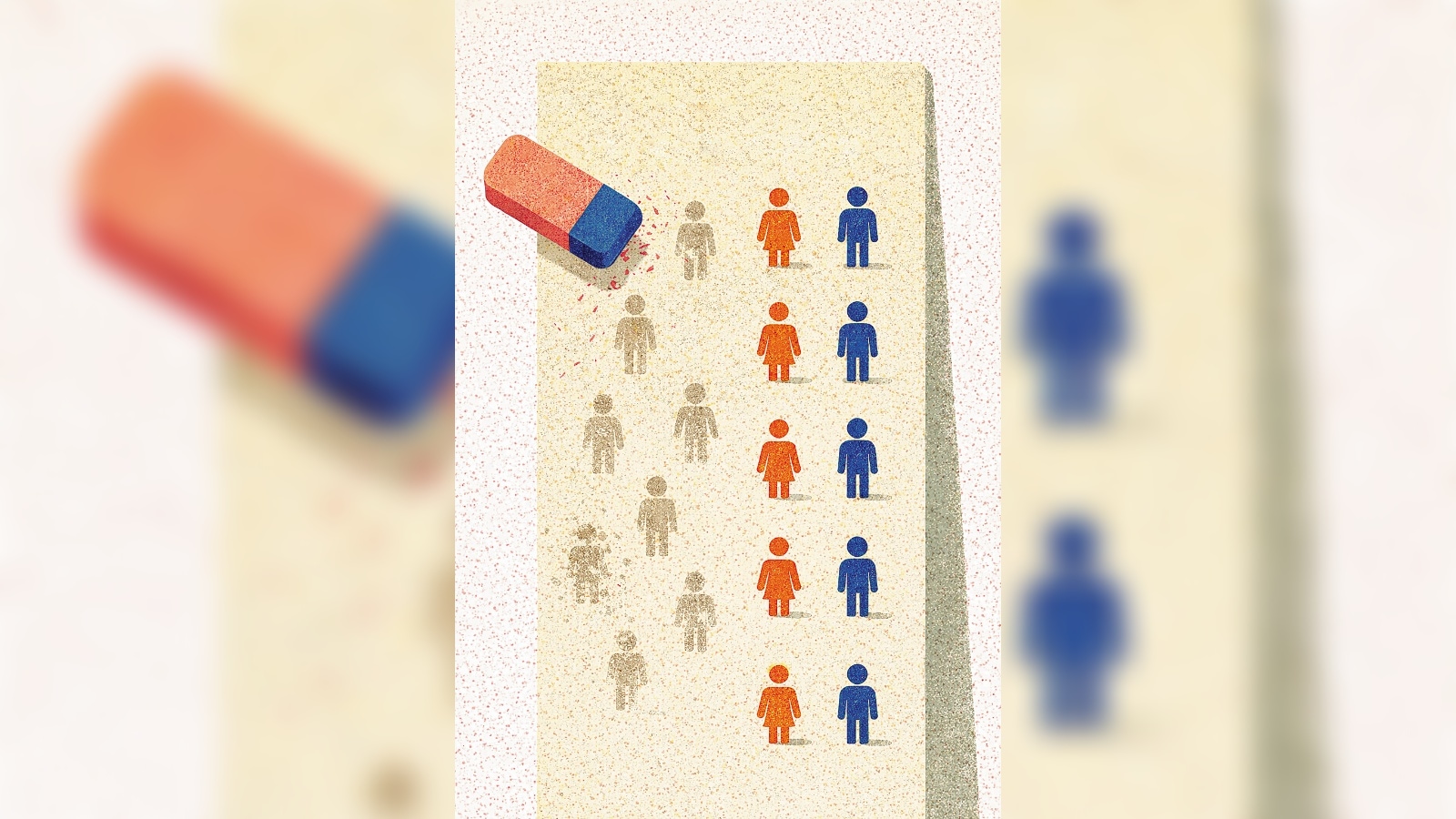
The idea of masculinity, however, has a different genealogy. While history has long been replete with the lives of elite men, masculinity might be seen as a 21st-century analytical concept. In her landmark work, Masculinities, published in 1995, R W Connell traced the modern idea of masculinities somewhat unexpectedly to the clinic. As Sigmund Freud noted, terms like “masculine” and “feminine” are among the most confused in science, and it was precisely this confusion that his work exposed rather than resolved. Working through cases, he showed that masculinity is not natural or fixed but built over time through conflict, desire, and repression. Boys do not simply “become men”; they pass through layered emotional processes in which identification, rivalry, fear, and attachment are constantly shifting. Later developments in psychoanalysis moved in different directions: Some simplified this complexity into norms of “healthy” development, while others tried to recover its tensions, pushing towards a more social understanding of how masculinity is produced and maintained.
By the late 20th century, work in sociology, anthropology, and history had moved decisively beyond the idea of a single male “role” to argue that there are multiple masculinities, shaped by power, class, institutions, and everyday practice. Masculinity is not something one simply has, but something one does, within particular settings such as those of schools, workplaces, families, each producing its own expectations and hierarchies. This shift also brings into view the fact that masculinities are not equal: Some forms dominate, others are subordinated, and these relations are tied to broader structures of inequality.
Recent work in India reflects this shift. Scholars like Michiel Baas and Romit Chowdhury show that discussions around masculinity today are tied to the middle class, not as a clearly defined category, but as an aspiration. For many upwardly mobile men, from gym trainers to gig workers, the middle class represents a horizon that is always just out of reach. In response, they create what Baas and Chowdhury describe as “third spaces” of sociability — gyms, streets, shared rides — where intimacy, aspiration, and masculinity are negotiated in everyday life.
In this context, I found the lives of the protagonists in Heated Rivalry curiously thin, the conversation sparse, and the personalities, including those of their parents, underdeveloped. Though the show gestures toward masculinity, it prefers the repetition of desire over the harder work of understanding how men live, speak, and relate beyond intimacy. Yet its popularity suggests that fantasies of a tender, coherent masculinity may be more about survival in a largely mediatised world where it is increasingly difficult to be oneself. Fantasies are hardly an escape; they expose reality’s confusions and the ways in which we live with them.
The writer is assistant professor of Social Sciences at the National Law School of India University