

In Hauz Rani victims’ rescue, a larger truth: Only Fraternity can bridge communal divide, douse flames of hate
Ambedkar defined Fraternity as ‘a sense of common brotherhood of all Indians’ and warned that without this psychological solidarity, the structural rights of Liberty and Equality would be ‘no deeper than coats of paint’
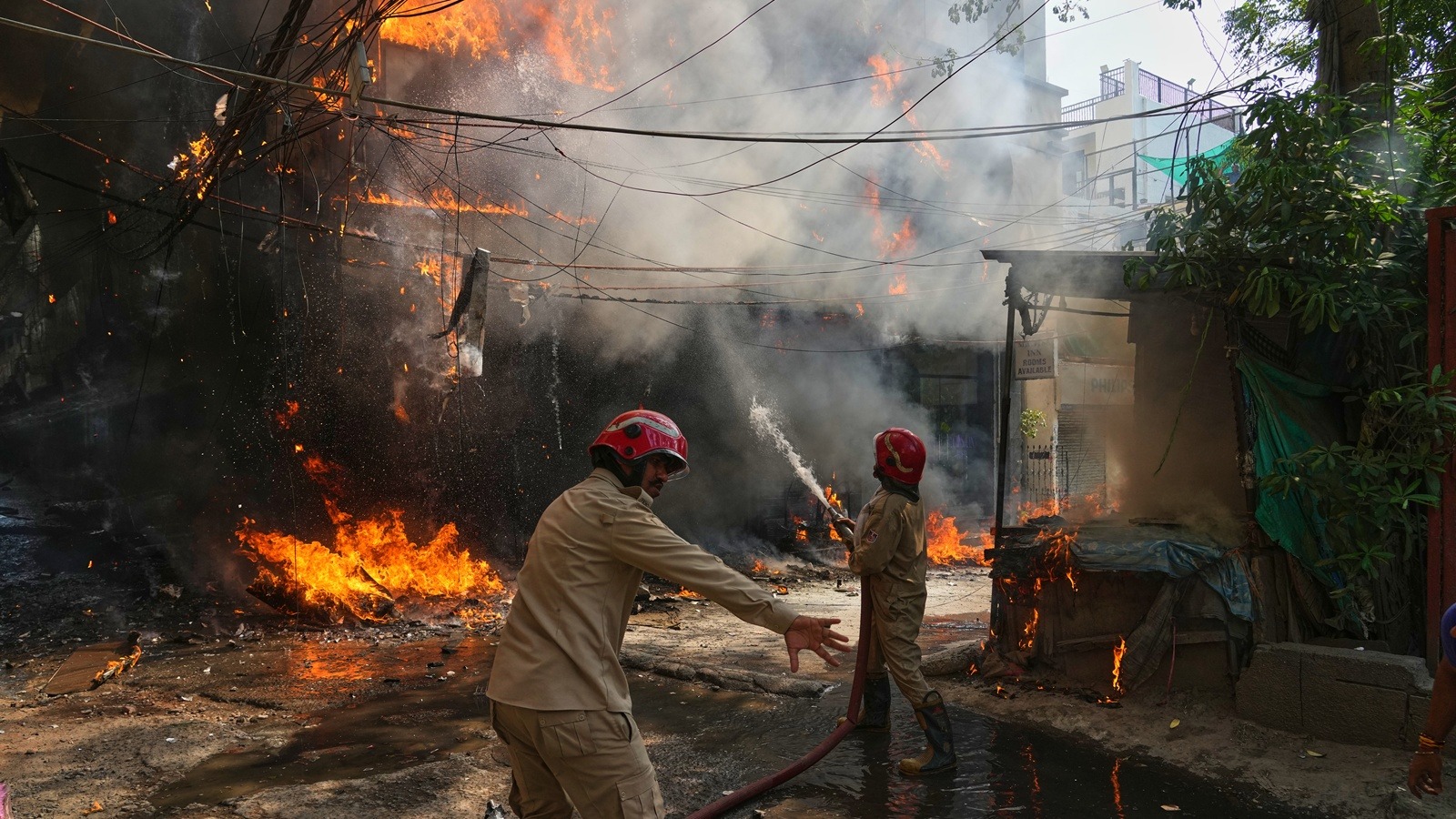
A day after the Citizens for Fraternity (CFF) held their first meeting to discuss ways to douse the spreading communal fire in our society, I saw a photo in the newspapers of the first responders during the rescue necessitated by the deadly fire in Hauz Rani. Their names: Mohammad Afzal, Wasim Raja, Mohammad Shoaib, Amir Khan. Others named in an Indian Express report were Mansoor, Israr Khan, and the man who stood out amid this tragedy, Riyazuddin Mansuri and his son Armaan, who spread mattresses on the road for those trapped inside the building to jump to their safety.
There were also 10 policemen — Kartar, Deepak, Vikram, Dinesh, Rampal, Sandeep, Hargyan, Premchand, Jitendra, and Raviranjan — who helped victims out of the blaze, unmindful of the injuries they themselves suffered because they didn’t wait to get into a safer gear that would minimise their risk. The police are a much-abused lot in our system, and the fellow citizens who saved many lives belong to a community that feels victimised in its own country.
The CFF is a new effort to address an old problem. Set up as a result of a dialogue between prominent Muslim citizens with Rashtriya Swayamsevak Sangh (RSS) sarsanghchalak Mohan Bhagwat and senior office-bearers, it is an attempt at finding ways to bridge the growing communal divide in India that has demoralised the minorities. Perhaps the need to communicate was inspired by Bashir Badr, who passed away recently, who said, “main chup raha to aur ghalat-fahmiyan baDhin, vo bhi suna hai us ne jo main ne kaha nahin (Because of my silence, our misunderstanding grew, He even heard that which I never said).”
The CFF meeting was attended by citizens belonging to different communities, the president of the Indira Gandhi National Centre for the Arts and the akhil bharatiya sampark adhikari of the RSS.
The focus of the dialogue was Fraternity. It was argued that while Liberty and Equality were fundamental rights supported by enabling legislation, Fraternity required a serious, sincere and subtle approach to provide a healing touch without scraping old wounds. It was emphasised that Liberty and Equality were justiciable but Fraternity would come about only when there was a deeper understanding of each other’s way of life, belief system, scriptures and culture.
The pity is that the need to discuss this remains as acute today as it did eight decades ago, when Fraternity and communal harmony were debated in the Constituent Assembly while framing the Constitution.
On August 15, 1947, Gandhi didn’t watch the flag hoisting in Delhi; he chose to be in Kolkata, staying in riot-torn areas “spreading mattresses” to subdue the communal conflagration. For him, communal harmony was an article of faith as he believed the true measure of a civilised nation’s commitment to fraternity lay in how secure its smallest or most vulnerable communities felt.
B R Ambedkar introduced Fraternity into the draft of the Preamble as he thought this was a core political necessity for a deeply divided society. Addressing the Assembly on November 25, 1949, he warned that political democracy would collapse if India failed to establish a social democracy. For him, Liberty, Equality, and Fraternity were inseparable principles as they formed “a union of trinity in the sense that to divorce one from the other is to defeat the very purpose of democracy. Liberty cannot be divorced from equality, equality cannot be divorced from liberty. Nor can liberty and equality be divorced from fraternity. Without equality, liberty would produce the supremacy of the few over the many. Equality without liberty would kill individual initiative. Without fraternity, liberty and equality could not become a natural course of things. It would require a constable to enforce them.”
Ambedkar defined Fraternity as “a sense of common brotherhood of all Indians” and warned that without this psychological solidarity, the structural rights of Liberty and Equality would be “no deeper than coats of paint”. He wasn’t alone in underscoring this as many others in the Assembly emphasised that while the Constitution could map out organs of the state, it couldn’t legislate affection. It was widely acknowledged that Fraternity was the emotional glue required to hold a diverse, multi-religious, and economically unequal India together and that it represented a moral principle that must be lived daily.
The Constituent Assembly exhaustively debated Fraternity and communal harmony as this reflected the real anxiety during the Constitution-making process between 1946 and 1950. Instead of talking about harmony as an abstract moral concept, the Assembly under the leadership of Nehru and Vallabhbhai Patel, the chairman of the Advisory Committee on Minorities, voted to abolish separate electorates for minorities and dropped political reservation based on religion entirely, choosing to protect minorities instead through cultural and educational rights (Articles 29 and 30), allowing them to preserve their distinct languages, scripts, and institutions without separating them politically.
It is an understanding of this distinct script and scriptures that the CFF aims to promote by taking this movement to the states and districts. It is encouraging that the push comes from the RSS. It will be interesting to see how many “mattresses” the RSS throws to cushion the impact of the vitriolic speech of those in power. Will it publicly support the action of “Mohammed” Deepak, who defended an elderly Muslim shopkeeper from a right-wing mob in Kotdwar, and suffered near ostracisation, leading to a near-collapse of his business? The RSS, the “world’s biggest NGO”, would do well, in furtherance of its avowed commitment to nation-building, to actively participate with the CFF and similar organisations to build a society based on the values of “Fraternity, Awareness, Dialogue, Respect, Justice, and Integration”.
Let us heed the poet of love, Bashir Badr: “dushmani ka safar ik qadam do qadam, tum bhi thak jaoge ham bhi thak ja.enge” (Even a step or two in the journey of enmity will exhaust both of us).”
The writer is a former election commissioner