

For India’s China challenge, a lesson from history
China’s aim has not been territorial annexation. It has been to tie India down south of the Himalayas
Although India is not a direct combatant in the Iran war, it has been impacted by inflation, fiscal stress, slower growth, supply chain disruption, pressure on agriculture, and a large outflow of capital. Has something similar happened before?
In 18th-century Europe, Great Britain and France were locked in a struggle for supremacy. France had more than twice the population of Britain and three times its GDP. Yet between 1750 and 1800, Britain’s economy tripled. That growth financed victory over France and the loss of its colonies in America and India. The usual explanation is the Industrial Revolution and the Bank of England. But later scholarship has questioned both claims. The Industrial Revolution, it is argued, began only around 1770, and the agricultural surplus said to have funded it has never been convincingly established.
A more persuasive explanation lies in the empire. British power was built not simply at home but through the capture of wealth abroad, especially in India. The first Indian force trained to European standards was raised at Madras by Stringer Lawrence and Robert Clive. Sailing up the Hooghly on Royal Navy ships, they defeated the Nawab of Bengal at Plassey in 1757. The resulting treaty gave the East India Company the right of diwani, or land revenue, in Bengal, Bihar and Orissa, a region whose population exceeded that of Great Britain. After 1857, the British Crown replaced the Company, but the logic remained the same. India’s textile trade was destroyed and replaced by Lancashire cloth made with Indian cotton. India was conquered by sea by a country one-tenth its size, 5,000 miles away, while it remained tied to a continental outlook and treated the oceans as kala pani.
Can something like that happen again? Not in the same way, but the deeper logic has returned.
Around 2015, China-watchers began to notice that the Chinese Dream, the 13th and 14th Five-Year Plans, and the National Security Strategy of 2015 together pointed to a grand strategy aimed at strategic pre-eminence. Basil Liddell Hart defined grand strategy as an all-of-government approach to strategic competition in which war is the least desirable option. China’s version is different. It seeks influence through economic dependence, infrastructure finance, market access, energy corridors, supply-chain dominance, control of digital nodes and the ability to deny them, pressure on cable landing stations, and efforts to weaken the dollar and bypass SWIFT.
Nowhere is this more evident than in China’s use of proxies, especially Pakistan and Iran. Beijing has supplied military assistance to Pakistan, which allowed it to obtain targeting data during Operation Sindoor. Iran, too, received similar support to target US installations in the Gulf. This is modern strategic competition: Not conquest by massed armies, but influence, denial and remote reach.
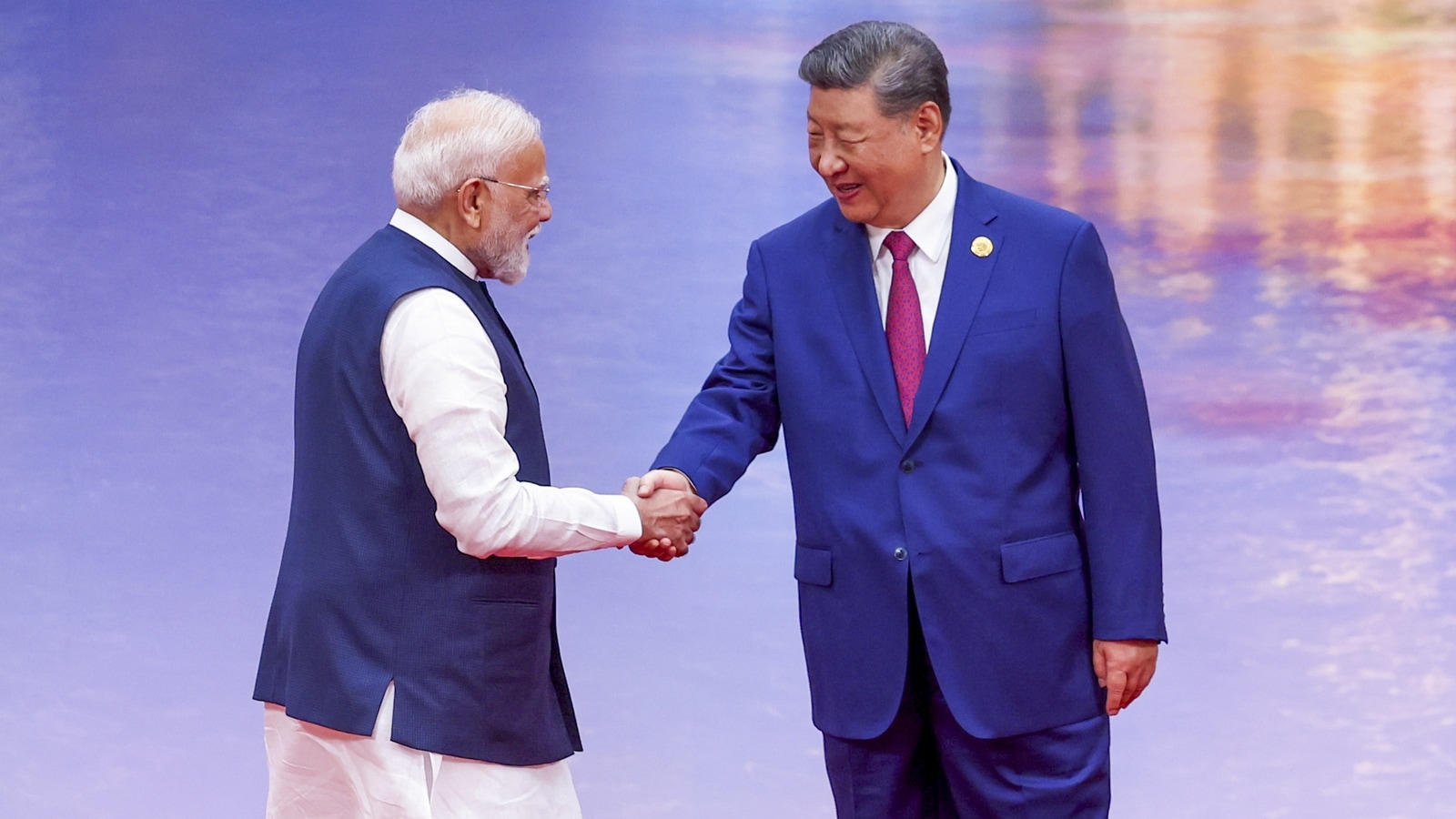
Chinese thinking also reflects Sun Tzu’s enduring insight: The greatest victory is won without fighting. Another is that distant conflicts are decided by shaping the environment without battle. From enabling Pakistan to develop its nuclear weapons to the border crises at Sumdorong Chu, Doklam and Galwan, the pattern for India has been unmistakable. China’s aim has not been territorial annexation. It has been to tie India down south of the Himalayas, consuming its attention and limiting its freedom of action.
India must therefore think strategically, not sentimentally. Its real leverage against China’s $20 trillion economy is not a Himalayan stalemate but its maritime geography. India sits astride the Indian Ocean and can influence the status of the Strait of Malacca, the Strait of Hormuz, the Red Sea and the Suez Canal. Negotiating with Beijing over the land boundary, a secondary issue in its grand design, without the backing of hard power at sea, would be another capitulation. And the idea of a tri-service, five-domain theatre command against a declining player with a GDP lower than Tamil Nadu’s would be another error of judgment.
History does not repeat itself in the same form. But its methods, adapted to new technology and new instruments of power, do return. India should remember that before it confuses tactical activity with strategic wisdom.
Menon is a retired rear admiral and author of The Long View from Delhi