

Elon Musk and the trillion dollar question
Can institutions evolve with the scale of inequality created by modern capitalism?
By Deepanshu Mohan and Ankur Singh
The arrival of the world’s first trillionaire, Elon Musk, is less a story about individual success and more a signal of how dramatically the relationship between markets, states, and societies has changed.
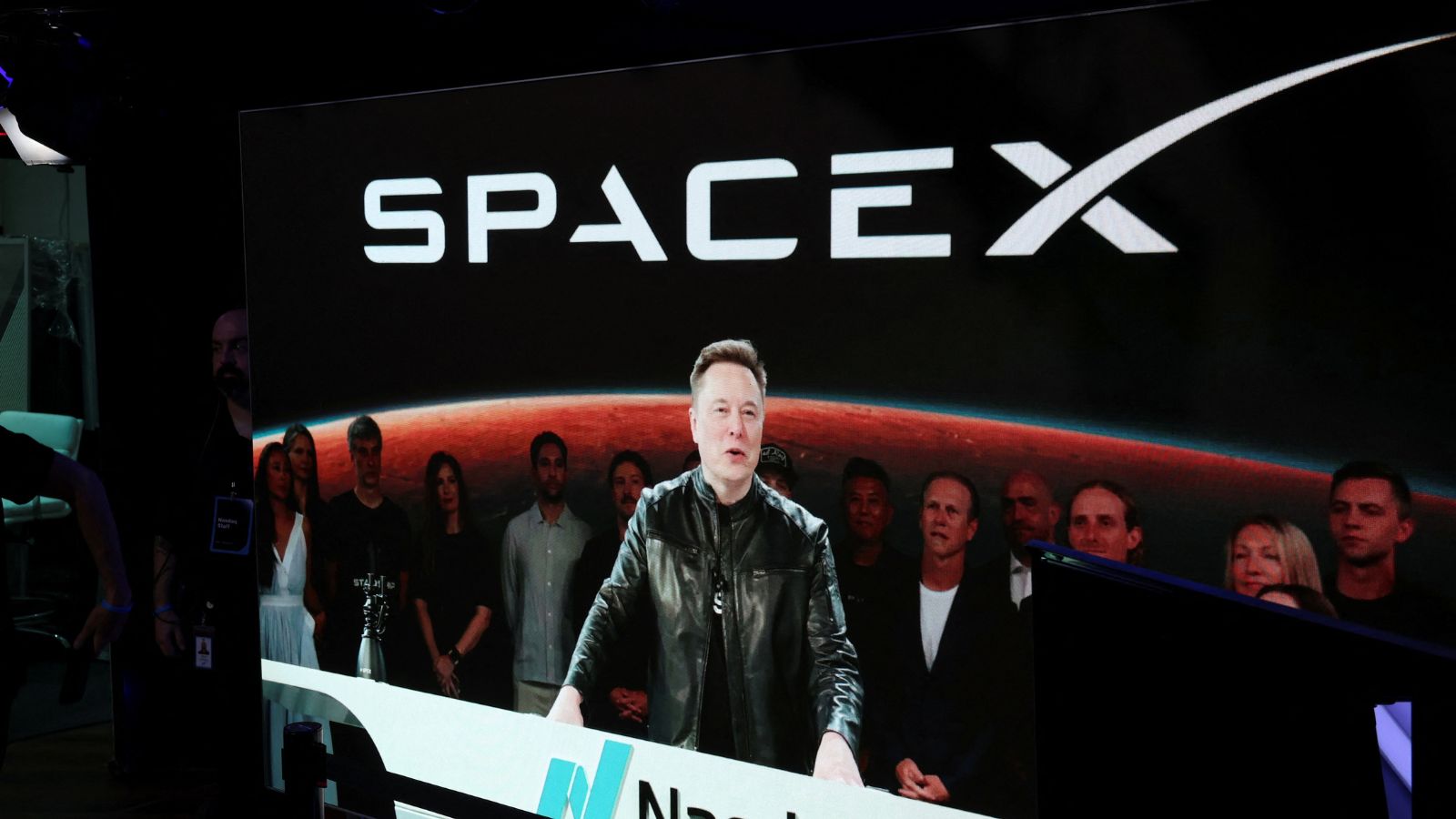
The SpaceX IPO valuation has once again shown Musk’s adeptness to bend Wall Street to his will. This was also evident back in 2022 when banks almost tripped on one another to lend Musk $13 billion to buy Twitter (now X). The loans were then “hung” as Musk attempted to back out of the deal, according to Financial Times.
Despite what Wall Street has done to enable and accommodate to Musk’s grand vision and ambitions — all to his credit — his trillionaire status is not merely an outcome of his innovative vision or corporate-stock market success. It is an event, posing a serious political economy problem, where excessive inequality often corrodes democratic institutions, fosters (public) institutional capture, and undermines social cohesion, similar to the late 19th century period of the Gilded Age.
The industrial magnates of previous centuries built wealth around railroads, oil, steel, and manufacturing. Contemporary wealth increasingly emerges from ownership of technological ecosystems, digital platforms, artificial intelligence, intellectual property, and financial assets, all capable of scaling across borders at an unprecedented pace.
Elon Musk’s personal fortune crossing $1.1 trillion represents the latest milestone in this broader transformation. His wealth, greater than South Africa’s GDP now, increased by more than $550 billion in a single year, equivalent to accumulating over $1 million every minute. A fortune of this magnitude would require roughly 2,740 years to spend if $1 million were spent every day.
This phenomenon of radically maximising wealth concentration has been observed for many years. In today’s world, the top 10 per cent of the world’s population has about 75 per cent of the world’s wealth, and the bottom 50 per cent has about 2 per cent. The richest 0.001 per cent of the world’s population (less than 60,000 people) possess three times as much wealth as the poorest half of the world’s population combined.
Such fortunes are a sign of a broader change in the distribution of economic benefits. The technological revolution was supposed to bring down the barriers to entry and increased economic opportunities. Its results have been mixed.
The benefits of the digital economy are increasingly going to those who control the underlying infrastructure of the digital economy, from data to algorithms to platforms to computing networks to intellectual property.
This shift is reflected in the evolution of the productivity-wages relationship. According to the estimates of the International Monetary Fund, the share of labour in total income has fallen by about four percentage points in the last few decades in the advanced economies. Technological change and automation have been blamed for about half of this loss.
The World Inequality Report 2026 projects that about 1 per cent of global GDP flows from poorer countries to richer countries annually through net foreign income flows and returns on external assets. This is almost three times the total amount of development assistance given worldwide. The contradiction is remarkable.
The impact is particularly felt in low-income countries, where external debt burdens are increasingly vying for investment funds that could be used for health care, education, infrastructure, industrial development and climate adaptation.
The problem here is not just that there is high poverty and there is a higher concentration of wealth by a very few. It is also about how gains and constraints are allocated between countries in the global economic system. Further, the political economy effect of increasing wealth concentration engenders an erosion of the polity.
Musk’s wealth enables him to exercise outsized influence on democratic-institutions and practices, via campaign contributions, Super PACs, lobbying, and a supine media establishment. There’s already mention of Musk using his economic influence via X (earlier Twitter) to stoke racial hatred in the UK.
Democratic institutions are always affected by economic concentration and influence. Billionaires accounted for a notable share of US federal election funding in recent cycles (about 10 per cent was made by 100 billionaire families), amplifying access and potential policy bias toward capital gains, light regulation, or incumbency questions.
Billionaires, if contesting, are also about 4,000 times more likely to be elected to political office than the average person, research indicates. Their influence on political power also fuels populism, across ideological spectrums. This focus is extended to the information-ecosystem. Billionaires control about 70 per cent of the world’s biggest media and press companies. The same goes for social media.
The emergence of the first trillionaire should therefore be viewed as a marker of a changing economic era. It reflects an economic system capable of producing immense technological progress and private wealth, while simultaneously raising important questions about competition, taxation, labour rights, democratic accountability, and global economic governance.
The challenge for the 21st century lies in ensuring that institutions evolve alongside the scale of economic power created by modern capitalism. The question is no longer whether wealth can be created at extraordinary levels. It is whether societies possess the institutional capacity to ensure that the concentration of wealth does not outpace democratic accountability.
Mohan is Dean and Professor of Economics, O P Jindal Global University. He is a Visiting Professor at LSE and a Visiting Research Fellow at the University of Oxford. Singh is a Research Analyst with Centre for New Economics Studies (CNES) at O P Jindal Global University