

Delimitation can bring more female-urban participation
Bring urban women into the participatory fold. The rural channels that have historically mobilised women — panchayat networks, anganwadis, self-help groups — do not extend to cities like Mumbai or Bengaluru
India is preparing for its first parliamentary delimitation in nearly two decades. After the 2026 Census, the Lok Sabha could expand from 543 to 816 seats. Most of the public discussion has focused on how the new seats will be distributed across states – the demographic differential between states, historical inter-state agreements, the principle of equal per-capita representation. We use this column to add a complementary question, drawing on our analysis of all 2,171 parliamentary-constituency (PC) elections held in India since 2009: how will delimitation affect voter participation?
When 642 million Indians voted in 2024, they produced a national turnout of 65.8 per cent — the second-highest of any general election in our history. But beneath that headline, urban turnout has been lagging. The fully built-up constituencies of Mumbai, Bengaluru, Hyderabad and the NCR are touching turnout floors of 55 to 60 per cent, well below the national average. The rural-urban turnout gap, which was 4.4 percentage points in 2009, has tripled to 11.6 points in 2024.
Two changes have reshaped the geography of Indian voting. First, the long-observed pattern that big constituencies vote less than small ones – the “size penalty” – has essentially vanished in the average data. In 2009, a 2-million-elector seat turned out 11 percentage points lower than a 1-million-elector one. By 2024, that gap is just 1.4 points. Constituency size alone no longer predicts turnout.
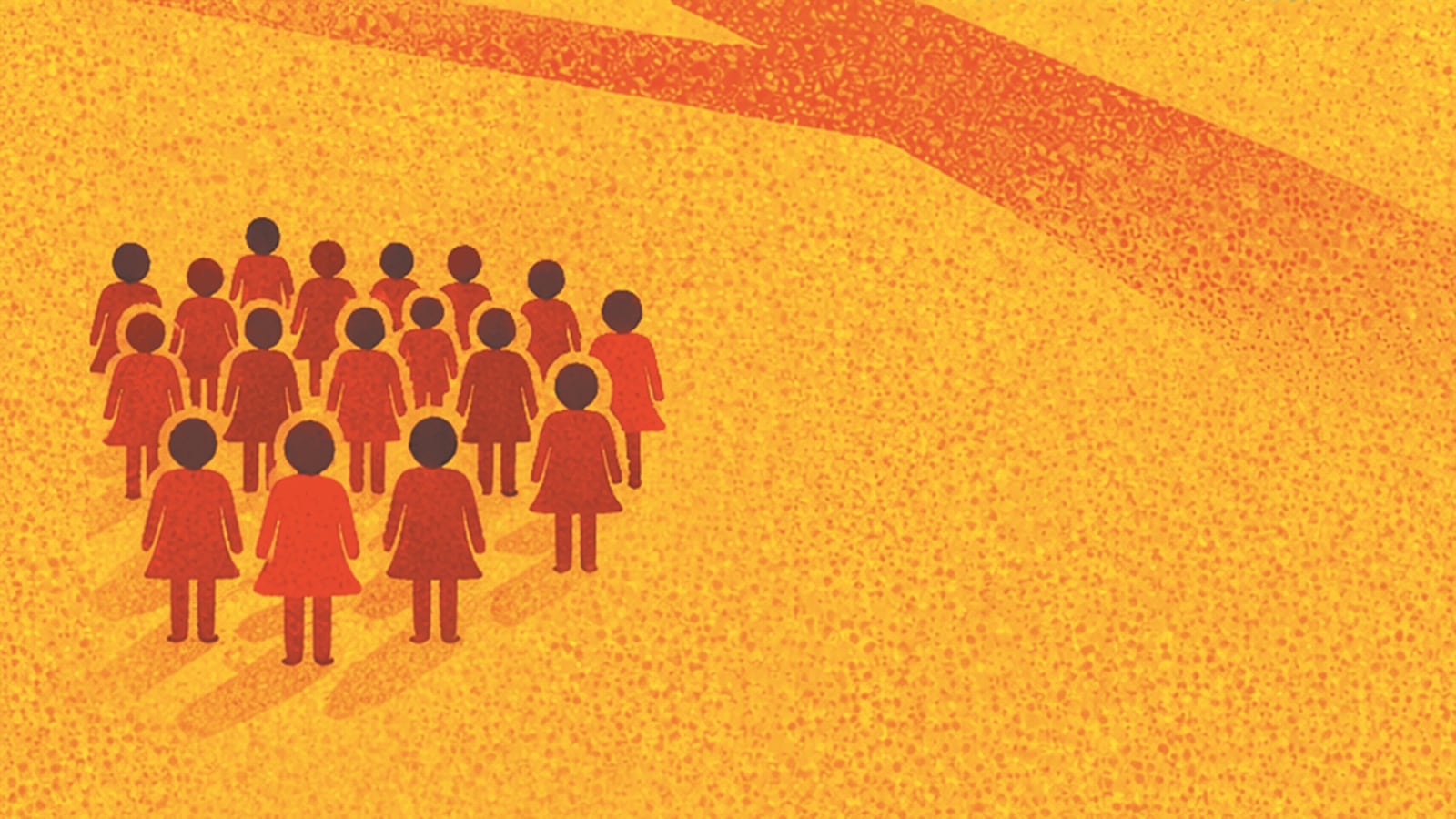
Second, the divergence in Indian voting now runs along urban-rural lines, with a sharp gendered twist. The women voter who lives in a rural large constituency is the most engaged voter in the country – testified by a turnout of around 75 per cent at two-million-elector seats. The women voter who lives in an urban large constituency is the least engaged – the turnout falls to about 64 per cent. As constituencies grow toward three million electors — a frontier several Mumbai, Delhi and Bengaluru seats are approaching — our model projects the rural-urban gap to widen to 22 percentage points for women and 16 for men.
The polling station is the third piece of the picture. Booth crowding has always been more severe in urban constituencies than in rural ones. The median PC in the most-urban decile carried 1,054 voters per polling booth in 2024, against 836 in the least-urban decile – a gap of roughly 220 voters per booth that has held constant across every cycle of our panel. The Election Commission’s 2014-to-2019 station expansion (12 per cent national growth) brought modest relief at the urban end – where the most-urban decile median fell from 1,041 to 1,008. But between 2019 and 2024 the rationalisation slipped: Stations grew only 1.3 per cent against 7.2 percent growth in electors, pushing most-urban decile crowding to its highest of 1,054. The resulting 1.28 percentage point national turnout decline is fully accounted for by this renewed booth crowding. Booth crowding deters male voters strongly – it explains 19.5 per cent of the male size penalty in our data – but has little direct effect on turnout of women voters (3.4 per cent). For women, mobilisation works through different channels: campaign outreach, household and time-of-day flexibility, and direct engagement with women’s collectives.
Why does all this matter for delimitation? Because the size penalty looks like it has disappeared on average, but at high urban shares it has not. Our model predicts that a 2-million-elector urban constituency turns out at about 65 per cent; at 1 million electors, the prediction rises to about 74 per cent. Splitting a 2-million-elector urban PC into two 1-million-elector PCs would raise predicted turnout by roughly 9 percentage points per half – a substantial gain. This is the strongest empirical case for the 543-to-816 expansion: properly designed, it would move many of India’s largest urban constituencies out of the steep section of the urban size-turnout curve, with female voters the largest beneficiaries.
What should the delimitation agenda then look like?
Put the new seats where they will actually raise turnout. Uniform expansion across rural and urban constituencies would deliver little. The biggest gains are in the band of urbanisation that runs through the suburbs of Bengaluru, Mumbai, NCR, Hyderabad, Pune, Ahmedabad and Chennai – constituencies that are 75 to 90 per cent urban, which have grown 46 per cent in electorate since 2009 (well above the 35-per-cent national average) and which are turning out at the lowest rates. Targeted shrinkage of these large urban PCs is where the model predicts the largest turnout gains.
Build the polling-station capacity in alongside. Maintaining a ratio of below 900 voters per booth – the level the ECI achieved after its 2018 station rationalisation – has to be locked in. The new urban constituencies will need new polling stations from day one. Without that, the size benefit will be partly eroded by the same booth crowding that drove the 1.28-percentage-point national turnout decline between 2019 and 2024.
Bring urban women into the participatory fold with urban-specific instruments. The rural channels that have historically mobilised women – panchayat networks, anganwadis, agricultural self-help groups – do not extend into Mumbai or Bengaluru in the same way. The right urban tools include women’s-canteen schemes, urban self-help-group networks under the National Urban Livelihoods Mission, female-only polling booths in metropolitan-suburb constituencies, and direct mobilisation through the women councillors elected under the 74th Constitutional Amendment’s reservation provisions for urban local bodies. These elected women have, so far, been an under-used channel for general-election voter mobilisation in cities.
The Indian voter has shown extraordinary resilience over fifteen years and four general elections, even as the country has urbanised rapidly. Turnout has stayed at 65 to 67 per cent through a pandemic and sustained urbanisation. But the who of Indian voting is changing, and the urban voter – especially the urban woman voter – is the cohort most at risk of being left behind. The 543-to-816 debate is rightly asking how many seats. The complementary question is which voters the new seats will reach.
The next delimitation will redraw the lines on a map. It will also, by constitutional design, be the moment at which the Nari Shakti Vandan Adhiniyam (the Women’s Reservation Act, 2023) comes into force, reserving one-third of the new Lok Sabha for women representatives. Urban-focused delimitation that creates smaller urban constituencies in precisely the band where female turnout is currently lowest, layered with women candidates on the ballot under the new reservation, and paired with the operational and engagement infrastructure that brings urban women to the polling station, can substantially close the female-urban turnout gap that has widened across the past four general elections. As India urbanises rapidly, the share of the electorate in metropolitan PCs will continue to rise. Whether that rising urban share translates into a falling national turnout – or into a renewed wave of female-urban participation – will be decided by what the Delimitation Commission chooses to do.
The writer is Member, EAC-PM.