

Red Fort terror attack chargesheet, Pakistan’s broader strategy reveal the challenges to peace South Asia
India has put Operation Sindoor on hold. Another attack in India that may appear ‘undeniably’ cross-border in nature, may re-ignite the next round of the India-Pakistan conflict
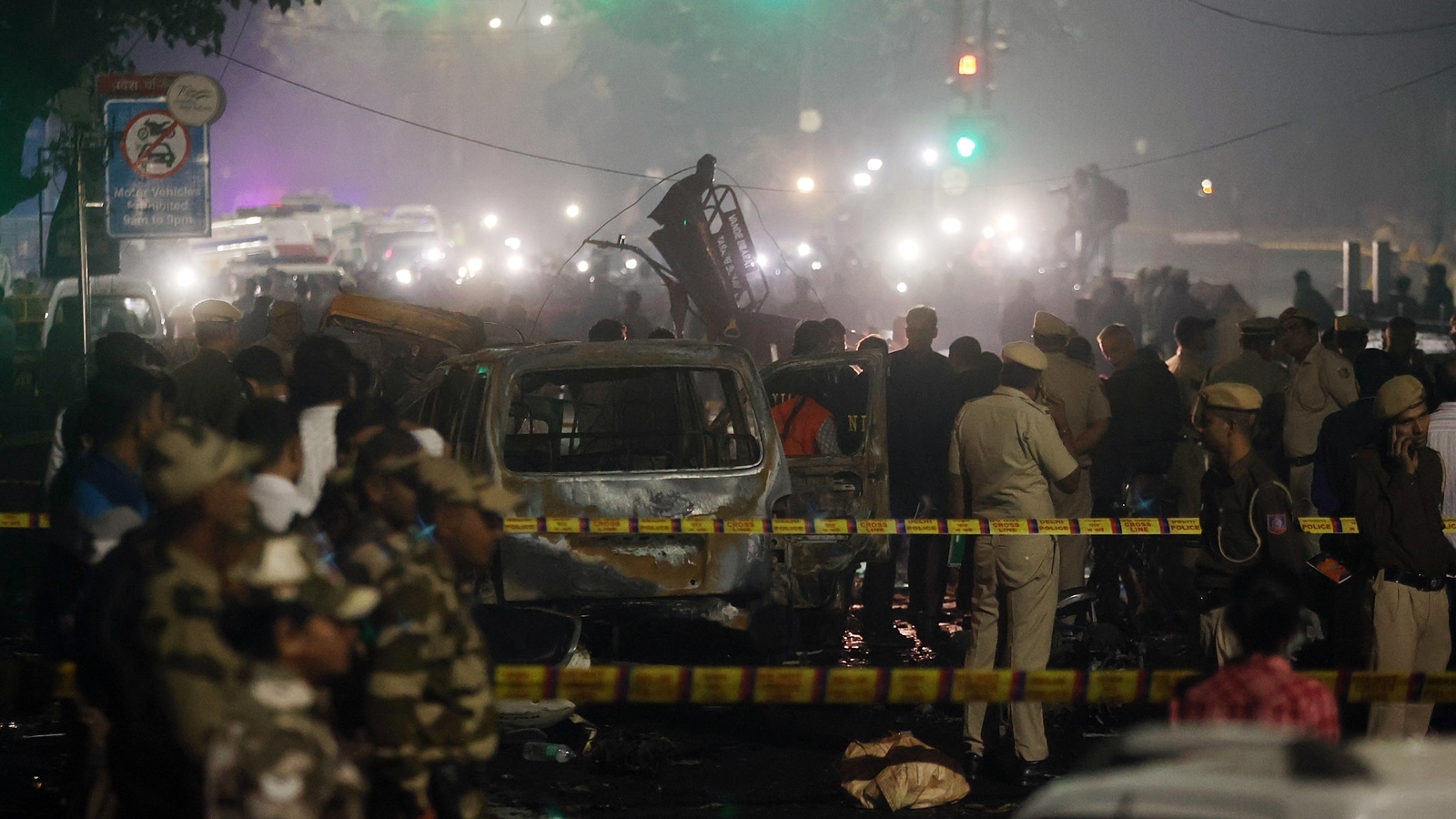
On May 14, the National Investigation Agency filed a chargesheet against 10 accused in the November 10 Delhi bomb blast case. The accused included (deceased) Dr Umer un Nabi, a Kashmiri doctor who had caused an explosion in the Hyundai i20 car he was driving, using it as a vehicle-borne improvised explosive device, close to the Red Fort metro station at 6.52 pm. The incident caused significant civilian casualties and marked the return of terror to Indian cities after a gap of 15 years.
The investigation has unravelled that the accused were linked to the Ministry of Home Affairs-listed terror group, the Ansar Ghazwat-ul-Hind (AGuH), which is an offshoot of al Qaeda’s branch in South Asia, referred to as the al Qaeda in the Indian Subcontinent (AQIS). The accused had reconstituted their module as “AGuH Interim” in 2022 in Srinagar with an aim to launch terror attacks across India. They recruited new members based on the violent jihadi ideology of the AGuH and were engaged in logistical and operational planning to spread terror, when the module was busted. The Red Fort attack has unequivocally demonstrated the serious consequences of “silent radicalisation” among a section of Kashmiris, including professionals. The radicalisation is, without doubt, rooted within the ecosystem created by long years of conflict and requires a mature response.
Earlier, on April 22, Pakistan-based groups with the support of their local affiliates attacked innocent Indian tourists in Pahalgam. Twenty-six civilians were killed in cold blood, and the terrorists also made efforts to polarise the killings by asking about their victims’ faith. The attack was a stark reminder that Pakistan-sponsored groups wanted not only to terrorise the people, but also drive a wedge through India’s multi-faith society. Such attempts are aimed at fuelling an “indiscriminate and disproportionate” law enforcement response and aiding their handlers’ silent radicalisation projects, especially among people of Jammu and Kashmir.
Post-Pahalgam, India’s immediate diplomatic and military response against Pakistan and the subsequent fine-tuning of internal security mechanisms have managed to effectively curb cross-border and other terror incidents. In J&K, against 61 terrorism-related incidents reported in 2024, 35 incidents were reported in 2025, and only nine had been reported up to May 2, 2026. One security personnel was killed in the incidents in 2026, while in 2025, this number was 17. However, on May 7, at a press briefing, Director General of Pakistan’s Inter-Services Public Relations, Lieutenant General Ahmed Sharif Chaudhry, stressed that “Jammu and Kashmir was not an internal problem of India,” but an “internationally recognised dispute.” The Pakistani army has not given up on Jammu and Kashmir as its “unfinished” agenda from the Partition.
Thus, the imperative to keep decoding Pakistan’s strategic and tactical moves to foment trouble in Jammu and Kashmir and in the hinterland remains high. Over the last year, multiple regional and global conflicts have sprung up, adding complex layers to India’s geo-security calculus. The new realities need to be factored in to prevent, pre-empt and ward off security threats that may emerge.
Pakistan would continue to attempt to use battle-hardened, well-trained cadres for cross-border attacks while pushing silent radicalisation and assistance with logistical and operational planning for lone-wolf attacks. The latter is far more difficult to detect as the “handlers” mask their real identities, locations and affiliations. The anonymous handlers are seldom identified and brought to book. The AQIS network is one such known Pakistani proxy that has historically tried to radicalise and recruit cadres in the name of al Qaeda across South Asia for lone-wolf attacks. That is why the US has offered millions of dollars in rewards for AQIS chief, Osama Mehmood and deputy chief, Atif Yahya Ghouri, both Pakistanis.
India has put Operation Sindoor on hold. Another attack in India that may appear “undeniably” cross-border in nature may re-ignite the next round of the India-Pakistan conflict. Having visibly sided with Trump on his claim about the May ceasefire and acted as a mediator in the Iran war, Pakistan may be able to bring Trump to pressure India for a ceasefire quickly and hence blunt the Indian military response.
Pakistan has been proactively spinning a narrative of being a “victim of terror,” sponsored by India from Afghan soil as well as on account of shelter and support given to anti-Pakistan groups such as the TTP, and Baloch groups in Afghanistan by the Taliban. Pakistan witnessed hundreds of attacks, including more than 30 suicide attacks, against military or police targets last year. Failing to provide internal security, blaming India and Afghanistan is an attempt to help deflect pressure on the army that projects itself as “the saviour” of Pakistan from internal and external threats. Such propaganda may find more takers across the world, given the prominent diplomatic role Pakistan has acquired in recent months.
Pakistan went ballistic when India restored diplomatic relations with the Taliban-led Afghanistan in October last year. Pakistan also went to war with Afghanistan. A ceasefire was mediated by Qatar and others after nine days. The Af-Pak conflict, which erupted again in February just before the US-Israeli attack on Iran, is continuing. However, the international community has not reacted sharply to the Pakistani aerial bombings of civilians, hospitals, and universities, including in Kabul. “Emboldened” Pakistani experts are now openly calling for the break-up of Afghanistan in order to “bring stability” to the region. The dangerous game around Afghanistan may again destabilise the South Asian region. This appeared to be a tactical move, so as not to have to fight on the side of Saudi Arabia, a strategic defence partner, against Iran, as the war was expected to expand across the Arab world. And the war did expand, in which Iran also targeted US bases and allied locations in Saudi Arabia.
For the past few days, Pakistan has not only upped the ante on Afghanistan, but has been issuing shrill warnings to India, including “counter-targeting of Indian cities” if Pakistani cities were targeted in terror attacks. Pakistan may well be doing it to keep the pot boiling to avoid having to fight on the side of Saudi Arabia against Iranian aggression if round two of the US-Iran war breaks out. It is not beyond imagination that it may seek to aggravate tensions with India. South Asia seems trapped in a vicious cycle that is hard to break without deep contemplation within the region.
Gupta, a security analyst and former director general of police is the author of ‘Glocal Terror in South Asia, Tracing the Roots in Geopolitics and the Tragedy of Afghanistan’