

Rahul Gandhi’s remarks have revived an old debate on Israel
Curtailing defence cooperation could have repercussions for India’s military preparedness and technological capabilities after decades of defence ties. Conversely, an uncritical embrace of Israel risks compromising India’s credibility in the Global South, its relationships across West Asia, and its ability to contribute to regional diplomacy.
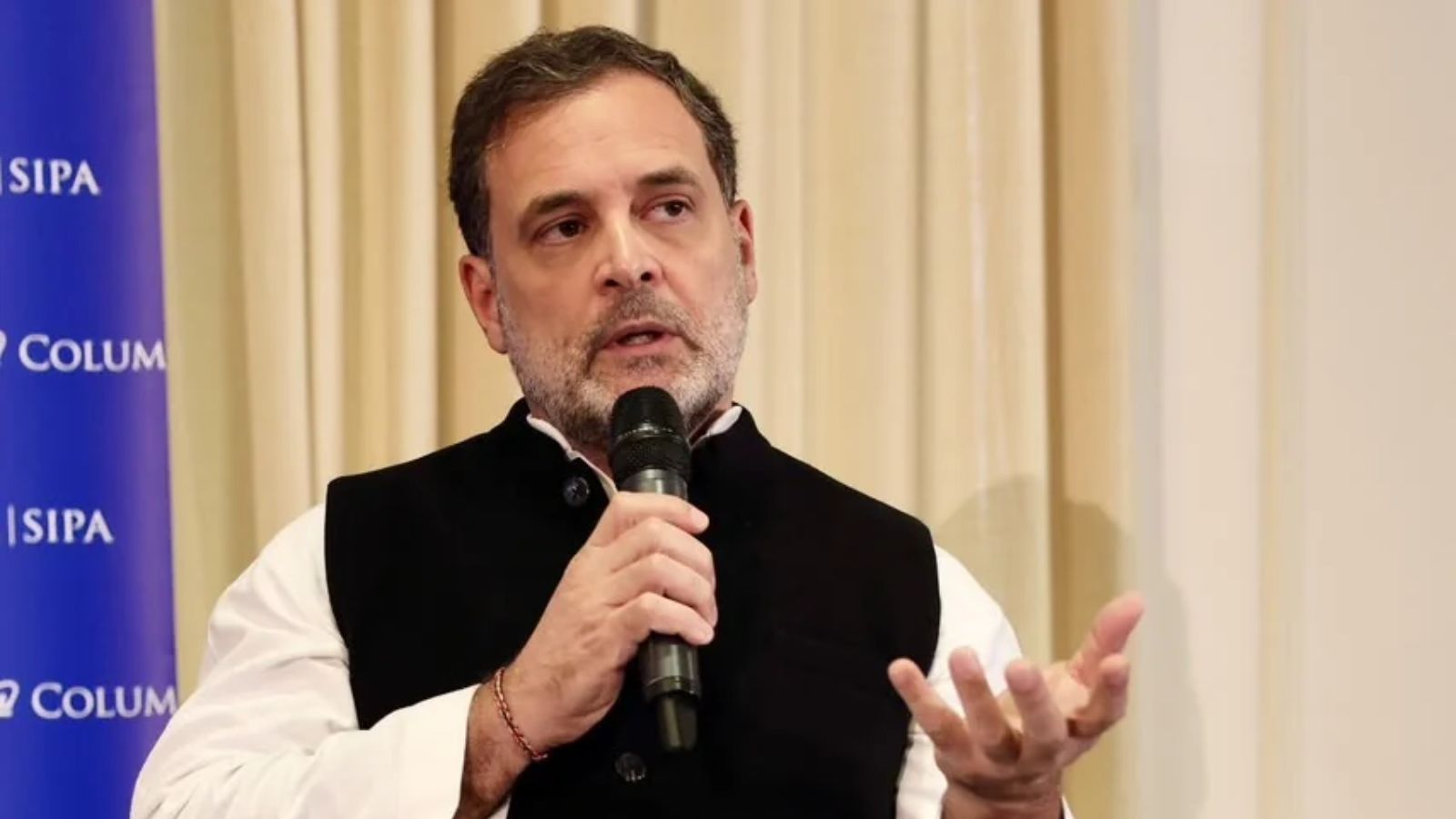
In his recent remarks made during an exchange with students and faculty at the University of Chicago about India’s relationship with Israel, Rahul Gandhi condemned both the October 7 terror attack and Israel’s actions in Gaza (but did not use the fraught word: Genocide). Nevertheless, he seemed to endorse continued strategic and defence cooperation with Israel.
His remarks are perhaps less of a departure from his own thinking, or indeed from his party’s historical approach to Israel, than they might initially appear. In September 2023, barely a month before the Hamas attack, during a similar exchange with students at Sciences Po in Paris, Rahul Gandhi explicitly acknowledged the strategic rationale underpinning India’s relationship with Israel, particularly the latter’s willingness to transfer weaponry. At the same time, he warned that Israel’s unfair policies towards the Palestinians could eventually come back to “bite” them later.
The events of the past three years have, of course, fundamentally altered the geopolitical context in which this relationship operates. The scale of destruction in Gaza, the suffering inflicted on Palestinian civilians, and the intensification of regional conflicts have made engagement with Israel considerably more contentious. Congress, and Sonia Gandhi in particular, has been unsparing in its criticism of Israel’s conduct and the Modi government’s response to its actions. Sonia Gandhi has questioned both the moral and the strategic rationale of New Delhi’s approach.
Earlier this month, Congress leader and former external affairs minister Salman Khurshid also expressed unease about engaging with Israeli companies at an investment summit organised by the Congress-led Telangana government, emphasising the need for ethical “guardrails” and “red lines” in India’s dealings with strategic partners. The Telangana episode illustrates a larger question: To what extent would a future Congress-led government be willing, or able, to reverse decades of institutionalised cooperation with Israel, developed under successive governments and increasingly involving state governments, private enterprises and research institutions?
There is, however, an instructive historical precedent. In the early 2000s, Congress and the Left were critical of the BJP-led government’s rapprochement with Israel, particularly around Israeli PM Ariel Sharon’s visit to India in September 2003. When Congress returned to power in 2004 with Left support, the UPA’s Common Minimum Programme reaffirmed India’s traditional commitment to the Palestinian cause, against the backdrop of demands for a shift in the BJP’s West Asia policy. Yet the subsequent decade saw considerable deepening of India-Israel defence cooperation under PM Manmohan Singh, albeit with less political visibility than under previous and subsequent BJP governments. The distinction between political signalling and substantive strategic engagement became a distinguishing feature of the UPA’s Israel policy.
Today, Congress faces a more difficult version of that dilemma. Rahul Gandhi’s observation in Chicago that India’s “foreign policy should be based on what’s good for us and not based on what’s good for someone else” brings the discussion back to India’s commitment to strategic autonomy. Shashi Tharoor’s defence of the remarks suggests that an important strand of thinking within Congress continues to distinguish between cooperation with Israel and endorsement of its current government’s policies. The opposing argument, however, is that continued engagement without meaningful conditions risks insulating Israel from the consequences of its actions.
There are tangible costs associated with either approach. Curtailing defence cooperation could have repercussions for India’s military preparedness and technological capabilities after decades of defence ties. From the Barak-8 air defence system, whose joint development was initiated under the UPA government, to the Heron drones deployed for surveillance along the Chinese frontier, Israeli technologies have become deeply embedded in India’s military architecture. The extensive use of Israeli-origin military equipment during Operation Sindoor in 2025 further illustrates the operational significance of this relationship. Disengagement is more complex than a political decision to suspend arms purchases.
Conversely, an uncritical embrace of Israel risks compromising India’s credibility in the Global South, its relationships across West Asia, and its ability to contribute to regional diplomacy. Some have questioned whether India has diluted its historical commitment to Palestinian statehood, international law, and a negotiated two-state solution. Further, PM Narendra Modi’s visit to Israel in February, just days before the outbreak of war with Iran, illustrates the risks of conflating a longstanding partnership with the political agenda of a particular Israeli government.
India’s interests in West Asia extend well beyond Israel. They encompass energy security, the welfare of 9 million Indian expatriates in the region, maritime security, and its relations with Iran and the Gulf monarchies. As Khurshid acknowledged, foreign policy cannot always be conducted in black and white. It must accommodate “shades of grey”. The question is where those shades end and the red lines begin.
Blarel is associate professor of International Relations at Leiden University; Ganguly is senior fellow, Hoover Institution at Stanford University