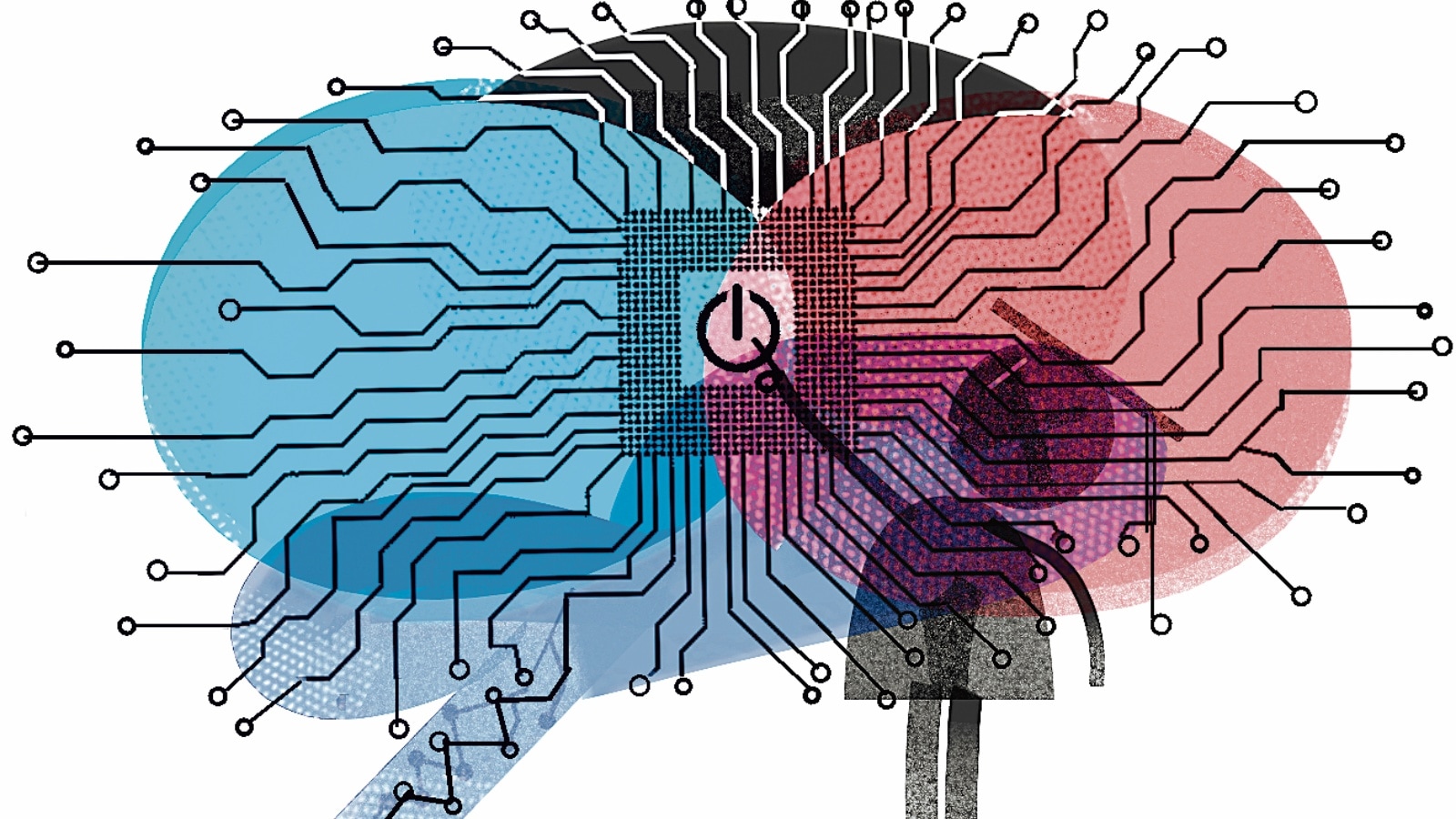


In a world of AI monks and super shoes, should we even bother trying?
Joan Didion once said: “I write entirely to find out what I’m thinking”. Now, when we have access to an omniscient machine that can do the thinking for us, and bless us to boot, what need do we have of putting pen to paper?
If you are a running enthusiast, chances are that in the past week you’ve looked up the Adidas Adizero Adios Pro Evo 3. A mouthful of a name for a pair of shoes, yes, but they clearly get the job done. True to their title, they helped Sabastian Sawe and Yomif Kejelcha bid adios to the rest of the pack at the London Marathon on April 26, and achieve a sub-two-hour finish for the first time in competitive racing. Tigst Assefa, who set the fastest-ever time in the women’s marathon, was also aided by these shoes.
Upgrades in shoe technology have long played a crucial role in shaving minutes off marathon records. When the Kenyan legend Eliud Kipchoge broke the two-hour barrier at an “unofficial” event in 2019, he wore Nike Alphafly prototypes. Kelvin Kiptum, the previous record-holder, also ran in cutting-edge Nikes. And these “super shoes” are not the preserve of elite athletes alone. Mass-market versions of these shoes — with carbon plates and more foam than your mattress — adorn the shelves of your local store and tempt you into emptying your bank account. Not only do they hold the promise of your “personal best” timing, they resemble — both in appearance and weight — clouds of cotton candy. Who can resist their lure?
And so, I asked Claude the other day how soon I could get my hands on the new Adidas shoes. (Unfortunately, they’re out of stock and listed on reseller websites for over $1,000. My dreams of shattering records will have to wait.) This has become something of a habit nowadays. When something piques my interest, I turn to Claude. Travel itineraries, exercise routines, drafting emails when you pretend to call in sick at work — there is no need it cannot serve. Its wide-ranging uses ensure we’re inundated by headlines featuring AI and robots.
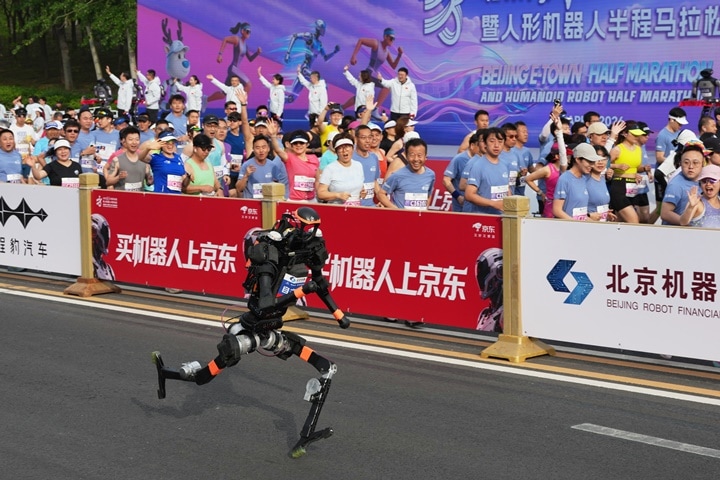
Last month, a robot recorded the fastest half-marathon time at a race in China. Commentary on global geo-politics is being delivered by AI-generated Lego videos. An amateur mathematician used ChatGPT to solve a decades-old problem. And acting on their pledge to incorporate AI into their religious traditions, a Buddhist sect in South Korea recently elevated a robot to monkhood.
In fairness, you cannot deny the transformative capabilities of this new technology. Super shoes can help lifestyle runners shave a few seconds off their timings — but those runners still need to groan their way to the finish line, cursing the day they decided to start running. AI, on the other hand, can churn out paintings, articles, and songs on demand. This article, too, could have been written by AI. (It was not, I promise.) Some prompts and an inchoate idea could have produced a fluent essay, one that probably did a better job of getting to the point by now.
While the rise of AI art has an obvious impact on the professional lives of artists, its shadow also looms over the amateur who creates not to earn a living but only to scratch an itch. When a few taps of a keyboard can produce hours’ worth of work, why should the amateur photographer, painter, musician even bother anymore? In a world where AI writes faster than any mortal, and monk-robots dispense spiritual wisdom, what is left for the human being to pursue? Joan Didion once said, “I write entirely to find out what I’m thinking”. Now, when we have access to an omniscient machine that can do the thinking for us, and bless us to boot, what need do we have of putting pen to paper?
I cannot pretend to know the answer to these questions, though I can take comfort from one fact: Whether I ever take the bait and buy a pair of super shoes is irrelevant, because no matter what’s on my feet, I will continue running. After all, it was never about the shoes.
Banerjee is a lawyer