

Rare pahari paintings on view in the US
An exhibition at Smithsonian’s National Museum of Asian Art illuminates new scholarship on the collaborative artist communities in which most painters worked
‘The tallest mountains on earth rise from the plains of northern India in a series of steep hills, snowy peaks, and narrow valleys. From the same Himalayan region arose some of the world’s most beautiful — yet least understood — works of art’.
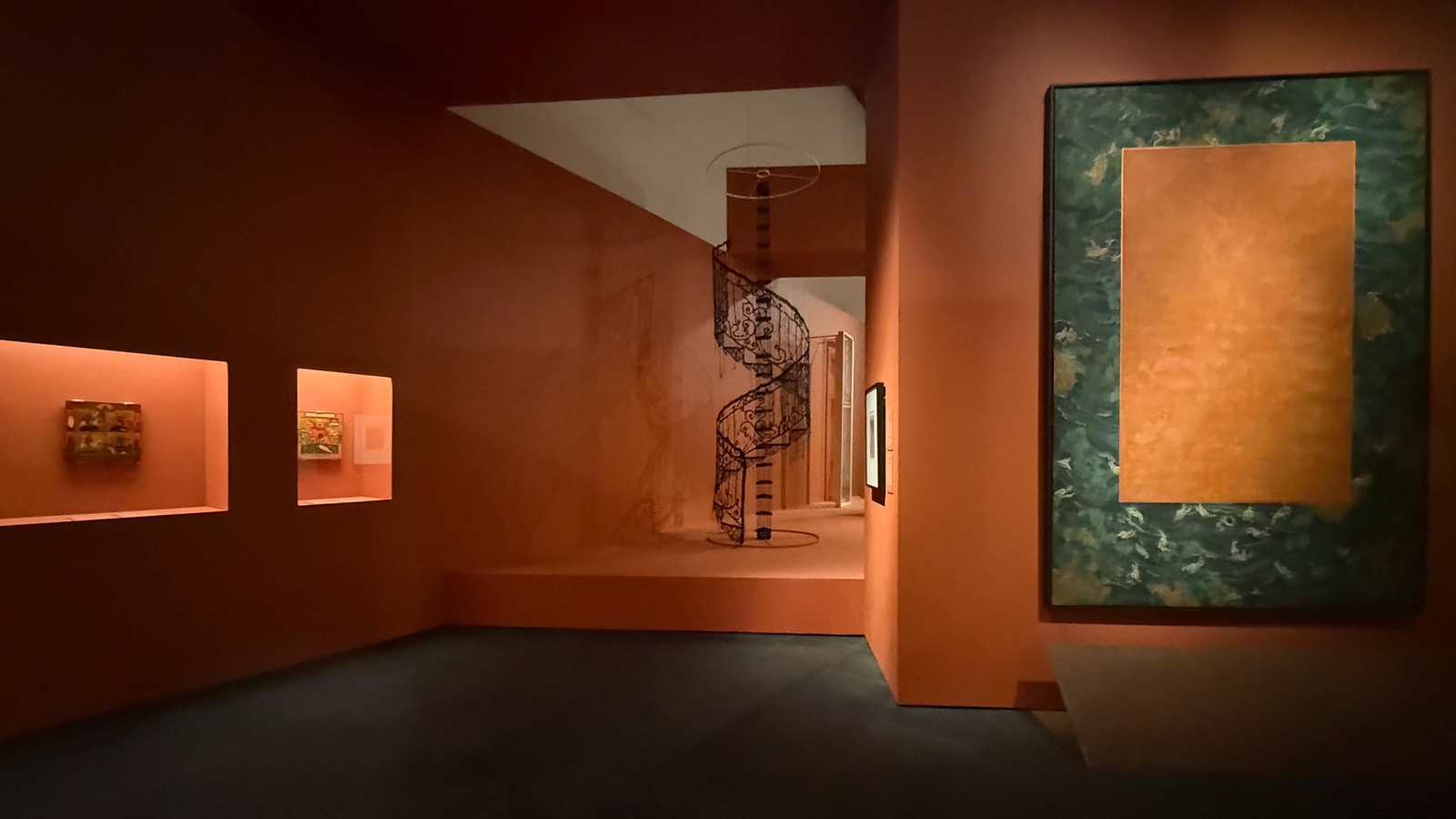
This is how a note on the exhibition “Of the Hills: Pahari Paintings from India’s Himalayan Kingdoms” at the Smithsonian’s National Museum of Asian Art in Washington DC introduces the genre to viewers. Featuring a total of 48 paintings and coloured drawings, the showcase, which runs till July 26, begins with an introductory gallery that acquaints visitors with the region by exploring how painters helped establish the Himalayas as a sacred geography. Following a chronological approach, including reflecting on the impact of collaboration on creativity in three key periods from 1620 to 1830, viewers are invited to appreciate the boldness of abstractions and the detailing of the artworks.
“These paintings are swoon-worthy,” said Debra Diamond, the Elizabeth Moynihan Curator for South and Southeast Asian Art, in a statement issued. She added, “Created with opaque watercolours made from ground pigments, beetle wings and gold, it’s no surprise that they are among the most beloved of Indian paintings. Paradoxically, they also are among the least well understood.”
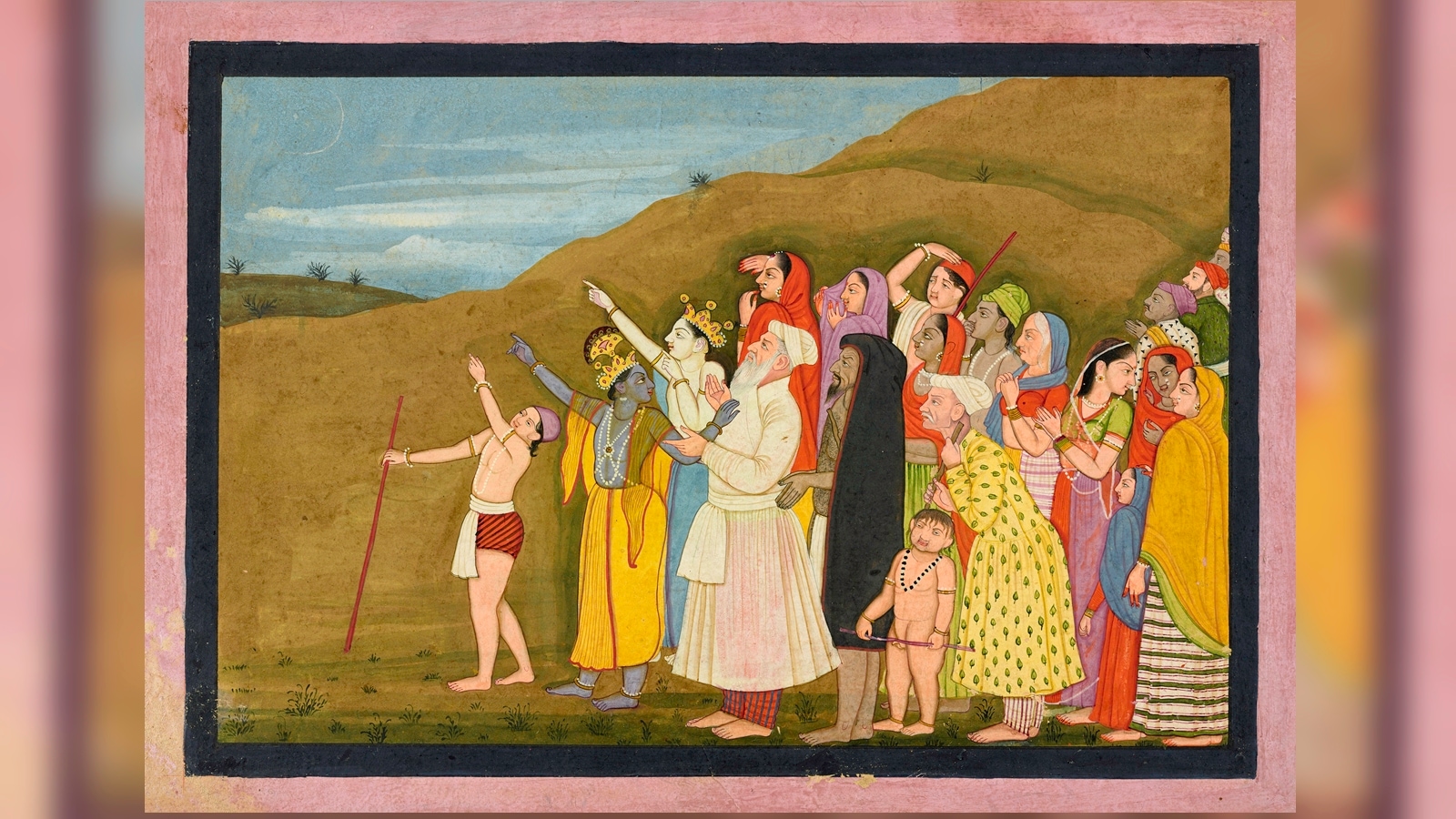
So seen on the walls, among others, is The Yogic Body of Raja Mandhata (1667–1700) that has Raja Mandhata of Nurpur as a yoga practitioner. If Krishna is seen with family admiring a solar eclipse, in a work based on the Bhagavata Purana, from Himachal Pradesh (1775–80), in Hemla Ragaputra, from a Ragamala (Garland of Ragas), from Himachal Pradesh (1700), a painter has personified a raga. There is also Nainsukh’s Two Elephants Fighting in a Courtyard Before Muhammad Shah (1730-1740).
The exhibition, notably, also runs parallel with the showcase “Epic of the Northwest Himalayas: Pahari Paintings from the ‘Shangri’ Ramayana” at the Cleveland Museum of Art and “Longing: Painting from the Pahari Kingdoms, 1680–1820” at the Cincinnati Museum of Art.
While several works in the exhibition have never been publicly displayed earlier, many are also recent acquisitions from the collection of Ralph Benkaim and art historian Catherine Glynn Benkaim.