

‘50-year demand’ nears fulfilment as Zojila tunnel breakthrough brings Ladakh closer to all-weather connectivity
Sajjad Kargili urges authorities to explore possibility of opening tunnel for emergency and medical services during winter months, even before its formal completion.
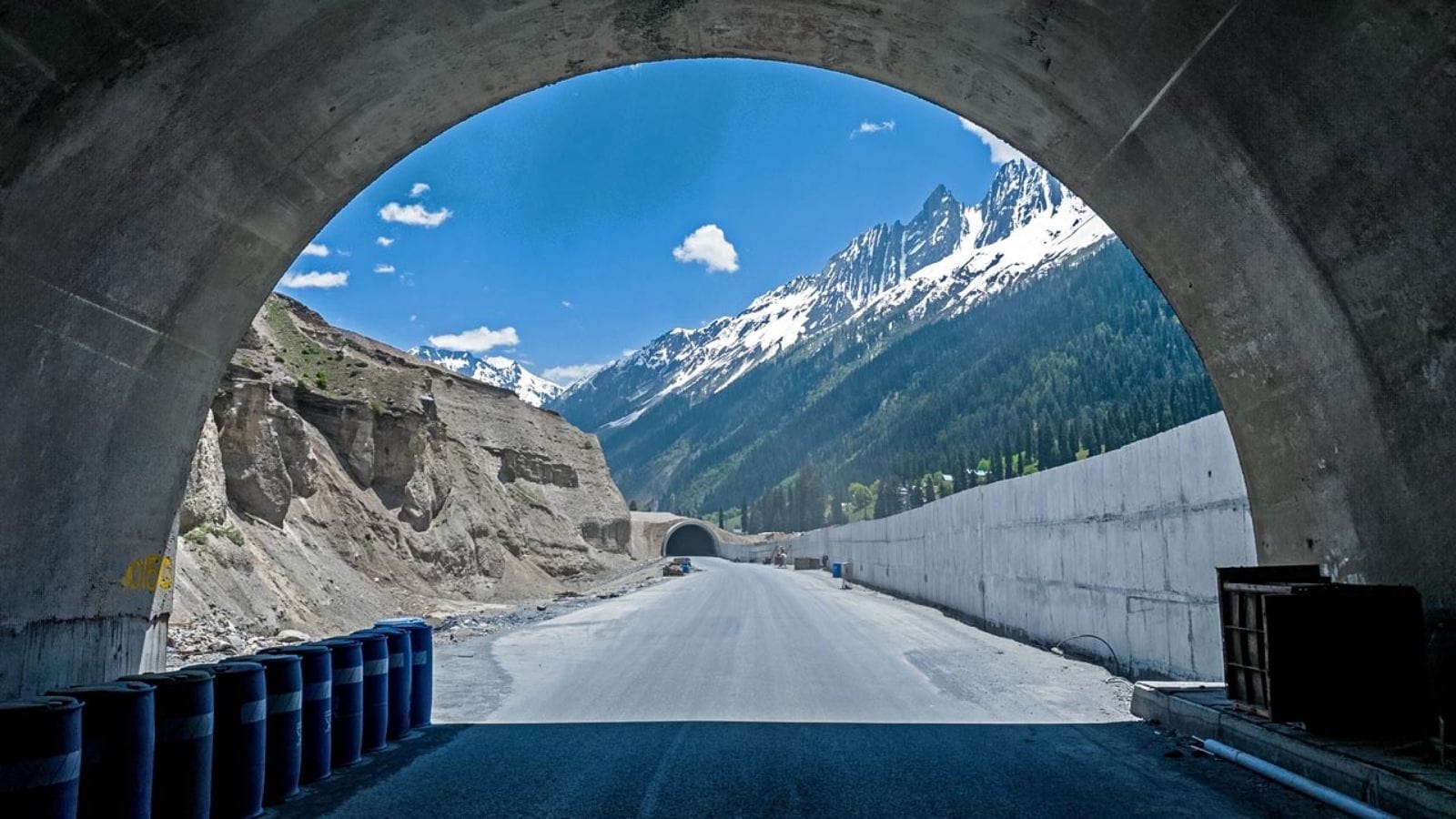
Leaders in Ladakh expressed joy as engineers on Tuesday achieved a breakthrough in the Zojila tunnel, linking Ladakh with Kashmir through an all-weather route. The project has long been seen as critical to ending the region’s seasonal isolation.
Ladakh MP Hanifa Jan described the breakthrough as the fulfilment of a dream that generations of Ladakhis had nurtured for several decades.
“People are extremely happy with this achievement,” Jan said. “For at least the last 50 years, Ladakh’s leadership has consistently demanded this tunnel to improve connectivity to the region.”
Thanking Prime Minister Narendra Modi and Union Road Transport and Highways Minister Nitin Gadkari, who was present at the breakthrough ceremony, Jan said the tunnel holds immense strategic as well as civilian importance.
“Though there were initial hurdles, the tunnel has finally become a reality. I think the government realised the need for this tunnel during the [Kargil] war in 1999,” he said.
Recalling the conflict, Jan noted that military movement depended on the Zojila Pass, which had opened only about two weeks before the war. Until now, the pass has remained Ladakh’s primary road link with the Kashmir Valley.
Every winter, heavy snowfall and temperatures plunging to around minus 30 degrees Celsius cut off road connectivity for months. With Leh’s airport serving as the region’s only civilian air link, airfares often rise sharply during the winter, placing travel beyond the reach of many residents.
Jan said the tunnel would boost economic growth and make life easier for ordinary people. It would help patients, especially the elderly, reach hospitals and enable students to travel for examinations during winter, he said.
In Kargil, the first major town beyond the tunnel, religious and social organisation Jamiat Ul Ulama Isna Asharia Kargil hailed the breakthrough as a historic milestone.
Its general secretary, Sheikh Ibrahim Khalili, and political affairs in-charge Sajjad Kargili said the Zojila tunnel had been among the most longstanding demands of the people of Kargil and Drass. They said local communities, activists, political leaders and civil society groups had campaigned for decades to secure year-round connectivity for the region.
They noted that the breakthrough is not merely an engineering milestone but also a “testament to the sacrifices, aspirations, and perseverance of generations of people who dreamt of year-round connectivity for Ladakh”.
Kargili said that the tunnel’s breakthrough marks a turning point in the developmental history of Ladakh. As construction continues on the tunnel, the organisation also urged authorities to explore the possibility of opening the tunnel for emergency and medical services during the winter months, even before its formal completion, to provide relief to residents who often face immense hardships due to prolonged road closures caused by heavy snowfall.
Kargili also noted that the people of Kargil have long pursued three major infrastructure aspirations: air services to Kargil, the development of a new township at Karba Thang plateau, and the construction of the Zojila Tunnel. He observed that with the breakthrough of the tunnel, one of these historic demands is now on the path to realisation.
Leaders in Ladakh expressed joy as engineers on Tuesday achieved a breakthrough in the Zojila tunnel, linking Ladakh with Kashmir through an all-weather route. The project has long been seen as critical to ending the region’s seasonal isolation.
Ladakh MP Hanifa Jan described the breakthrough as the fulfilment of a dream that generations of Ladakhis had nurtured for several decades.
“People are extremely happy with this achievement,” Jan said. “For at least the last 50 years, Ladakh’s leadership has consistently demanded this tunnel to improve connectivity to the region.”
Thanking Prime Minister Narendra Modi and Union Road Transport and Highways Minister Nitin Gadkari, who was present at the breakthrough ceremony, Jan said the tunnel holds immense strategic as well as civilian importance.
“Though there were initial hurdles, the tunnel has finally become a reality. I think the government realised the need for this tunnel during the [Kargil] war in 1999,” he said.
Recalling the conflict, Jan noted that military movement depended on the Zojila Pass, which had opened only about two weeks before the war. Until now, the pass has remained Ladakh’s primary road link with the Kashmir Valley.
Every winter, heavy snowfall and temperatures plunging to around minus 30 degrees Celsius cut off road connectivity for months. With Leh’s airport serving as the region’s only civilian air link, airfares often rise sharply during the winter, placing travel beyond the reach of many residents.
Jan said the tunnel would boost economic growth and make life easier for ordinary people. It would help patients, especially the elderly, reach hospitals and enable students to travel for examinations during winter, he said.
In Kargil, the first major town beyond the tunnel, religious and social organisation Jamiat Ul Ulama Isna Asharia Kargil hailed the breakthrough as a historic milestone.
Its general secretary, Sheikh Ibrahim Khalili, and political affairs in-charge Sajjad Kargili said the Zojila tunnel had been among the most longstanding demands of the people of Kargil and Drass. They said local communities, activists, political leaders and civil society groups had campaigned for decades to secure year-round connectivity for the region.
They noted that the breakthrough is not merely an engineering milestone but also a “testament to the sacrifices, aspirations, and perseverance of generations of people who dreamt of year-round connectivity for Ladakh”.
Kargili said that the tunnel’s breakthrough marks a turning point in the developmental history of Ladakh. As construction continues on the tunnel, the organisation also urged authorities to explore the possibility of opening the tunnel for emergency and medical services during the winter months, even before its formal completion, to provide relief to residents who often face immense hardships due to prolonged road closures caused by heavy snowfall.
Kargili also noted that the people of Kargil have long pursued three major infrastructure aspirations: air services to Kargil, the development of a new township at Karba Thang plateau, and the construction of the Zojila Tunnel. He observed that with the breakthrough of the tunnel, one of these historic demands is now on the path to realisation.